Condo vs. Homeowners Insurance in New York: Key Differences
See How We're Different
or call us: 845-942-7200
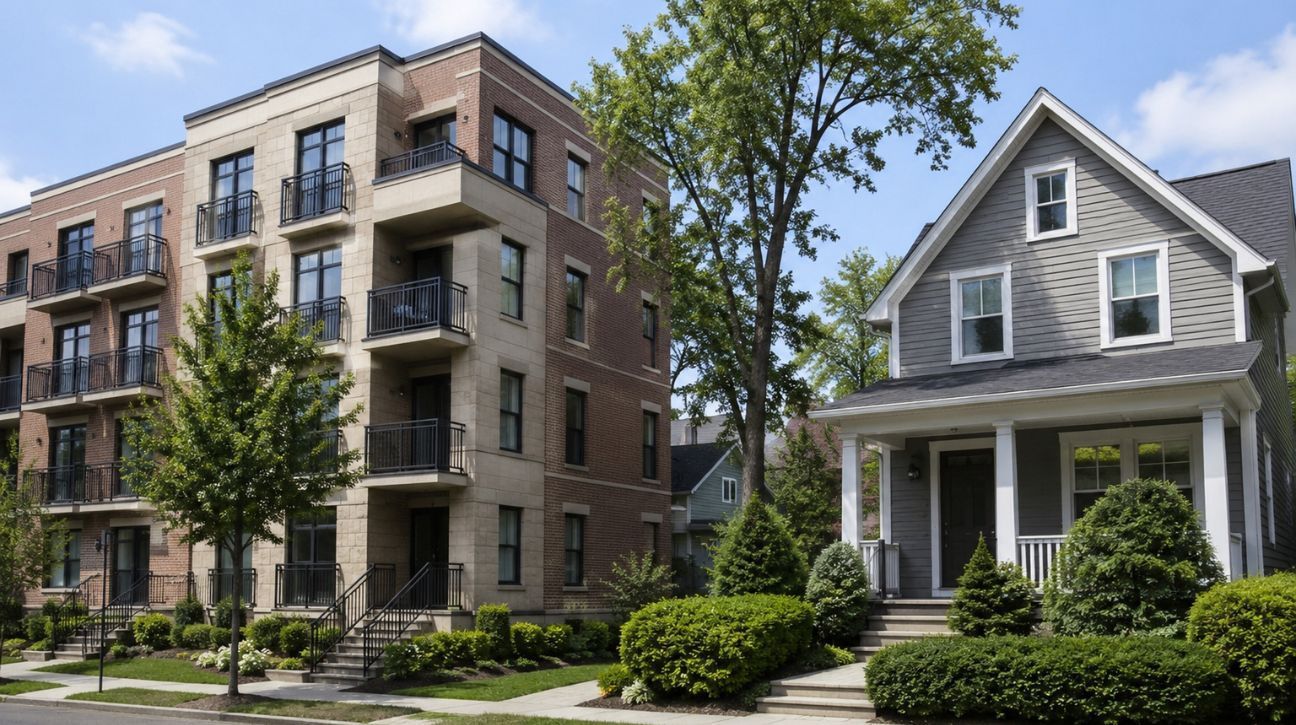
Buying property in New York is one thing. Insuring it correctly is another challenge entirely. A co-op on the Upper West Side, a condo in Brooklyn Heights, and a single-family home in Westchester each carry different ownership structures, and those structures determine what kind of insurance you actually need. Too many New York buyers assume all property insurance works the same way, and that mistake can leave thousands of dollars in damage uncovered. The key differences between condo insurance and homeowners insurance in New York come down to what you own, what your association covers, and where the gaps hide. If you're financing a purchase, your lender will require proof of coverage before closing, but the minimum required policy isn't always the right one. Understanding these distinctions now saves you from a painful claims experience later. Whether you're comparing an HO-3 policy for a house or an HO-6 for a condo unit, the details matter more than you'd expect. This guide breaks down ownership types, policy structures, New York-specific risks, and the questions buyers most frequently get wrong.
Understanding Ownership Structures in New York Real Estate
Your insurance policy is shaped by what you legally own. That sounds obvious, but the line between "your property" and "the association's property" gets blurry fast in New York's real estate market. The ownership model dictates which policy type applies, what your insurer covers, and where your financial exposure begins.
Fee Simple vs. Walls-In Ownership
A traditional homeowner holds fee simple ownership. You own the structure, the land beneath it, the roof, the foundation, and everything in between. If a tree falls through your roof, that's your problem from the shingles down to the subfloor. Your HO-3 policy responds to that claim because you own every component of the building.
Condo ownership works differently. You typically own from the interior walls inward: the paint, flooring, fixtures, cabinets, and any upgrades you've made. The building's exterior walls, roof, hallways, elevators, and shared amenities belong to the condo association. This "walls-in" ownership model means your HO-6 policy only needs to cover your unit's interior and personal belongings, not the building shell. One common mistake is assuming your condo association's insurance covers your kitchen renovation or custom bathroom tile. It almost never does.
The Role of the Master Insurance Policy
Every New York condo association carries a master insurance policy. This policy covers the building's common elements: the structure itself, shared spaces like lobbies and gyms, and liability for accidents in those areas. The master policy typically comes in two forms.
A "bare walls" master policy covers the structure only, leaving all interior finishes to unit owners. An "all-in" master policy may cover original fixtures and installations inside units but not upgrades. You need to read your association's master policy carefully before purchasing your HO-6. The gap between what the master policy covers and what you've invested in your unit is exactly what your condo insurance needs to fill. Skipping this step is one of the most expensive mistakes condo buyers make in New York.
HO-3 vs. HO-6: Comparing Policy Coverage
The Insurance Services Office designates homeowners policies as HO-3 and condo policies as HO-6. These aren't just different labels: they're fundamentally different products designed for fundamentally different ownership situations.
Coverage for Structural Elements and Land
An HO-3 policy covers the dwelling itself on an "open perils" basis, meaning it protects against all causes of loss unless specifically excluded. Flood and earthquake are the two big exclusions you'll encounter. Your detached garage, fence, shed, and other structures on the property also fall under this policy. The land itself isn't insured (dirt doesn't burn down), but everything built on it is your responsibility.
An HO-6 policy doesn't cover the building structure because you don't own it. Instead, it covers building property within your unit: interior walls, installed fixtures, and improvements you've made. If you spent $40,000 remodeling your kitchen in a Manhattan condo, that investment needs to be reflected in your dwelling coverage amount. Many condo owners underinsure here. The average annual cost of homeowners insurance in New York ranges from $1,450 to $1,900, while condo insurance typically runs $400 to $800 per year because the structural coverage responsibility is smaller.
Personal Property and Liability Protections
Both HO-3 and HO-6 policies include personal property coverage and personal liability protection. Your furniture, electronics, clothing, and other belongings are covered under either policy type, usually on a "named perils" basis. That means only specific listed causes of loss (fire, theft, windstorm, etc.) trigger a payout for your stuff.
Liability coverage works similarly across both policies. If someone is injured in your home or condo unit, your policy covers legal defense costs and damages up to your policy limit, typically $100,000 to $300,000. One area where condo owners need extra attention is loss of use coverage. If your unit becomes uninhabitable after a covered loss, your HO-6 pays for temporary housing. Given New York rental prices, make sure that coverage limit is realistic. A $1,500-per-month allowance won't get you far in most NYC neighborhoods.
Comparison Table: Standard Homeowners vs. Condo Insurance
| Feature | Homeowners (HO-3) | Condo (HO-6) |
|---|---|---|
| Dwelling Coverage | Full structure, roof, foundation | Interior walls, fixtures, improvements only |
| Other Structures | Garage, shed, fences included | Not applicable |
| Land Ownership | Yes (not insured, but you own it) | No land ownership |
| Personal Property | Named perils basis | Named perils basis |
| Liability | $100K-$300K typical | $100K-$300K typical |
| Loss of Use | Temporary housing if home is uninhabitable | Temporary housing if unit is uninhabitable |
| Loss Assessment | Not standard | Available as endorsement |
| Average Annual Cost (NY) | $1,450-$1,900 | $400-$800 |
| Master Policy Dependency | None | Must coordinate with association's policy |
| Typical Deductible | $1,000-$2,500 | $500-$1,000 |
The price difference reflects the scope of coverage, not the quality. Condo insurance costs less because the association's master policy handles the building shell. That said, skimping on your HO-6 limits to save $50 a year is a false economy if you've invested heavily in your unit's interior.
New York Specific Considerations
New York's insurance market has quirks that don't apply in most other states. From shared-space assessments to hurricane deductibles, your location within the state significantly affects both your coverage needs and your costs.
Loss Assessment Coverage for Shared Spaces
Here's a scenario that catches condo owners off guard. A burst pipe floods the building's parking garage, causing $500,000 in damage. The association's master policy covers $400,000 after its deductible. The remaining $100,000 gets divided among unit owners as a special assessment. You're suddenly on the hook for $2,000 to $5,000 depending on your building's unit count.
Loss assessment coverage on your HO-6 policy handles exactly this situation. Standard policies may include $1,000 in loss assessment coverage, but that's rarely enough for a New York building. You can typically increase this to $25,000 or $50,000 for a modest premium increase. Buildings with pools, fitness centers, or underground parking carry higher assessment risk, and loss assessment endorsements are worth every dollar for owners in amenity-heavy buildings.
Coastal Risk and NYC Hurricane Deductibles
If your property sits in a coastal zone, you'll encounter separate hurricane or windstorm deductibles. These aren't flat dollar amounts: they're percentages of your dwelling coverage. A 2% hurricane deductible on a home insured for $800,000 means you're paying $16,000 out of pocket before insurance kicks in for wind damage.
New York's coastal exposure affects properties in all five NYC boroughs, Long Island, and parts of Westchester. The New York Property Insurance Underwriting Association (NYPIUA) serves as the insurer of last resort for properties that can't find coverage in the private market. Flood insurance remains a separate policy through the National Flood Insurance Program or private carriers, and it's required for properties in FEMA-designated flood zones regardless of whether you own a house or condo.
Common Questions About NY Property Insurance
Does my condo association's master policy cover my personal belongings? No. The master policy covers the building's structure and common areas. Your personal property, interior improvements, and liability are your responsibility through your HO-6 policy.
Can I skip condo insurance if my building has a master policy? Technically yes, if you own outright with no mortgage. But it's a terrible idea. One kitchen fire could wipe out tens of thousands in personal property and improvements with zero coverage to recover.
Do I need flood insurance for a condo in NYC? If your building is in a FEMA flood zone, your lender will require it. Even if it's not required, ground-floor and basement units in flood-prone areas should carry it. Standard HO-6 policies exclude flood damage entirely.
Why is homeowners insurance so expensive in New York compared to other states? High construction costs, dense population, severe weather exposure, and New York's no-fault auto insurance framework that indirectly affects broader insurance market pricing all contribute. NYC premiums can run 30-50% higher than upstate.
What's the difference between actual cash value and replacement cost on my policy? Actual cash value deducts depreciation, so your five-year-old laptop might pay out at $200 instead of $800. Replacement cost covers what it takes to buy a new equivalent item. Always choose replacement cost if it's available.
How often should I update my condo or homeowners policy? Review annually, and update immediately after renovations. A $30,000 bathroom remodel that isn't reflected in your policy won't be covered if it's destroyed.
Making the Right Choice for Your Property
The distinction between condo insurance and homeowners insurance in New York isn't just academic: it determines whether you're properly protected or dangerously exposed. Homeowners need HO-3 policies that cover the full structure and land improvements. Condo owners need HO-6 policies calibrated to their unit's interior value and coordinated with their building's master policy.
Start by requesting a copy of your condo association's master policy or, for homeowners, getting a current replacement cost estimate for your dwelling. Don't rely on your purchase price as a coverage benchmark: construction costs in New York have climbed steadily, and your home's replacement value may be significantly higher than what you paid.
Get quotes from at least three carriers, and pay attention to deductible structures, especially hurricane and windstorm percentages for coastal properties. Ask specifically about loss assessment limits if you're buying a condo. The right policy isn't always the cheapest one: it's the one that won't leave you financially exposed when something goes wrong. Talk to a licensed New York insurance agent who can walk through your specific property type, location, and risk profile before you commit.
Recent Posts