Dump Trailer vs. Dump Truck Insurance: What NY Contractors Need
See How We're Different
or call us: 845-942-7200
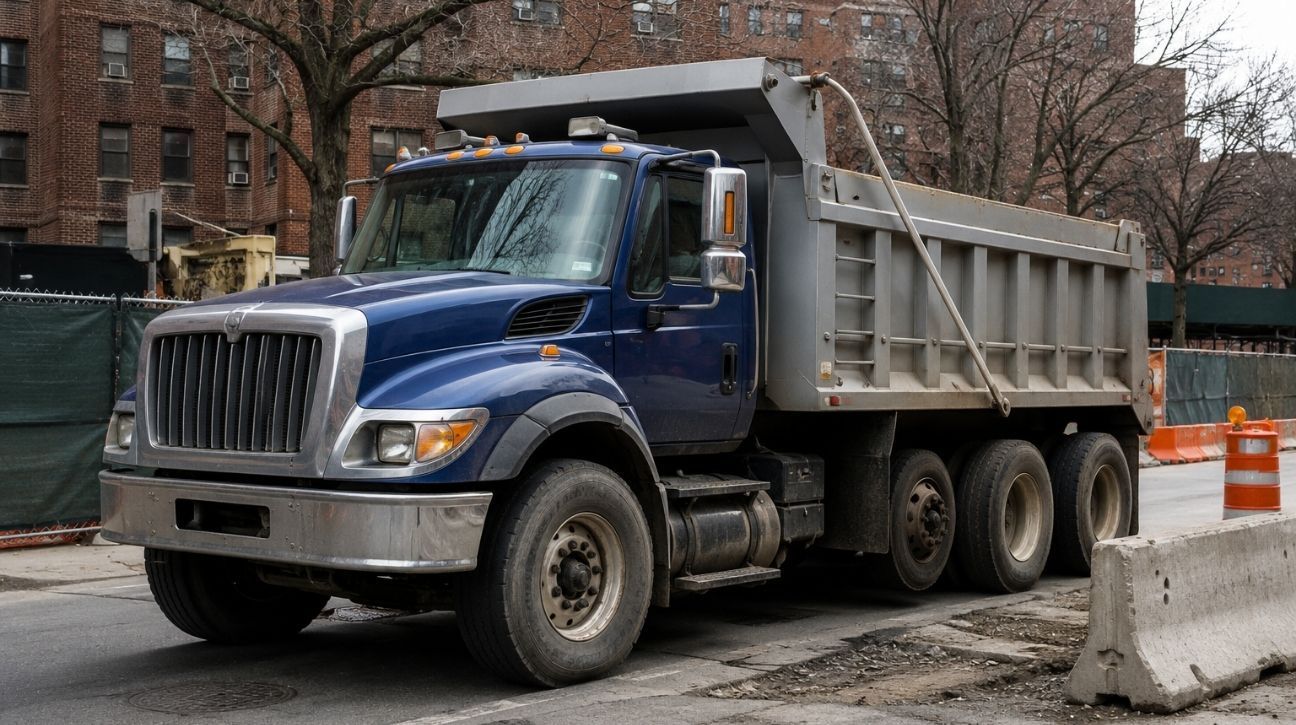
A cracked hydraulic line on a dump trailer sitting at a job site in Queens creates a very different insurance claim than a dump truck rear-ending a sedan on the BQE. Yet too many New York contractors carry the wrong coverage for one or both of these assets, leaving gaps that surface only after something goes wrong. Understanding what insurance NY contractors need for dump trailers versus dump trucks isn't just about compliance: it's about protecting your business from the kind of losses that shut down small operations overnight.
New York is already one of the most expensive states for commercial vehicle insurance. The state's unique legal environment, including the Scaffold Law, makes contractor liability coverage roughly 30% more expensive than the national average. Add in congested metro-area traffic, aggressive litigation culture, and strict DOT enforcement, and you've got a state where choosing the right policy structure matters more than almost anywhere else. Whether you're running a single dump trailer behind your pickup or operating a fleet of tri-axle dump trucks, the coverage you carry needs to match the risks you actually face.
Understanding Liability Differences in New York
Liability coverage is where dump trailer and dump truck insurance diverge most sharply. A dump truck is a self-propelled commercial vehicle that carries its own liability policy. A dump trailer, on the other hand, is a towable asset: and New York treats the two very differently for insurance purposes. This distinction affects everything from who's responsible in an accident to how claims get processed.
The Coverage Gap Between Towing and Hauling
Here's where contractors get burned. When your dump trailer is attached to your tow vehicle, liability typically falls under the tow vehicle's commercial auto policy. But the moment that trailer is detached and sitting on a job site, a different set of risks kicks in. If someone trips over the hitch, if the trailer rolls into a parked car, or if debris falls from an improperly secured load while parked, your auto policy likely won't cover it. You need a separate policy or endorsement for those scenarios. Most contractors don't realize this until a claim gets denied.
New York State Minimum Requirements for Commercial Vehicles
New York mandates minimum liability limits for commercial vehicles based on weight class and use. Dump trucks operating commercially need at least $1.5 million in combined single limit (CSL) liability if they haul hazardous materials, though most general contractors carry $1 million CSL as standard practice. Dump trailers don't have standalone liability requirements since they're classified as towable equipment, but your tow vehicle must carry commercial auto coverage that accounts for the trailer's weight and cargo. Insurance premiums in New York have been climbing steadily across the construction sector, making it critical to structure your coverage efficiently rather than just meeting minimums.
Dump Trailer Insurance: Protecting Your Towable Assets
Dump trailers range from $8,000 utility models to $60,000+ commercial units, and they face risks that standard auto policies aren't designed to handle. Theft is a major concern: trailers are easy targets because they can be hitched and towed away in minutes. Physical damage from job site debris, hydraulic system failures, and weather events round out the most common claims.
Physical Damage and Inland Marine Coverage
Physical damage coverage for dump trailers usually falls under an inland marine policy rather than a traditional auto policy. Inland marine insurance covers mobile equipment and property in transit, which fits a dump trailer perfectly. A typical inland marine policy for a commercial dump trailer in New York runs between $500 and $1,500 annually, depending on the trailer's value and your deductible. This covers theft, vandalism, collision damage, and sometimes hydraulic system breakdowns. Make sure your policy includes coverage while the trailer is both in transit and stationary at job sites: some policies only cover one or the other.
Why Personal Auto Policies Often Fail Contractors
If you're towing a dump trailer with a personal pickup truck and carrying a personal auto policy, you're almost certainly underinsured. Personal policies exclude commercial use in their fine print. Even if your insurer doesn't ask how you use the vehicle, they'll investigate during a claim. A contractor in Westchester learned this the hard way in 2024 when his personal policy denied a $47,000 claim after his dump trailer detached on Route 9 and struck another vehicle. The insurer argued the truck was being used commercially. He was personally liable for the full amount. Get a commercial auto policy on any vehicle that tows equipment for work.
Dump Truck Insurance: Comprehensive Protection for Heavy Equipment
Dump trucks are among the most expensive commercial vehicles to insure in New York. A standard tri-axle dump truck policy in the NYC metro area can run $12,000 to $25,000 annually for liability alone. Upstate, those numbers drop to $6,000 to $14,000, but they're still significant. The cost reflects the vehicle's size, the damage it can cause, and the litigious environment New York contractors operate in.
Primary Liability vs. Non-Trucking Liability
Primary liability insurance covers your dump truck while it's being used for business purposes: hauling materials, driving to job sites, operating under contract. Non-trucking liability (also called bobtail insurance) covers the truck during personal or non-business use. If you lease your dump truck to a general contractor and they provide primary liability, you'd still want non-trucking liability for the times you're driving the truck home or running personal errands. Many owner-operators in New York carry both, though your lease agreement dictates which you need. New York recently adjusted some commercial vehicle insurance rules, and these regulatory changes affect how policies are structured for trucking operations statewide.
Cargo Insurance for Transporting Materials
Cargo insurance covers the materials your dump truck is hauling: gravel, sand, demolition debris, asphalt. If you dump a load on the highway after a rollover, cargo insurance pays for the lost material and cleanup costs. Standard cargo coverage for dump trucks ranges from $25,000 to $100,000 per occurrence. Most general contractors require their hauling subcontractors to carry at least $50,000 in cargo coverage before they'll issue a purchase order. Don't confuse cargo insurance with the physical damage coverage on the truck itself: they're separate policies covering separate things.
Comparison Table: Trailer vs. Truck Insurance Features
| Feature | Dump Trailer | Dump Truck |
|---|---|---|
| Liability Coverage | Covered under tow vehicle's policy | Standalone commercial auto policy |
| Physical Damage | Inland marine policy | Commercial auto physical damage |
| Typical Annual Cost (NYC metro) | $500 - $1,500 | $12,000 - $25,000 |
| Typical Annual Cost (Upstate) | $400 - $1,000 | $6,000 - $14,000 |
| Cargo Coverage | Usually not needed | $25,000 - $100,000 per occurrence |
| Non-Trucking Liability | Not applicable | Available for owner-operators |
| Theft Risk | High (easily towed away) | Lower (harder to steal) |
| NY DOT Requirements | Minimal (tied to tow vehicle) | Extensive (USDOT number, MCS-150) |
| Common Claims | Theft, hydraulic failure, detachment | Rollovers, collisions, cargo spills |
This comparison highlights why insurance for dump trailers and dump trucks requires different strategies. A one-size-fits-all approach leaves gaps on both sides.
Key Factors That Influence NY Insurance Premiums
Your premium isn't just based on the vehicle. Insurers evaluate a combination of factors that can swing your annual cost by thousands of dollars.
Gross Vehicle Weight Rating (GVWR) Impact
GVWR is one of the biggest premium drivers. A dump truck with a GVWR over 26,001 pounds requires a CDL to operate and falls into a higher insurance tier. These vehicles cause more damage in accidents, cost more to repair, and attract larger lawsuit settlements. A Class 7 dump truck (26,001-33,000 lbs) typically costs 20-35% more to insure than a Class 5 truck (16,001-19,500 lbs). For dump trailers, the GVWR affects your tow vehicle's insurance: adding a 14,000-pound trailer to your commercial pickup's policy increases the combined weight your insurer has to account for.
Radius of Operation and Job Site Risks
Insurers want to know how far your vehicles travel. A dump truck operating within a 25-mile radius of a single location is cheaper to insure than one running 100+ miles across multiple counties. NYC and Long Island operations carry the highest premiums due to traffic density and accident frequency. Job site risks also matter. If you're hauling materials to high-rise construction sites in Manhattan, your exposure to Scaffold Law claims is real, and construction insurance costs reflect that added liability. Contractors working primarily in residential zones upstate face lower premiums for the same coverage limits.
Common Questions About Hauling Insurance in NY
Do I need a separate policy for my dump trailer, or does my truck insurance cover it? Your commercial auto policy on the tow vehicle covers liability while the trailer is attached. You'll need a separate inland marine policy for physical damage, theft, and coverage when the trailer is detached.
Can I save money by insuring my dump truck as a personal vehicle? No. Using a personal policy for commercial operations voids your coverage. If your insurer discovers commercial use during a claim, they'll deny it and potentially cancel your policy entirely.
How much does dump truck insurance cost in New York City versus upstate? NYC metro premiums for dump trucks run $12,000 to $25,000 annually for liability coverage. Upstate contractors typically pay $6,000 to $14,000 for equivalent coverage. The difference comes down to traffic density, accident rates, and litigation costs.
Does New York's Scaffold Law really affect my dump truck insurance rates? Yes. The Scaffold Law imposes absolute liability on contractors and property owners for gravity-related injuries. This increases insurance costs by approximately 30% compared to states without similar statutes.
What happens if my dump trailer detaches and causes an accident? Your tow vehicle's commercial auto liability policy should cover third-party damages. However, if the detachment resulted from improper maintenance or an uninspected hitch, your insurer may argue negligence and reduce or deny the claim.
Do I need cargo insurance for a dump trailer?
Generally, no. Cargo insurance is designed for the materials being hauled by self-propelled vehicles. Your dump trailer's inland marine policy covers the trailer itself, not its contents. That said, check with your insurer if you're hauling high-value materials.
Making the Right Choice for Your Fleet
The insurance decision between dump trailers and dump trucks comes down to how you use the equipment and what risks you're actually exposed to. A contractor running two dump trailers behind commercial pickups has a fundamentally different risk profile than an owner-operator with a tri-axle dump truck hauling materials across the five boroughs.
Start by auditing your current coverage. Pull your policies and check whether your dump trailers have standalone physical damage coverage or if you're relying on your auto policy to do something it wasn't designed for. If you own dump trucks, verify that your liability limits meet the requirements of the general contractors you work with: many GCs now require $2 million in combined single limit, not just the $1 million that was standard a few years ago.
Get quotes from brokers who specialize in New York commercial auto and construction insurance. A generalist agent selling homeowners policies on the side won't understand the nuances of inland marine coverage for dump trailers or the Scaffold Law's impact on your liability exposure. The right broker can often save you 15-20% by structuring your policies correctly and bundling where it makes sense. Your equipment earns you money: make sure the insurance protecting it actually works when you need it.
Recent Posts