A single CBCT scanner can cost more than a mid-range sedan. Your aligner inventory might represent tens of thousands of dollars sitting in a supply closet. And that 3D printer you rely on for retainer fabrication? It's running eight hours a day, every day. Orthodontic practices carry an unusually dense concentration of high-value, specialized assets, and a standard
commercial property policy often leaves critical gaps in coverage. The right insurance for your orthodontic practice should protect aligner inventory, patient appliances, equipment in transit, and property claims that are unique to your specialty. With the
cost of dental equipment and supplies rising 23% since January 2021 while reimbursement rates have only climbed 19%, the financial margin for absorbing an uninsured loss keeps shrinking. Getting your coverage right isn't optional anymore: it's a matter of practice survival.
Protecting the High-Value Assets of an Orthodontic Practice
Orthodontic offices aren't like general dental practices. The mix of digital imaging systems, custom patient appliances, and consumable inventory creates a risk profile that generic policies handle poorly. Understanding what makes your assets different is the first step toward closing coverage gaps.
Distinguishing Between Specialized Equipment and General Inventory
Your practice holds two fundamentally different categories of assets. Fixed equipment like panoramic X-ray units, intraoral scanners, and curing lights are expensive, hard to replace quickly, and often customized with software configurations. Then there's your consumable and semi-consumable inventory: clear aligners, brackets, archwires, elastics, bonding agents, and patient-specific appliances that are either in production or waiting for pickup.
These two categories behave differently in a loss scenario. A fire might destroy both, but the replacement timeline and valuation method for a $90,000 CBCT machine differs wildly from restocking 200 sets of custom aligners that were fabricated for specific patients. Your policy needs to account for both.
Why Standard Commercial Property Insurance May Not Be Enough
A typical commercial property policy covers your building contents against named perils like fire, theft, and certain weather events. The problem is that these policies often cap coverage for specific asset types, exclude equipment breakdown from mechanical failure, and don't cover items in transit between locations.
If you're shipping aligners from a lab, moving a portable scanner to a satellite office, or storing patient records digitally, standard property insurance likely leaves you exposed. Sub-limits on "electronic data processing equipment" can cap your payout at a fraction of your actual loss. That's a painful discovery to make after a claim.
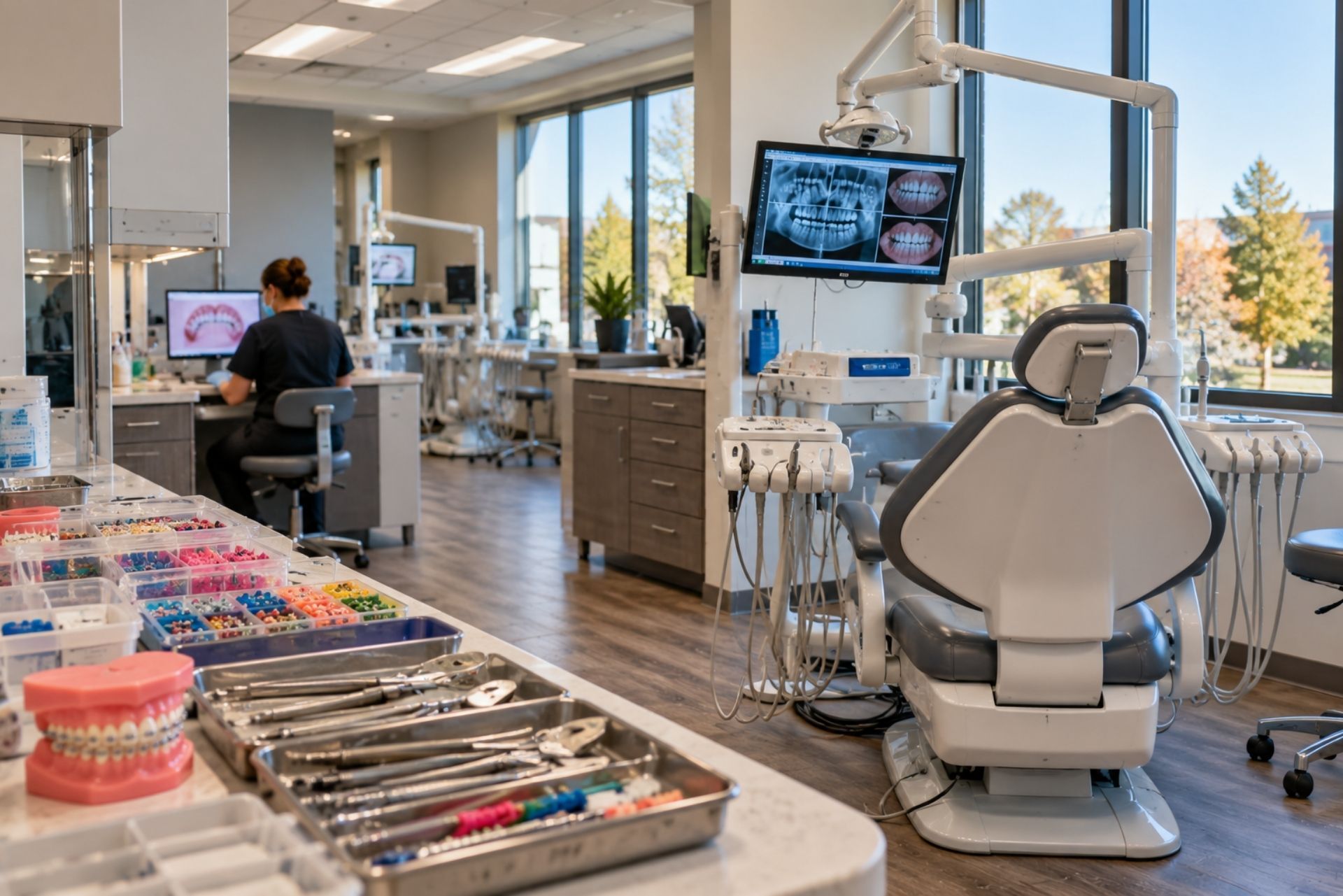

Core Coverage Types for Orthodontic Tools
Several distinct policy types work together to create a complete safety net for orthodontic assets. Each one addresses a specific risk that standard property coverage misses.
Inland Marine Insurance for Portable Diagnostic Tools
Inland marine insurance covers property that moves. If you transport intraoral scanners, portable X-ray units, or diagnostic models between offices, this is the policy that protects them. Standard property insurance typically only covers assets while they're at your listed business address.
This coverage matters more than many practice owners realize. A scanner dropped during transport, stolen from a vehicle, or damaged at a temporary clinic location falls outside most property policies. Inland marine fills that gap, and it's usually affordable relative to the value it protects.
Equipment Breakdown Coverage for 3D Printers and X-Ray Machines
Equipment breakdown coverage (sometimes called boiler and machinery insurance) pays for repairs or replacement when mechanical or electrical failure takes out your equipment. This is distinct from accidental damage: it covers internal component failure, power surges, motor burnout, and similar mechanical events.
Your 3D printer's laser module failing, your autoclave's pressure system malfunctioning, or a voltage spike frying your CBCT scanner's control board: none of these are covered under standard property insurance. Equipment breakdown coverage picks up where property policies stop, and for practices running expensive digital fabrication equipment daily, it's essential.
Business Personal Property (BPP) for Brackets, Wires, and Supplies
BPP coverage protects your inventory and supplies while they're at your practice location. This includes brackets, wires, bands, bonding materials, aligner trays, retainers, and other consumables. It also covers office furniture, computers, and non-building fixtures.
The key detail here is the coverage limit. Many practice owners set their BPP limit based on a rough estimate, then never update it. If your aligner inventory has grown significantly or you've added new product lines, your coverage limit may be dangerously low. An annual review of your BPP limit is one of the simplest ways to avoid being underinsured.
Comparison: Standard Property vs. Specialized Equipment Coverage
Choosing between a basic property policy and specialized coverage isn't always straightforward. The table below breaks down the practical differences.
Comparison Table: Coverage Scope and Limits
| Feature | Standard Commercial Property | Specialized Equipment Coverage |
|---|---|---|
| Fixed equipment (scanners, X-rays) | Covered, often with sub-limits | Full replacement cost available |
| Equipment mechanical failure | Excluded | Covered under equipment breakdown |
| Items in transit | Excluded | Covered under inland marine |
| Aligner/appliance inventory | Covered under BPP, often capped | Higher limits, custom valuation |
| Power surge damage | Sometimes excluded | Typically covered |
| Digital records/software | Limited or excluded | Can be included with endorsement |
| Temporary off-site use | Excluded | Covered under inland marine |
| Valuation method | Often actual cash value | Replacement cost available |
The pattern is clear: standard property insurance provides a foundation, but specialized policies fill the gaps that matter most for orthodontic practices.
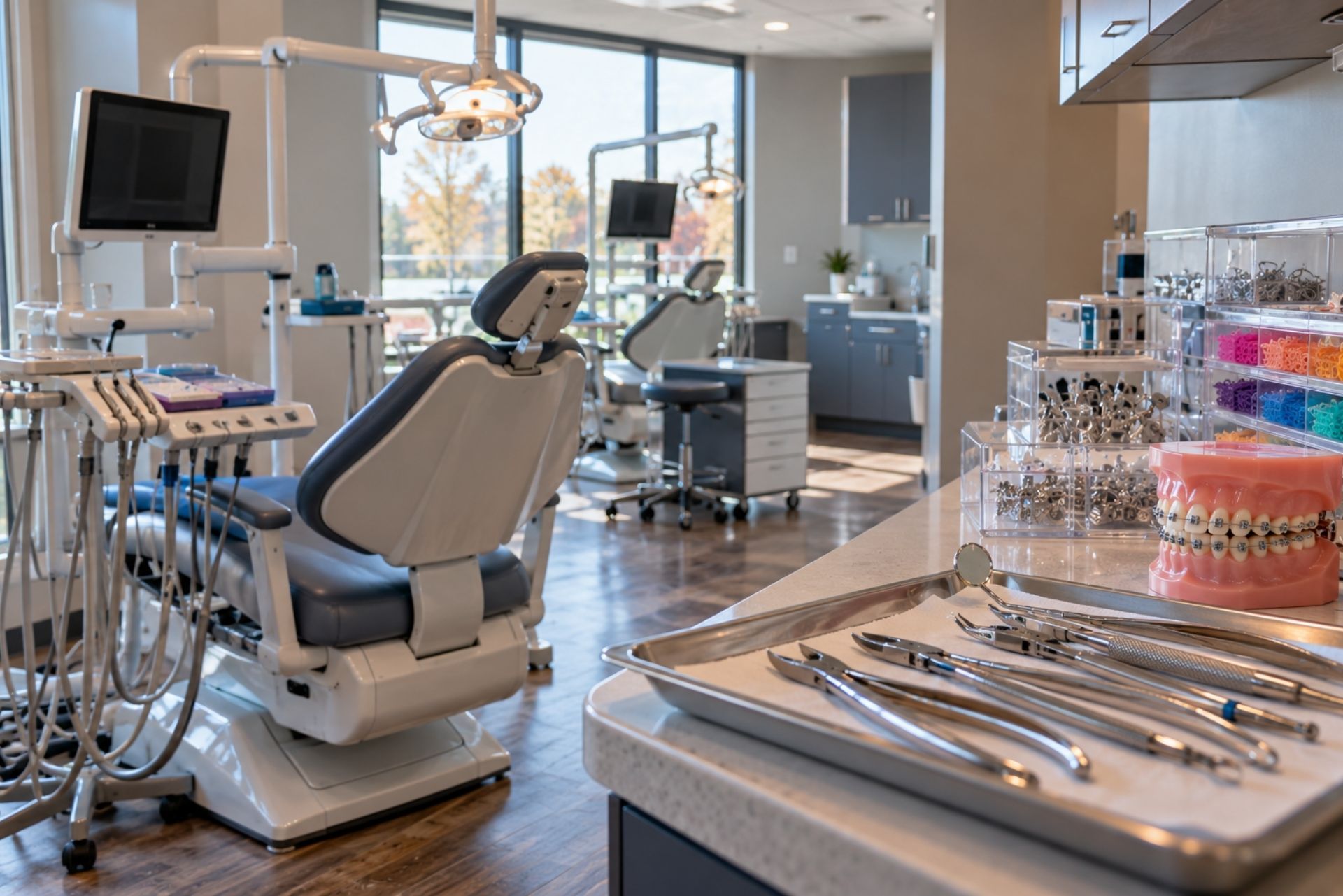
Common Risks and Claims in Orthodontic Practices
Knowing what goes wrong most often helps you prioritize your coverage decisions. Two categories of claims dominate orthodontic practice losses.
Accidental Damage and Mechanical Failure
Dropped scanners, cracked screens on chairside monitors, and sterilization equipment that simply stops working: these are the everyday risks. Mechanical failure is particularly common with 3D printers and milling machines that run heavy production cycles. A failed print head or laser module can cost thousands to replace, and the downtime disrupts patient care.
Water damage from burst pipes or HVAC leaks is another frequent culprit. Even a small leak above a supply closet can ruin thousands of dollars in aligner inventory overnight. These claims are routine for insurers, but only if you have the right coverage in place.
Inventory Loss Due to Theft or Environmental Hazards
Theft of orthodontic supplies is less common than equipment damage, but it happens. Break-ins targeting electronics can also result in collateral damage to inventory. Environmental hazards like flooding, extreme heat in storage areas, or prolonged power outages that compromise temperature-sensitive materials round out the risk picture.
One scenario that catches practices off guard: a multi-day power outage that ruins a batch of bonding agents or thermoplastic materials stored at specific temperatures. If your policy doesn't explicitly cover spoilage or has a low sub-limit for perishable inventory, you'll absorb that loss yourself.
Common Questions About Orthodontic Insurance
Does my insurance cover my 3D scanner if it falls and breaks? It depends on where it falls. If it's at your office, your BPP or equipment policy likely covers it. If it breaks during transport to another location, you'll need inland marine coverage. Check both policies before assuming you're protected.
What happens if my inventory is ruined by a power outage? Standard property policies may not cover spoilage from power loss unless you've added an equipment breakdown endorsement or a specific spoilage rider. Ask your agent about this scenario directly: it's more common than most practice owners expect.
Is my equipment covered while I'm moving it to a satellite office? Not under a standard property policy. You need inland marine insurance to cover equipment and supplies in transit. This is especially important if you regularly move portable scanners or diagnostic tools between locations.
Do I need separate coverage for my digital software and patient records? Yes, in most cases. Standard property policies offer limited or no coverage for electronic data. With proposed 2026 HIPAA updates requiring encryption for all ePHI at rest and in transit, your digital infrastructure is both a compliance obligation and an insurable asset. Ask about cyber liability and data restoration coverage as add-ons.
How do I determine the right coverage limit for my inventory? Conduct a physical count of all supplies, aligners, and patient appliances on hand. Multiply by current replacement cost, not what you originally paid. Update this figure at least annually, and consider seasonal fluctuations if your ordering patterns vary throughout the year.
Before You Buy a Policy
Shopping for orthodontic practice insurance covering aligner inventory, patient appliances, equipment, and property claims requires preparation. Two steps will save you from buying the wrong policy or paying too much.
Conducting a Thorough Inventory Audit
Before you talk to any agent, document everything. Walk through your practice with a camera and a spreadsheet. Record every piece of equipment with its make, model, serial number, purchase date, and current replacement cost. Do the same for your supply inventory, including aligner stock and patient-specific appliances in progress.
This audit serves two purposes. First, it gives your agent accurate data to build a quote. Second, it becomes your proof of loss if you ever file a claim. Practices that can't document what they owned before a loss routinely receive lower payouts. Store your inventory records off-site or in the cloud so they survive the same event that triggers a claim.
Reviewing Replacement Cost vs. Actual Cash Value
This is where many practice owners make a costly mistake. Actual cash value (ACV) policies pay you what your equipment is worth today, after depreciation. A five-year-old CBCT scanner that cost $85,000 new might only pay out $35,000 under ACV. Replacement cost coverage pays what it actually costs to buy a comparable new unit.
The premium difference between ACV and replacement cost is usually modest: often 10-20% more. For high-value orthodontic equipment, replacement cost coverage is almost always the better choice. The gap between a depreciated payout and what you'd actually need to spend on a replacement can be devastating to a practice's cash flow.
With 16 states enacting 30 new dental insurance laws during the 2026 legislative season, the regulatory environment around dental and orthodontic practice insurance is shifting fast. Some of these reforms, including
mandatory Dental Loss Ratio reporting in states like Mississippi, could affect how insurers price and structure policies for dental professionals. Stay current with your state's requirements and review your coverage annually. The best time to discover a gap in your policy is before you need to file a claim, not after.
ABOUT THE AUTHOR:
TAYLOR RICHARDSON
Taylor Richardson is the founder and CEO of 5M Insurance. With a focus on real estate risk management, Taylor helps investors and property managers nationwide secure smarter, scalable coverage solutions—without the headaches of traditional insurance brokers.
Contact Us
Comprehensive Coverage for Businesses of All Sizes
Protecting Your Business, Securing Your Future
General Liability Insurance
Protection against lawsuits and third-party claims.

Workers Comp Insurance
Required protection for employees in case of injury or illness.
Commercial Property Insurance
Coverage for buildings, equipment, and business assets.
Commercial Auto Insurance
Coverage for company vehicles and fleet operations.
Commercial Umbrella Insurance
Protection against errors, omissions, and negligence claims.
Business Owner's Policy
A bundled policy combining essential business coverages.
Personalized Insurance for Every Stage of Life
Protect What Matters Most with Comprehensive Coverage
Jewelry Insurance
Specialized protection for valuable items like engagement rings, watches, and heirlooms.
Pet Insurance
Financial protection for veterinary care and unexpected pet health expenses.
Specialized Insurance for Your Business Needs
Serving the Industries That Drive
New York & New Jersey






What Our Clients Say
Trusted by Businesses & Families Across New York & New Jersey
Frequently Asked Questions
Get Answers to Your Insurance Questions
We understand that insurance can be complex. Here are answers to some of the most common questions our clients ask. If you need more information, our team is always here to help.
- Still have questions?
How do I know what coverage I need?
Choosing the right insurance starts with understanding your risks. For personal insurance, consider factors like your home’s value, your vehicle, and your financial responsibilities. Homeowners may need additional protection for floods or valuable belongings, while drivers should evaluate coverage limits based on their assets.
For businesses, the right coverage depends on the industry, number of employees, and liability risks. General liability is essential for most businesses, but some may need property, workers’ compensation, or business owner’s policies. Our team can assess your needs and guide you to the best options.
What factors affect my insurance rate?
Insurance rates are influenced by multiple factors. For auto policies, your driving history, vehicle type, and location play a major role. Home insurance costs depend on your home’s value, construction type, and potential risks like flooding or fire hazards.
For business insurance, rates vary based on the industry, size, claims history, and coverage limits. High-risk industries may require specialized policies, while businesses with strong safety measures and claims-free histories can qualify for better rates. Our agents help find discounts and cost-saving opportunities.
Why should I work with an independent insurance agency?
Unlike captive agents who represent a single insurance company, independent agencies like Joyce Insurance Agency work with multiple carriers to find the best coverage for your needs. This means you get more choices, competitive rates, and a policy that truly fits your situation.
We take the time to understand your needs, compare options, and provide expert advice. Whether you're insuring your home, car, or business, our priority is finding you the best protection at a great value.
How quickly can I get insured?
The time it takes to secure a policy depends on the type of insurance. Auto and home policies can often be issued the same day, while business insurance may take longer, especially for specialized coverage. Workers’ compensation and commercial policies may require underwriting approval, which can extend the timeline.
We prioritize efficiency and make the process as smooth as possible. Once we understand your needs, we work quickly to get you insured with minimal hassle.
What should I do if I need to file a claim?
If you need to file a claim, contact us as soon as possible. We’ll guide you through the process and ensure you have everything needed to submit your claim correctly. Gathering necessary documentation, such as photos, receipts, or witness statements, can help speed up the process.
We work directly with your insurance provider to streamline communication and advocate on your behalf. Our goal is to make sure your claim is handled quickly and fairly so you can recover without unnecessary stress.
How can I lower my insurance costs?
There are several ways to reduce insurance premiums without sacrificing coverage. For auto insurance, maintaining a clean driving record, bundling policies, and increasing deductibles can help lower costs. Homeowners can save by installing security systems, upgrading safety features, and bundling home and auto policies.
For business owners, implementing risk management strategies, maintaining a claims-free history, and working with an independent agent to find competitive rates can lead to cost savings. Our team helps you explore discounts and options to ensure you’re getting the best value.
Contact Us
Phone
Location