A single defective crown can trigger a chain reaction: a patient injury, a malpractice claim against the prescribing dentist, and a products liability suit that lands squarely on your dental lab's doorstep. For New York dental labs, the stakes are especially high. The state treats custom dental restorations as products, not services, which opens the door to strict liability claims that don't require proof of negligence. Between defective restorations, patient injuries, recall expenses, and the fine print buried in your policy's exclusions, there's a lot that can go wrong if you're underinsured or carrying the wrong coverage.
New York's regulatory environment has also tightened. Senate Bill S06929 and Assembly Bill A1364A now require all dental labs operating in the state to register with the Department of Health, adding compliance obligations that didn't exist a few years ago. That registration requirement signals a broader trend: increased oversight, higher standards, and greater legal exposure for labs that cut corners. If your lab fabricates crowns, bridges, dentures, implant abutments, or orthodontic appliances for New York patients, understanding how products liability insurance protects you isn't optional. It's the difference between surviving a claim and shutting your doors.
Understanding Products Liability in the Dental Lab Industry
Products liability insurance for dental laboratories covers claims arising from defective or harmful products your lab manufactures. Unlike general liability, which addresses slip-and-fall incidents or property damage at your facility, products liability responds when something you made causes harm after it leaves your shop. This distinction matters enormously for labs, because the product you're shipping is going directly into a patient's mouth.
Your lab's exposure doesn't end at the loading dock. If a restoration fails six months after cementation, the patient's attorney will trace the chain of manufacture back to your bench. That's why specialized dental laboratory insurance typically bundles products liability with other essential coverages, but the products component is where most of the financial risk sits.
The Legal Shift from Service to Product in New York
New York courts have consistently classified dental lab output as a product rather than a professional service. This classification is critical. When your work is considered a product, injured patients can pursue strict liability claims, meaning they don't need to prove you were careless. They only need to show the product was defective and caused their injury.
This legal framework differs from how dentists are typically treated. Dentists generally face malpractice claims under a negligence standard, which requires proving a breach of the standard of care. Your lab doesn't get that protection. A crown with an improper margin, a bridge with a hidden porosity, or a denture containing an undisclosed allergen can all trigger strict liability regardless of how careful your technicians were.
Common Causes of Action: Negligence vs. Strict Liability
Plaintiffs suing dental labs typically choose between two legal theories, and they often pursue both simultaneously. Negligence requires proving your lab failed to exercise reasonable care during design, fabrication, or quality control. Strict liability skips the "reasonable care" question entirely and focuses on whether the product itself was unreasonably dangerous.
In practice, strict liability claims are harder to defend because your lab's internal processes become almost irrelevant. Even if you followed every protocol perfectly, a defective product that injures a patient creates liability. Negligence claims, on the other hand, give your defense team more room to argue that you met industry standards. Most New York dental lab claims involve both theories, and your insurance needs to respond to either.

High-Risk Scenarios: Defective Restorations and Patient Injuries
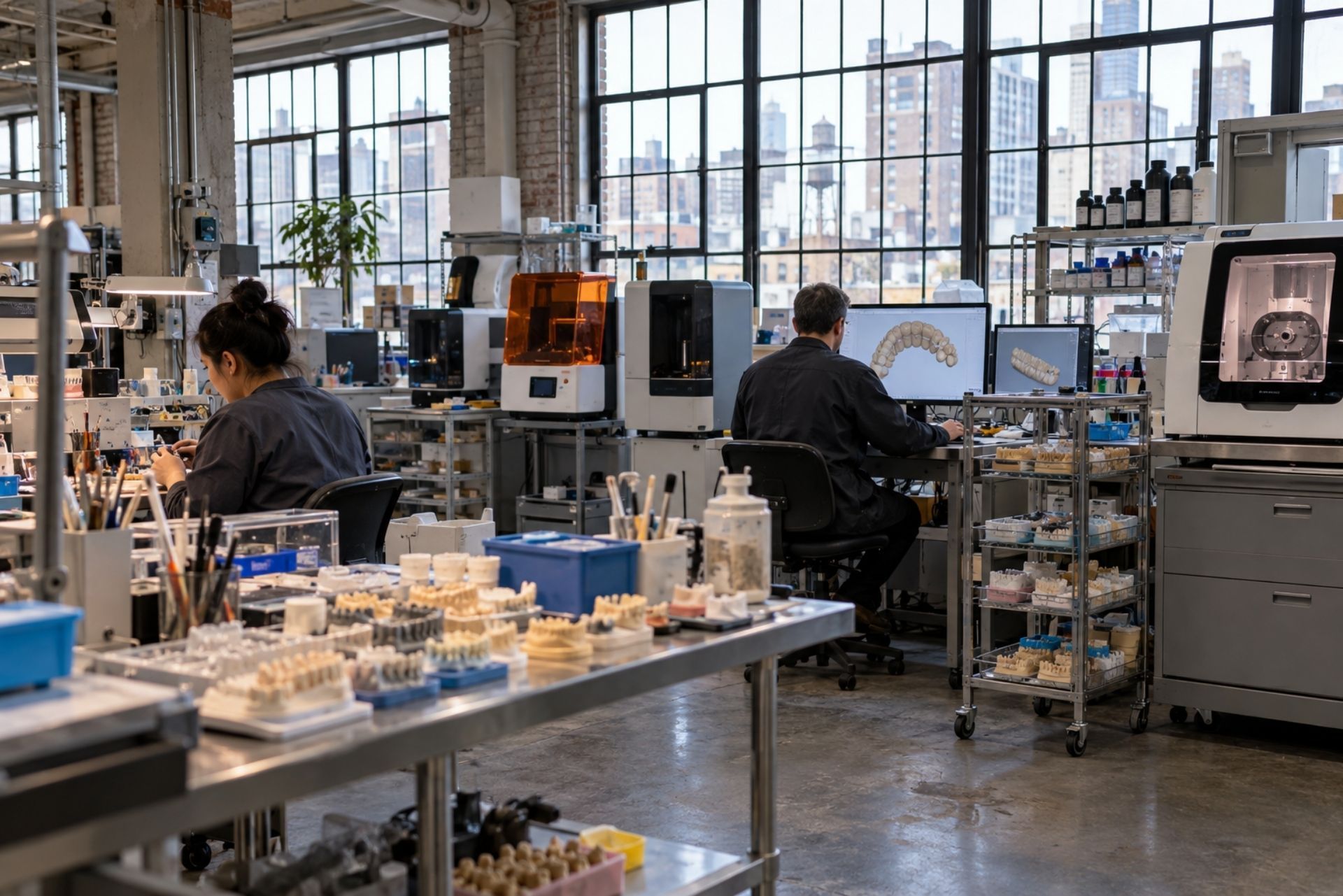
Not all claims are created equal. Some defective restorations cause minor inconvenience, like a crown that doesn't seat properly and needs a remake. Others result in serious patient harm: allergic reactions to undisclosed metals, fractured restorations that cause lacerations, or ill-fitting prosthetics that lead to bone resorption over time. The severity of the injury drives the size of the claim, and New York juries are not known for modest awards.
Material Failures: Toxic Alloys and Fractured Ceramics
Material-related claims are among the most common and most expensive. A lab that uses a nickel-beryllium alloy without confirming the patient's allergy history is sitting on a ticking clock. Beryllium sensitivity can cause chronic respiratory issues in lab technicians and severe oral reactions in patients. Fractured ceramics present a different problem: if a zirconia crown fails catastrophically during function, the sharp fragments can lacerate soft tissue.
Your products liability policy should cover bodily injury resulting from these failures. But here's the catch: if you sourced materials from an unapproved supplier or used an alloy outside the manufacturer's specifications, your insurer may deny the claim under a material misuse exclusion. Document every material lot number and supplier certificate.
Design Defects in CAD/CAM Workflows
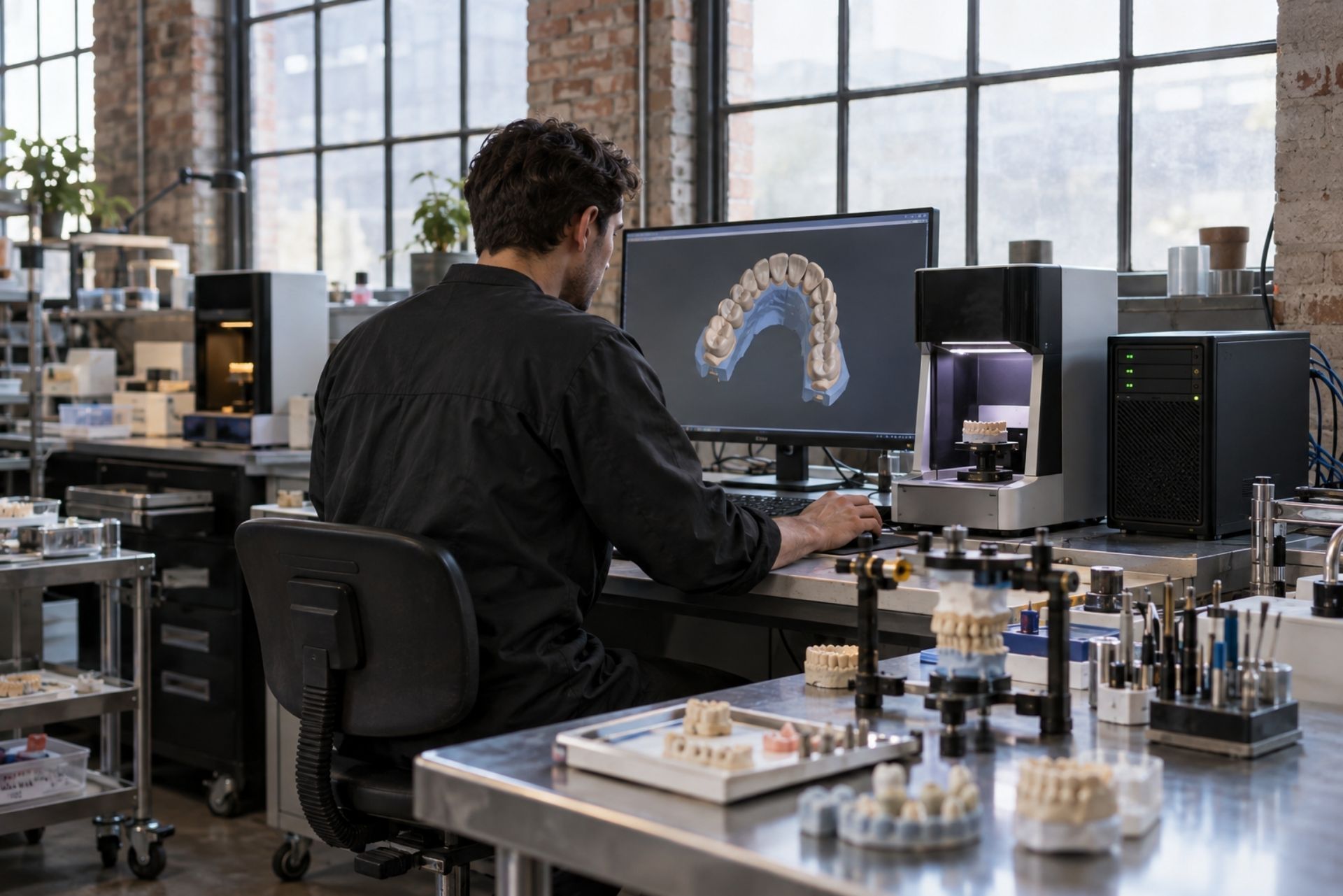
Digital workflows have reduced some fabrication errors, but they've introduced new liability risks. A design defect in a CAD/CAM restoration might stem from incorrect software parameters, outdated material libraries, or a technician overriding the software's recommended minimum wall thickness. If the digital file produces a restoration that's structurally inadequate, your lab owns that defect.
One emerging issue involves AI-assisted design tools that auto-generate crown morphology. If your lab relies on these tools without manual verification, you're trusting an algorithm with
patient safety. Courts haven't fully addressed who bears liability when AI-designed restorations fail, but your lab is the manufacturer of record. That's where the claim will land.
Financial Safeguards: Product Recall and Replacement Costs
A single defective batch of restorations can force your lab to recall dozens or even hundreds of units. The direct costs are staggering: contacting every affected dentist, arranging patient examinations, fabricating replacements, and covering the clinical chair time needed for removal and recementation.
Coverage for Batch Recalls and FDA Compliance
Product recall coverage reimburses the costs of identifying and retrieving defective products from the market. For dental labs, this includes notification expenses, shipping costs for returned units, and the administrative burden of tracking affected cases. If the FDA gets involved, which happens more often than labs expect, you'll also face compliance costs for documenting corrective actions and filing required reports.
Standard products liability policies don't always include recall coverage. It's frequently offered as an endorsement or rider, and many lab owners skip it to save on premiums. That's a mistake. A single recall event can easily exceed $50,000 in direct costs before any patient injury claims are filed.
Reimbursement for Remakes and Clinical Chair Time
Remake costs are a persistent drain on dental lab profitability even without a formal recall. Industry data shows that the hidden costs of remakes extend well beyond materials and labor, encompassing damaged client relationships, lost production time, and expedited shipping fees. When remakes are triggered by a product defect rather than a miscommunication, your products liability policy may cover the replacement fabrication and the dentist's chair time for the redo procedure.
Not every policy handles this the same way. Some reimburse only the cost of the replacement product, while others cover the downstream clinical expenses. Read your policy's "product withdrawal" or "product repair and replacement" provisions carefully. The difference between these coverage structures can be tens of thousands of dollars per incident.
Comparing Coverage: General Liability vs. Products Liability
Many lab owners assume their general liability policy covers everything. It doesn't. General liability and products liability protect against fundamentally different risks, and confusing the two is one of the most common insurance mistakes dental labs make.
Key Differences Table
| Feature | General Liability | Products Liability |
|---|---|---|
| What it covers | Third-party bodily injury or property damage at your premises | Injury or damage caused by products you manufacture |
| When it applies | During your operations (e.g., a visitor slips in your lab) | After your product leaves your facility and reaches the end user |
| Typical claim example | Delivery driver trips on a wet floor in your shop | Patient suffers allergic reaction to a crown your lab fabricated |
| Defense costs | Included up to policy limit | Included up to policy limit |
| Recall costs | Not covered | Covered if recall endorsement is added |
| Required for NY labs? | Yes, for most commercial leases and contracts | Yes, most dentist contracts require proof of products coverage |
Your lab needs both. A
comprehensive dental lab insurance program will package these together, but you should understand what each component does independently.
Choosing the right policy limits and understanding your exclusions are two of the most consequential decisions you'll make when purchasing coverage. Get either one wrong, and you could face a claim that your insurance barely touches.
Aggregate vs. Per-Occurrence Limits
Your per-occurrence limit is the maximum your insurer will pay for a single claim. Your aggregate limit is the total your insurer will pay across all claims during the policy period, typically one year. A common structure for dental labs is $1 million per occurrence with a $2 million aggregate.
Here's where it gets tricky. If your lab faces a batch defect affecting 15 patients, each patient's claim may be treated as a separate occurrence, or the insurer may argue it's a single occurrence with multiple claimants. The distinction dramatically affects how much coverage you actually have. Ask your broker how your policy defines "occurrence" in the context of batch manufacturing defects.
Standard Exclusions: Off-Label Material Use and Foreign Imports
Every products liability policy contains exclusions, and dental lab policies have some specific ones you need to know. Off-label material use is a common exclusion: if you use a material outside its FDA-cleared indications, your insurer can deny the claim. Using a temporary cement as a permanent luting agent, for example, could void your coverage entirely.
Foreign-sourced materials and components present another exclusion risk. If your lab imports zirconia blanks, alloys, or prefabricated components from manufacturers outside the U.S. that lack FDA clearance, some policies exclude resulting claims. This is particularly relevant for labs that source from overseas suppliers to reduce material costs. The savings evaporate the moment a claim is denied.
Common Questions About Dental Lab Insurance
Does my lab need products liability insurance even if I only work with one dental practice? Yes. A single patient injury claim can exceed $100,000 in legal defense and settlement costs. The number of clients you serve doesn't reduce your exposure per case.
Are CAD/CAM design errors covered under products liability? Generally, yes. If a digital design defect results in a defective physical product that injures a patient, your products liability policy should respond. However, errors in the digital file alone, without a resulting physical product defect, may fall into a gray area.
What's the average cost of products liability insurance for a small New York dental lab? Premiums vary widely based on revenue, number of employees, and types of restorations produced. A small lab with under $500,000 in annual revenue might pay between $1,500 and $4,000 annually for products liability coverage.
Will my policy cover claims from restorations I made years ago? That depends on whether you have an occurrence-based or claims-made policy. Occurrence policies cover incidents that happened during the policy period regardless of when the claim is filed. Claims-made policies only cover claims filed while the policy is active.
Do I need separate coverage for implant components? Implant abutments and custom implant prosthetics carry higher risk profiles. Some insurers charge additional premiums or require specific endorsements for implant-related work. Confirm this with your broker before accepting implant cases.
Protecting Your Lab's Future
Products liability coverage isn't a box you check and forget. It's an active part of your lab's risk management strategy that needs regular review as your services, materials, and client base evolve. A lab that added implant work or started sourcing new materials since its last policy renewal may have gaps it doesn't know about.
Your next step should be straightforward: pull out your current policy and read the exclusions section. If you see language about off-label use, foreign materials, or batch defect limitations that you don't fully understand, call your broker and get clarification before your next renewal. New York's regulatory environment for dental labs is only getting stricter, and the labs that thrive will be the ones carrying coverage that actually matches their real-world risk profile. Don't wait for a claim to find out what your policy doesn't cover.
ABOUT THE AUTHOR:
TAYLOR RICHARDSON
Taylor Richardson is the founder and CEO of 5M Insurance. With a focus on real estate risk management, Taylor helps investors and property managers nationwide secure smarter, scalable coverage solutions—without the headaches of traditional insurance brokers.
Contact Us
Comprehensive Coverage for Businesses of All Sizes
Protecting Your Business, Securing Your Future
General Liability Insurance
Protection against lawsuits and third-party claims.

Workers Comp Insurance
Required protection for employees in case of injury or illness.
Commercial Property Insurance
Coverage for buildings, equipment, and business assets.
Commercial Auto Insurance
Coverage for company vehicles and fleet operations.
Commercial Umbrella Insurance
Protection against errors, omissions, and negligence claims.
Business Owner's Policy
A bundled policy combining essential business coverages.
Personalized Insurance for Every Stage of Life
Protect What Matters Most with Comprehensive Coverage
Jewelry Insurance
Specialized protection for valuable items like engagement rings, watches, and heirlooms.
Pet Insurance
Financial protection for veterinary care and unexpected pet health expenses.
Specialized Insurance for Your Business Needs
Serving the Industries That Drive
New York & New Jersey





What Our Clients Say
Trusted by Businesses & Families Across New York & New Jersey
Frequently Asked Questions
Get Answers to Your Insurance Questions
We understand that insurance can be complex. Here are answers to some of the most common questions our clients ask. If you need more information, our team is always here to help.
- Still have questions?
How do I know what coverage I need?
Choosing the right insurance starts with understanding your risks. For personal insurance, consider factors like your home’s value, your vehicle, and your financial responsibilities. Homeowners may need additional protection for floods or valuable belongings, while drivers should evaluate coverage limits based on their assets.
For businesses, the right coverage depends on the industry, number of employees, and liability risks. General liability is essential for most businesses, but some may need property, workers’ compensation, or business owner’s policies. Our team can assess your needs and guide you to the best options.
What factors affect my insurance rate?
Insurance rates are influenced by multiple factors. For auto policies, your driving history, vehicle type, and location play a major role. Home insurance costs depend on your home’s value, construction type, and potential risks like flooding or fire hazards.
For business insurance, rates vary based on the industry, size, claims history, and coverage limits. High-risk industries may require specialized policies, while businesses with strong safety measures and claims-free histories can qualify for better rates. Our agents help find discounts and cost-saving opportunities.
Why should I work with an independent insurance agency?
Unlike captive agents who represent a single insurance company, independent agencies like Joyce Insurance Agency work with multiple carriers to find the best coverage for your needs. This means you get more choices, competitive rates, and a policy that truly fits your situation.
We take the time to understand your needs, compare options, and provide expert advice. Whether you're insuring your home, car, or business, our priority is finding you the best protection at a great value.
How quickly can I get insured?
The time it takes to secure a policy depends on the type of insurance. Auto and home policies can often be issued the same day, while business insurance may take longer, especially for specialized coverage. Workers’ compensation and commercial policies may require underwriting approval, which can extend the timeline.
We prioritize efficiency and make the process as smooth as possible. Once we understand your needs, we work quickly to get you insured with minimal hassle.
What should I do if I need to file a claim?
If you need to file a claim, contact us as soon as possible. We’ll guide you through the process and ensure you have everything needed to submit your claim correctly. Gathering necessary documentation, such as photos, receipts, or witness statements, can help speed up the process.
We work directly with your insurance provider to streamline communication and advocate on your behalf. Our goal is to make sure your claim is handled quickly and fairly so you can recover without unnecessary stress.
How can I lower my insurance costs?
There are several ways to reduce insurance premiums without sacrificing coverage. For auto insurance, maintaining a clean driving record, bundling policies, and increasing deductibles can help lower costs. Homeowners can save by installing security systems, upgrading safety features, and bundling home and auto policies.
For business owners, implementing risk management strategies, maintaining a claims-free history, and working with an independent agent to find competitive rates can lead to cost savings. Our team helps you explore discounts and options to ensure you’re getting the best value.
Contact Us
Phone
Location