A single ransomware attack can shut down your dental practice for days. Your schedule goes dark, patient records become inaccessible, and the costs start piling up before you even pick up the phone to call for help. Ransomware incidents targeting healthcare surged 58% in 2025, with a sharp spike in the final quarter aimed squarely at smaller providers, including dental offices. If you're running a practice without cyber and HIPAA insurance, you're carrying a financial risk that most dentists dramatically underestimate.
This isn't just about hackers. It's about patient records, payment fraud, vendor vulnerabilities, regulatory fines, and the spiraling response costs that follow a breach. The right insurance policy won't prevent an attack, but it can mean the difference between recovering in weeks and closing your doors permanently.
Why Dental Practices Are High-Risk Targets for Cyberattacks
Dental offices sit in a strange spot: they handle the same sensitive data as hospitals but rarely have dedicated IT security teams. Most practices run with fewer than 15 employees, a single server or cloud platform, and minimal cybersecurity training. That combination makes them attractive, low-effort targets for cybercriminals who know the payoff can be significant.
The threat isn't hypothetical. The average cost of a ransomware incident for a dental practice reached roughly $85,000 in 2025, factoring in IT recovery, legal fees, and lost production. For a solo or small-group practice, that number can be devastating.
The Value of Protected Health Information (PHI) on the Dark Web
Credit card numbers sell for a few dollars on underground markets. A complete patient health record, with Social Security numbers, insurance details, medical history, and billing data, can fetch ten to forty times more. That's because PHI can be used for identity theft, fraudulent insurance claims, and prescription fraud, all of which are harder to detect and take longer to resolve than stolen credit card charges.
Your dental practice stores exactly this kind of data. Every patient intake form, every insurance verification, every digital X-ray tied to a name and date of birth adds to the trove criminals want.
Common Vulnerabilities in Dental Practice Management Software
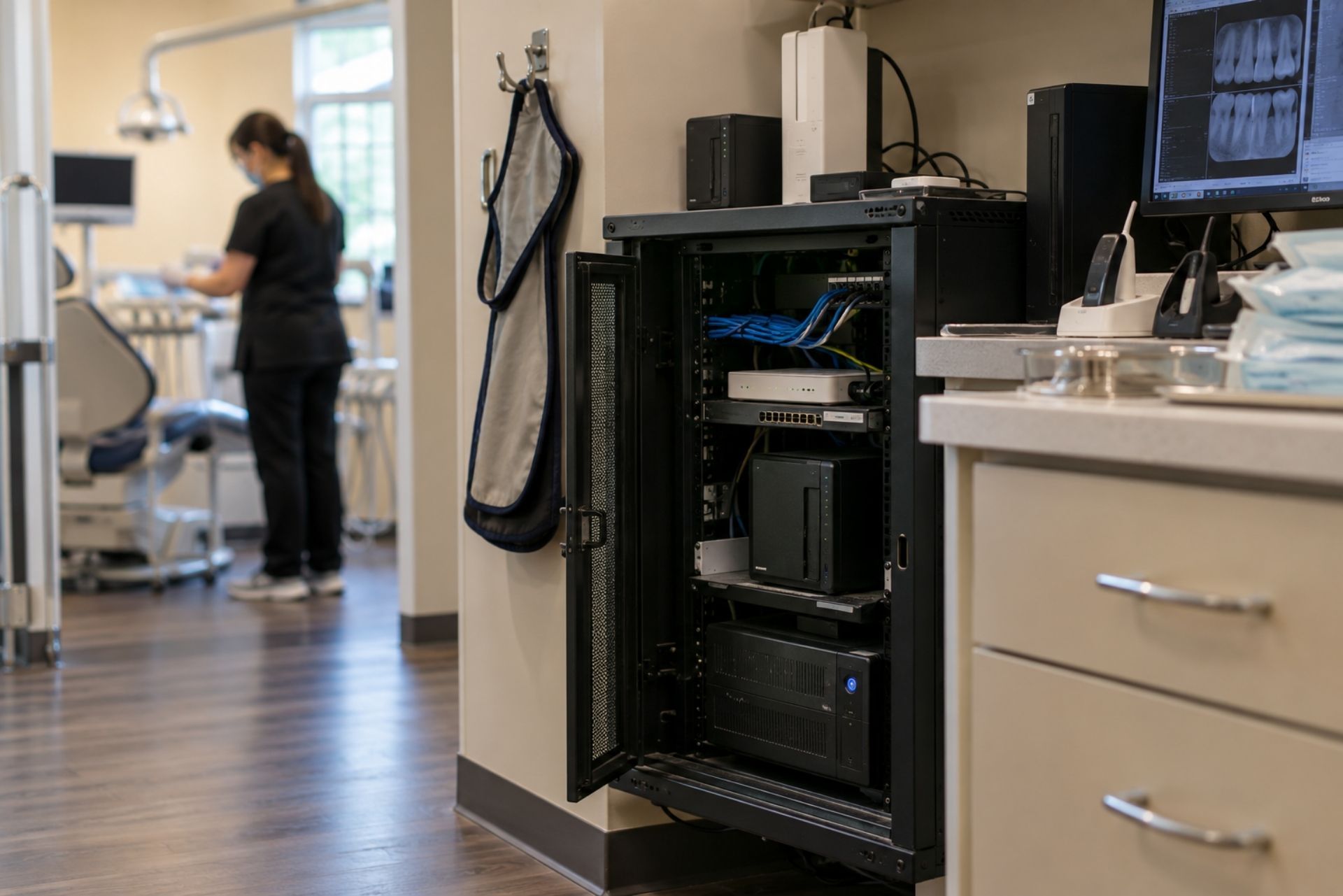
Many practices still run outdated versions of practice management software or fail to patch known security holes. Weak passwords, shared logins among staff, and unencrypted data backups are common. One cybersecurity report noted that antivirus alone isn't a cybersecurity program but merely one layer, and that for most dental groups, the real target has shifted from the server to the identity layer: staff credentials, email accounts, and remote access portals.
The 2025 breach at Absolute Dental exposed 1.2 million patient records through a compromised account held by an outside IT vendor. Your practice doesn't need to be careless to be vulnerable. Your vendors can be the weak link.

Understanding the Role of Cyber and HIPAA Liability Insurance
Standard malpractice and general liability policies weren't designed for digital threats. Cyber liability insurance fills that gap, covering the financial fallout from data breaches, ransomware attacks, and regulatory investigations. HIPAA liability coverage specifically addresses the costs tied to violations of federal patient privacy rules.
Think of these policies as two overlapping shields. Cyber insurance handles the broad category of digital threats: hacking, phishing, system failures. HIPAA coverage zeroes in on the regulatory consequences of failing to protect patient health information. Many standalone cyber policies bundle both, but you need to read the fine print.
First-Party vs. Third-Party Coverage
First-party coverage pays for your direct losses: forensic investigation, data recovery, business interruption, ransom payments, and patient notification costs. Third-party coverage protects you when someone else sues or files a complaint because of a breach. That could be a patient whose records were exposed, a business partner affected by your compromised systems, or a regulatory body levying fines.
You need both. A policy that only covers first-party costs leaves you exposed to lawsuits and HIPAA penalties. A policy that only covers third-party claims won't help you get your systems back online.
Regulatory Fines and HIPAA Settlement Costs
HIPAA fines range from $100 to $2 million per violation category per year [https://blog.hipaacertify.com/hipaa-violation-fines-real-costs/]. Proposed changes expected in late 2026 will eliminate the distinction between "required" and "addressable" safeguards, making multi-factor authentication and encryption mandatory rather than optional. That shift means more practices will face compliance gaps, and more fines will follow.
A good HIPAA liability policy covers defense costs, settlement payments, and certain regulatory penalties. Not all policies cover fines resulting from willful neglect, though, so compliance still matters.
Comparing Data Breach vs. Full Cyber Liability Policies
Some dental practices carry a basic data breach endorsement on their business owner's policy and assume they're covered. That's a dangerous assumption. A data breach endorsement typically covers notification costs and maybe some credit monitoring. It won't cover ransomware negotiations, system restoration, lost revenue during downtime, or regulatory defense.
A full standalone cyber liability policy covers a much wider range of scenarios. The difference in premium is often modest, especially compared to the gap in protection.
Comparison Table: Endorsement vs. Standalone Policy
| Coverage Area | Data Breach Endorsement (BOP Add-On) | Standalone Cyber Liability Policy |
|---|---|---|
| Patient notification costs | Usually included | Included |
| Credit monitoring | Sometimes included | Included |
| Ransomware/extortion payments | Rarely covered | Typically covered |
| Business interruption | Not covered | Covered |
| Forensic investigation | Limited or excluded | Covered |
| HIPAA defense costs | Not covered | Covered |
| Third-party lawsuits | Not covered | Covered |
| Vendor-related breaches | Not covered | Often covered |
| Typical annual premium | Varies by carrier | $1,200-$3,600 [https://insura.ai/insurance/cyber-liability-insurance-cost] |
The standalone policy costs more, but the endorsement leaves you exposed to the most expensive parts of a cyber incident.
Essential Coverage Features for Modern Dentists
Not every cyber policy is built the same. When you're shopping for coverage, these are the features that matter most for a dental practice handling protected health information, processing payments, and relying on third-party vendors.
Ransomware and Cyber Extortion Protection
Ransomware is the single biggest cyber threat to dental practices right now. A policy should cover the ransom payment itself (if you choose to pay), negotiation services, and the full cost of restoring your systems from backup. Some policies also cover the cost of hiring a breach coach or incident response firm within the first hours of discovery.
Pay attention to sub-limits. A policy with $1 million in aggregate coverage but a $50,000 sub-limit on ransomware won't go far when the average incident costs around $85,000.
Patient Notification and Credit Monitoring Services
HIPAA requires you to notify affected patients within 60 days of discovering a breach [https://medcurity.com/hipaa-penalties-2026/]. If more than 500 individuals are affected, you must also notify the Department of Health and Human Services and local media. These notifications cost money: printing, mailing, call center setup, and credit monitoring subscriptions for affected patients.
Your policy should cover all of these costs without restrictive caps. Some carriers include access to pre-arranged notification vendors, which speeds up the process considerably.
Business Interruption and Lost Revenue Recovery
When your systems go down, you can't see patients, process claims, or collect payments. Business interruption coverage reimburses lost income during the downtime period and can also cover extra expenses you incur to keep operating, like renting temporary equipment or paying overtime to staff catching up on rescheduled appointments.
Check the waiting period. Some policies don't kick in until 8 or 12 hours after the incident. Others start from the moment systems go offline.
Common Questions About Dental Cyber Coverage
Does my Business Owner's Policy (BOP) already cover cyber attacks?
Almost certainly not in any meaningful way. A BOP may include a small data breach endorsement, but it won't cover ransomware, business interruption from a cyber event, or HIPAA defense costs. Treat any BOP cyber add-on as a starting point, not a solution.
What is the average cost of a cyber policy for a small practice?
For a dental practice with 5-15 employees and $1 million in coverage, expect to pay between $1,000 and $3,500 annually. Premiums vary based on your revenue, the number of patient records you store, and your existing security controls. In 2026, carriers require proof of MFA and endpoint detection before issuing policies, so practices without these controls may face higher premiums or outright denials.
Will insurance pay my HIPAA fines if I'm not compliant?
It depends on the policy and the nature of the violation. Most policies cover fines resulting from unintentional violations or reasonable oversights. Fines stemming from willful neglect or knowing disregard of HIPAA rules are typically excluded. The policy protects you when you've made a good-faith effort to comply, not when you've ignored the rules.
Do I need this if I use a cloud-based dental software?
Yes. Cloud-based software reduces some risks but doesn't eliminate them. Your vendor's breach can become your breach, as the Absolute Dental incident demonstrated. You're still responsible for access controls, staff training, and HIPAA compliance on your end. Your cloud provider's liability is limited by their service agreement, and it rarely covers your losses.
What should I do immediately after discovering a data breach?
Isolate affected systems, don't turn them off. Contact your cyber insurance carrier's incident response hotline, which should be available 24/7. Document everything you observe. Don't attempt to negotiate with attackers on your own. Your carrier will connect you with forensic investigators, legal counsel, and breach notification specialists.
Before You Buy a Policy
Cyber and HIPAA insurance for dental practices isn't a luxury anymore. It's a baseline operational expense, like malpractice coverage or property insurance. The threats are real, the costs are quantifiable, and the regulatory environment is tightening.
Before you sign a policy, take three steps. First, run a current risk assessment of your practice: know where your patient data lives, who has access, and what security controls you have in place. Second, get quotes from at least two carriers that specialize in healthcare cyber coverage, not general commercial insurers. Third, read the exclusions. Every policy has them, and the ones that matter most are sub-limits on ransomware, waiting periods for business interruption, and carve-outs for non-compliant practices.
Your patients trust you with their health information. The right policy ensures you can honor that trust even when things go wrong.
ABOUT THE AUTHOR:
TAYLOR RICHARDSON
Taylor Richardson is the founder and CEO of 5M Insurance. With a focus on real estate risk management, Taylor helps investors and property managers nationwide secure smarter, scalable coverage solutions—without the headaches of traditional insurance brokers.
Contact Us
Comprehensive Coverage for Businesses of All Sizes
Protecting Your Business, Securing Your Future
General Liability Insurance
Protection against lawsuits and third-party claims.

Workers Comp Insurance
Required protection for employees in case of injury or illness.
Commercial Property Insurance
Coverage for buildings, equipment, and business assets.
Commercial Auto Insurance
Coverage for company vehicles and fleet operations.
Commercial Umbrella Insurance
Protection against errors, omissions, and negligence claims.
Business Owner's Policy
A bundled policy combining essential business coverages.
Personalized Insurance for Every Stage of Life
Protect What Matters Most with Comprehensive Coverage
Jewelry Insurance
Specialized protection for valuable items like engagement rings, watches, and heirlooms.
Pet Insurance
Financial protection for veterinary care and unexpected pet health expenses.
Specialized Insurance for Your Business Needs
Serving the Industries That Drive
New York & New Jersey






What Our Clients Say
Trusted by Businesses & Families Across New York & New Jersey
Frequently Asked Questions
Get Answers to Your Insurance Questions
We understand that insurance can be complex. Here are answers to some of the most common questions our clients ask. If you need more information, our team is always here to help.
- Still have questions?
How do I know what coverage I need?
Choosing the right insurance starts with understanding your risks. For personal insurance, consider factors like your home’s value, your vehicle, and your financial responsibilities. Homeowners may need additional protection for floods or valuable belongings, while drivers should evaluate coverage limits based on their assets.
For businesses, the right coverage depends on the industry, number of employees, and liability risks. General liability is essential for most businesses, but some may need property, workers’ compensation, or business owner’s policies. Our team can assess your needs and guide you to the best options.
What factors affect my insurance rate?
Insurance rates are influenced by multiple factors. For auto policies, your driving history, vehicle type, and location play a major role. Home insurance costs depend on your home’s value, construction type, and potential risks like flooding or fire hazards.
For business insurance, rates vary based on the industry, size, claims history, and coverage limits. High-risk industries may require specialized policies, while businesses with strong safety measures and claims-free histories can qualify for better rates. Our agents help find discounts and cost-saving opportunities.
Why should I work with an independent insurance agency?
Unlike captive agents who represent a single insurance company, independent agencies like Joyce Insurance Agency work with multiple carriers to find the best coverage for your needs. This means you get more choices, competitive rates, and a policy that truly fits your situation.
We take the time to understand your needs, compare options, and provide expert advice. Whether you're insuring your home, car, or business, our priority is finding you the best protection at a great value.
How quickly can I get insured?
The time it takes to secure a policy depends on the type of insurance. Auto and home policies can often be issued the same day, while business insurance may take longer, especially for specialized coverage. Workers’ compensation and commercial policies may require underwriting approval, which can extend the timeline.
We prioritize efficiency and make the process as smooth as possible. Once we understand your needs, we work quickly to get you insured with minimal hassle.
What should I do if I need to file a claim?
If you need to file a claim, contact us as soon as possible. We’ll guide you through the process and ensure you have everything needed to submit your claim correctly. Gathering necessary documentation, such as photos, receipts, or witness statements, can help speed up the process.
We work directly with your insurance provider to streamline communication and advocate on your behalf. Our goal is to make sure your claim is handled quickly and fairly so you can recover without unnecessary stress.
How can I lower my insurance costs?
There are several ways to reduce insurance premiums without sacrificing coverage. For auto insurance, maintaining a clean driving record, bundling policies, and increasing deductibles can help lower costs. Homeowners can save by installing security systems, upgrading safety features, and bundling home and auto policies.
For business owners, implementing risk management strategies, maintaining a claims-free history, and working with an independent agent to find competitive rates can lead to cost savings. Our team helps you explore discounts and options to ensure you’re getting the best value.
Contact Us
Phone
Location