A single CAD/CAM milling machine can cost your lab anywhere from $20,000 to over $250,000. A high-end 3D printer for dental restorations isn't far behind. These machines are the backbone of your production line, and when one goes down unexpectedly, you don't just lose a piece of equipment: you lose revenue, client trust, and potentially months of backlogged cases. Equipment breakdown insurance for
dental labs in New York covers exactly these scenarios, protecting your investment in CAD/CAM mills, 3D printers, and other precision technology from mechanical failure, electrical damage, and operational disruptions. But not all policies are built the same, and understanding the details around deductibles, downtime coverage, and claims procedures can mean the difference between a minor inconvenience and a financial crisis. This guide breaks down what New York dental labs need to know to protect their most expensive assets.
Understanding Equipment Breakdown Insurance for NY Labs
Equipment breakdown insurance, sometimes called boiler and machinery coverage, is specifically designed to cover sudden, accidental mechanical or electrical failure in your production equipment. For dental labs, this means protection for milling machines, sintering furnaces, 3D printers, compressors, and the computer systems that drive them.
This type of policy kicks in where standard property insurance stops. It typically covers the cost of repair or replacement, spoilage of materials in progress, and in many cases, lost income during the repair window. For a New York dental lab running tight production schedules, that income protection alone can justify the premium.
Why Standard Property Insurance Often Falls Short
Most lab owners assume their commercial property policy covers everything. It doesn't. Standard property insurance is built around external perils: fire, theft, windstorms, vandalism. If a voltage regulator fails inside your five-axis mill and fries the spindle motor, that's an internal mechanical breakdown, and your property policy will almost certainly exclude it.
The same applies to operator error. If a technician loads incorrect toolpath settings and the mill crashes its bur into a titanium block, destroying the collet assembly, that's not a covered peril under most property forms. Equipment breakdown insurance fills this gap. It covers internal failures, electrical arcing, motor burnout, and even certain operator-caused damage depending on your policy terms.
New York Specific Risks: Power Surges and Grid Stability
New York City's electrical infrastructure presents a unique risk for labs running sensitive digital equipment. The New York ISO has warned that reliability margins for the NYC grid are projected to be dangerously thin starting in 2026, with potential violations on Long Island as well. Brownouts and voltage fluctuations can damage sensitive servo motors, control boards, and laser components in your printers.
Surge protectors and UPS systems help, but they aren't foolproof. A lab in Queens or Brooklyn faces different grid stress than one in Rochester. Equipment breakdown coverage accounts for electrical damage regardless of cause, giving you a safety net that surge strips simply can't provide.

High-Value Assets: Protecting CAD/CAM Mills and 3D Printers
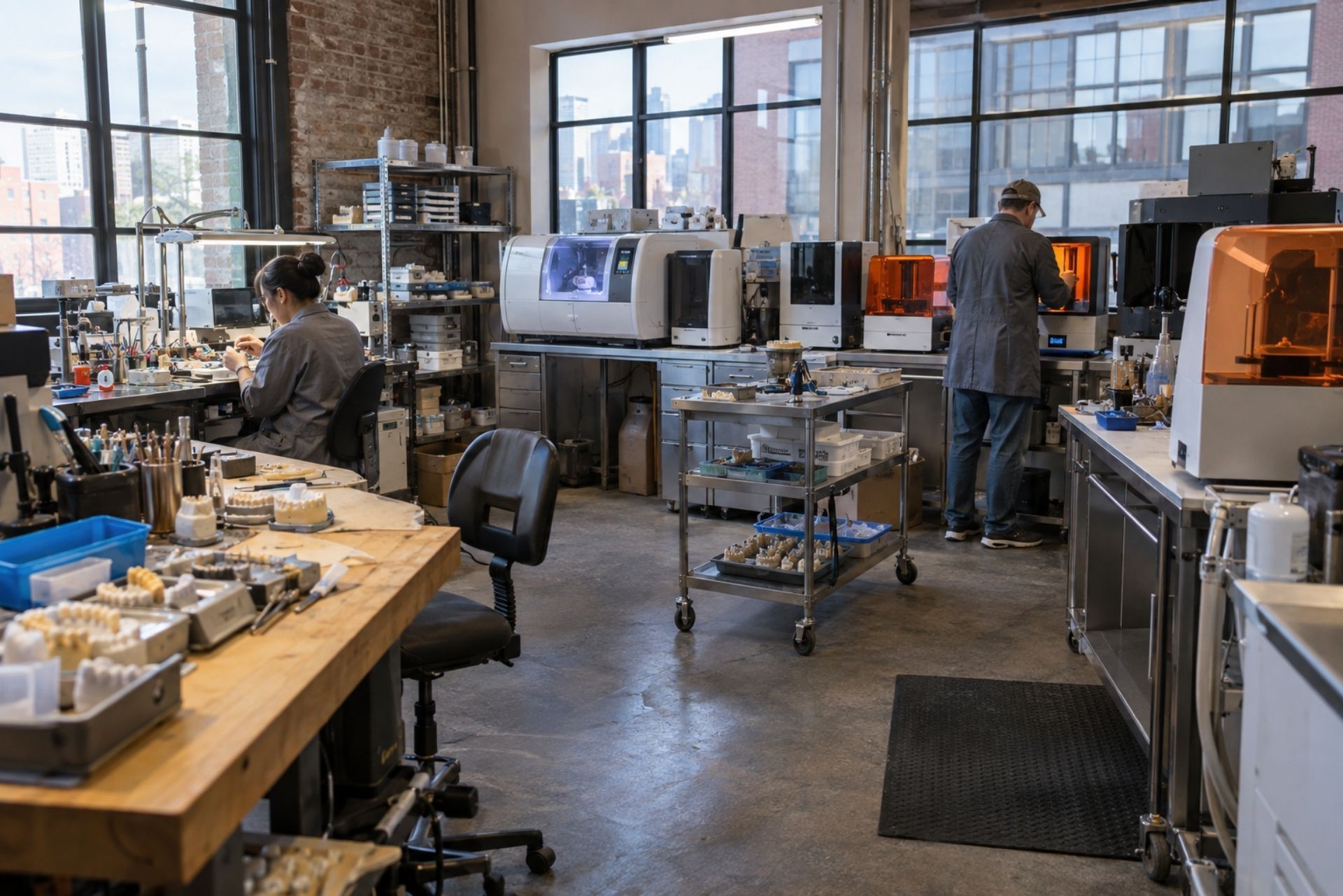
Your milling machines and 3D printers represent the highest concentration of capital in your lab. A mid-range five-axis dental mill can run between $40,000 and $250,000 depending on the brand and capabilities, and that's before you factor in annual tooling, calibration, and software licensing. Resin-based and metal 3D printers carry similar price tags at the professional level.
Protecting these assets isn't optional: it's a financial necessity. Your policy should list each major piece of equipment on the schedule of covered items, with replacement values updated annually.
Mechanical Failure in Precision Milling Components
CAD/CAM mills operate under extreme precision tolerances, often within 10 to 20 microns. Spindle bearings wear out. Coolant pumps fail. Tool changers jam. These aren't rare events; they're inevitable over time. The question is whether you're paying for repairs out of pocket or through a policy designed for exactly this scenario.
One common claim involves spindle failure during high-speed milling of zirconia. The spindle seizes, the bur snaps, and the resulting vibration damages the linear guides. A repair bill of $8,000 to $15,000 isn't unusual. Regular maintenance and troubleshooting protocols are critical for extending the life of CAD/CAM dental equipment, but even well-maintained machines break down eventually.
Software and Electrical Issues in Additive Manufacturing
3D printers introduce a different set of failure modes. Laser diodes degrade. Galvanometer mirrors lose calibration. Resin heating elements short out. These are electrical and optical failures that standard property insurance won't touch.
Software glitches can also cause physical damage. A corrupted build file can cause a printer to run its laser continuously in one spot, warping the build plate or damaging the optical window. If your policy includes coverage for damage resulting from software malfunction, you're protected. If it doesn't, you're absorbing that cost yourself. Always confirm this with your broker before signing.
Coverage Comparison: Basic vs. Comprehensive Plans
Not all equipment breakdown policies offer the same scope of protection. A basic plan might cover only direct physical damage to the machine, while a comprehensive plan extends to lost income, expediting expenses, spoilage, and even data restoration costs. For a dental lab, the difference matters enormously.
Comparison Table: Standard Property vs. Breakdown Coverage
| Coverage Feature | Standard Property Policy | Equipment Breakdown Policy |
|---|---|---|
| Fire / Theft / Vandalism | Covered | Not typically included |
| Internal Mechanical Failure | Excluded | Covered |
| Electrical Arcing / Surge Damage | Usually excluded | Covered |
| Motor / Compressor Burnout | Excluded | Covered |
| Operator Error Damage | Excluded | Covered (varies by policy) |
| Spoilage of Materials in Progress | Excluded | Covered |
| Business Income Loss (Downtime) | Separate endorsement needed | Often included |
| Expediting / Overnight Shipping for Parts | Not covered | Covered (comprehensive plans) |
| Data Restoration | Rarely covered | Available as add-on |
The takeaway here is straightforward: if your lab depends on
digital manufacturing equipment, a standard property policy alone leaves significant gaps. You need both.
Managing Deductibles and Business Downtime Costs
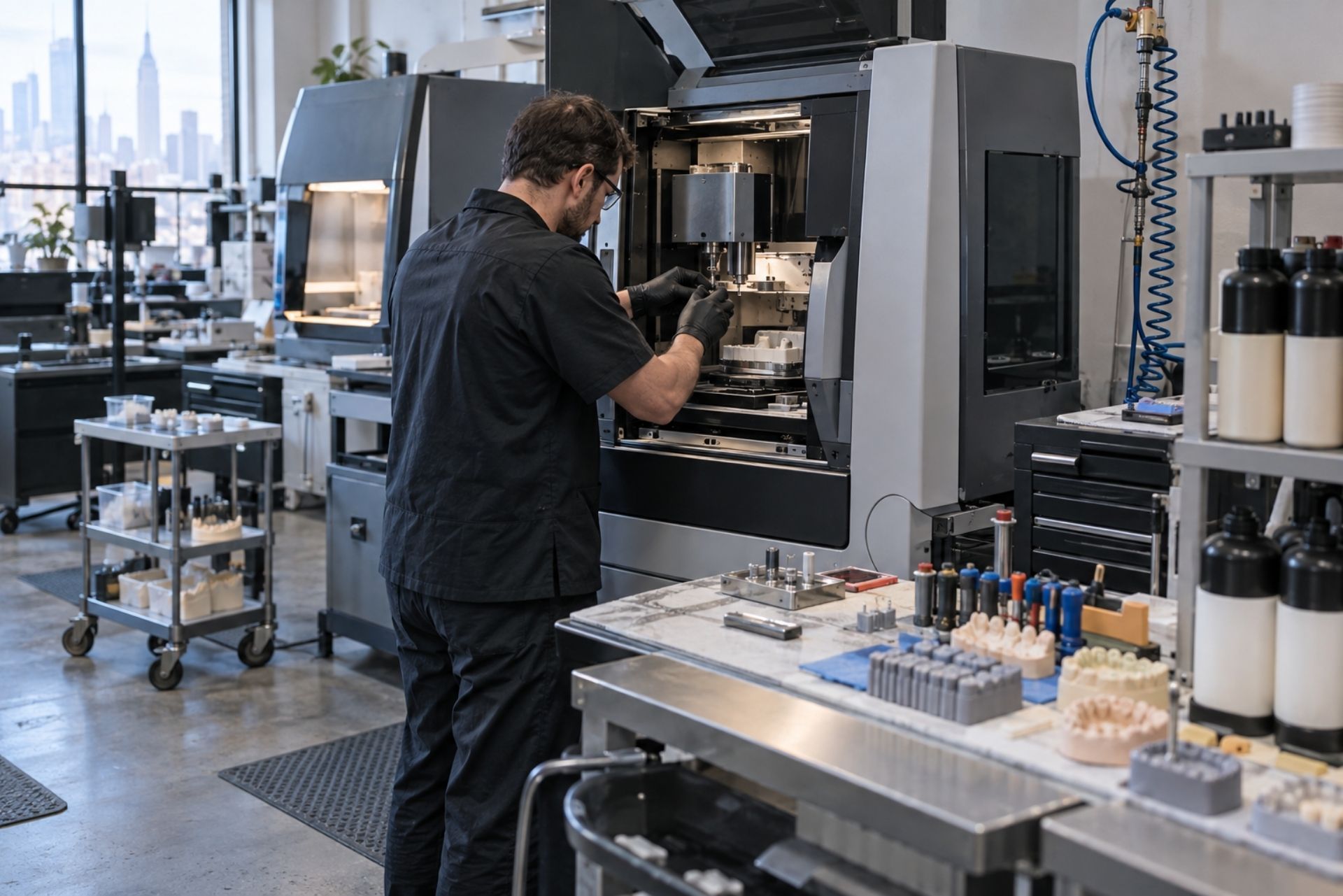
Choosing the right deductible is one of the most consequential decisions you'll make when purchasing dental lab equipment breakdown insurance in New York. A higher deductible lowers your annual premium but increases your out-of-pocket exposure on every claim. For labs with thin margins, that tradeoff requires careful math.
Calculating the Real Price of a 48-Hour Lab Shutdown
Think about what happens when your primary mill goes down for two days. You can't produce crowns, bridges, or implant abutments. Cases back up. Dentists start calling. Some send their work to a competitor lab.
A mid-size New York dental lab producing 40 to 60 units per day at an average revenue of $80 to $150 per unit is looking at $6,400 to $18,000 in lost revenue over 48 hours. That doesn't include rush shipping fees for outsourced cases, overtime labor to catch up, or the cost of materials wasted in interrupted builds. The real cost of downtime almost always exceeds the repair bill itself. With 58% of dental practices now committing to automation and digital workflows, your clients expect fast turnaround, and they won't wait.
Choosing a Deductible That Balances Premium and Risk
Most equipment breakdown policies offer deductibles ranging from $1,000 to $10,000. Here's a practical way to think about it: if your lab can absorb a $5,000 unexpected expense without disrupting operations, a $5,000 deductible makes sense. If that would strain your cash flow, drop it to $2,500 or lower.
Keep in mind that some policies apply the deductible per occurrence, while others apply it per piece of equipment. A single power surge that damages three machines could trigger three separate deductibles under the wrong policy structure. Ask your broker to clarify this before you bind coverage.
The Claims Process for Dental Lab Technology
Filing a claim on specialized dental equipment isn't like filing a claim for a broken window. Insurers often require detailed documentation, manufacturer repair estimates, and proof that the failure wasn't caused by neglected maintenance. Knowing the process in advance saves you time and frustration when you're already dealing with a production crisis.
Documenting Damage and Expediting Repairs
The moment a machine fails, document everything. Take photos of the equipment, error codes on the display, and any visible damage. Save the build file or job log that was running when the failure occurred. Contact the manufacturer or an authorized repair service to get a written diagnosis and repair estimate.
Here's what a solid claims submission looks like:
- Date and time of the failure
- Photos and video of the damaged equipment
- Error codes or diagnostic readouts
- Written repair estimate from a qualified technician
- Maintenance records showing regular service history
- Documentation of any lost production or spoiled materials
Most insurers will assign an adjuster who specializes in mechanical equipment. Having your records organized speeds up approval. Some comprehensive policies also cover expediting expenses: the cost of overnight shipping for parts or flying in a specialist technician. If your policy includes this, use it. Getting back online 48 hours sooner can save thousands.
Common Questions About Lab Equipment Insurance
FAQ: Coverage Limits, Maintenance, and Claims
Does my equipment need to be under manufacturer warranty for coverage to apply? No. Equipment breakdown insurance covers machines regardless of warranty status. In fact, it's most valuable after the manufacturer warranty expires, which is when most failures occur.
Will the insurer deny my claim if I haven't followed the manufacturer's maintenance schedule? Possibly. Most policies require you to maintain equipment according to manufacturer guidelines. If an adjuster finds evidence of neglected maintenance, your claim could be reduced or denied. Keep all service records.
Are coverage limits per machine or per incident? This varies by policy. Some set a per-item limit based on the equipment schedule, while others cap coverage per occurrence. A comprehensive policy typically offers both, with a higher aggregate annual limit.
Can I insure leased equipment? Yes, but check your lease agreement first. The leasing company may require you to carry equipment breakdown coverage and may dictate minimum coverage amounts.
How long does a typical claim take to resolve? Simple claims with clear documentation often settle within two to four weeks. Complex claims involving custom-manufactured parts or disputed cause of failure can take longer. Thorough documentation at the outset is the single best thing you can do to speed the process.
Does this cover my CAM software licenses if a hardware failure corrupts my data?
Some comprehensive plans include data restoration coverage, which can pay for software reinstallation and data recovery. This isn't standard on basic plans, so confirm with your broker.
Making the Right Choice for Your Lab's Future
Your dental lab's equipment is both its greatest asset and its greatest vulnerability. A single uninsured breakdown on a primary CAD/CAM mill or 3D printer can cascade into weeks of lost production, damaged client relationships, and tens of thousands in unrecoverable costs. New York labs face additional exposure from aging grid infrastructure, high operating costs, and a competitive market where clients won't tolerate delays.
The right equipment breakdown policy doesn't just cover repairs. It protects your revenue stream, your reputation, and your ability to keep producing while a machine is down. Review your current coverage, confirm that every major piece of equipment is scheduled at its correct replacement value, and make sure your deductible reflects what your business can actually absorb.
Talk to a broker who understands dental lab operations, not just general commercial insurance. Bring your equipment list, your maintenance records, and your questions. The cost of the right policy is always less than the cost of the wrong surprise.
ABOUT THE AUTHOR:
TAYLOR RICHARDSON
Taylor Richardson is the founder and CEO of 5M Insurance. With a focus on real estate risk management, Taylor helps investors and property managers nationwide secure smarter, scalable coverage solutions—without the headaches of traditional insurance brokers.
Contact Us
Comprehensive Coverage for Businesses of All Sizes
Protecting Your Business, Securing Your Future
General Liability Insurance
Protection against lawsuits and third-party claims.

Workers Comp Insurance
Required protection for employees in case of injury or illness.
Commercial Property Insurance
Coverage for buildings, equipment, and business assets.
Commercial Auto Insurance
Coverage for company vehicles and fleet operations.
Commercial Umbrella Insurance
Protection against errors, omissions, and negligence claims.
Business Owner's Policy
A bundled policy combining essential business coverages.
Personalized Insurance for Every Stage of Life
Protect What Matters Most with Comprehensive Coverage
Jewelry Insurance
Specialized protection for valuable items like engagement rings, watches, and heirlooms.
Pet Insurance
Financial protection for veterinary care and unexpected pet health expenses.
Specialized Insurance for Your Business Needs
Serving the Industries That Drive
New York & New Jersey



What Our Clients Say
Trusted by Businesses & Families Across New York & New Jersey
Frequently Asked Questions
Get Answers to Your Insurance Questions
We understand that insurance can be complex. Here are answers to some of the most common questions our clients ask. If you need more information, our team is always here to help.
- Still have questions?
How do I know what coverage I need?
Choosing the right insurance starts with understanding your risks. For personal insurance, consider factors like your home’s value, your vehicle, and your financial responsibilities. Homeowners may need additional protection for floods or valuable belongings, while drivers should evaluate coverage limits based on their assets.
For businesses, the right coverage depends on the industry, number of employees, and liability risks. General liability is essential for most businesses, but some may need property, workers’ compensation, or business owner’s policies. Our team can assess your needs and guide you to the best options.
What factors affect my insurance rate?
Insurance rates are influenced by multiple factors. For auto policies, your driving history, vehicle type, and location play a major role. Home insurance costs depend on your home’s value, construction type, and potential risks like flooding or fire hazards.
For business insurance, rates vary based on the industry, size, claims history, and coverage limits. High-risk industries may require specialized policies, while businesses with strong safety measures and claims-free histories can qualify for better rates. Our agents help find discounts and cost-saving opportunities.
Why should I work with an independent insurance agency?
Unlike captive agents who represent a single insurance company, independent agencies like Joyce Insurance Agency work with multiple carriers to find the best coverage for your needs. This means you get more choices, competitive rates, and a policy that truly fits your situation.
We take the time to understand your needs, compare options, and provide expert advice. Whether you're insuring your home, car, or business, our priority is finding you the best protection at a great value.
How quickly can I get insured?
The time it takes to secure a policy depends on the type of insurance. Auto and home policies can often be issued the same day, while business insurance may take longer, especially for specialized coverage. Workers’ compensation and commercial policies may require underwriting approval, which can extend the timeline.
We prioritize efficiency and make the process as smooth as possible. Once we understand your needs, we work quickly to get you insured with minimal hassle.
What should I do if I need to file a claim?
If you need to file a claim, contact us as soon as possible. We’ll guide you through the process and ensure you have everything needed to submit your claim correctly. Gathering necessary documentation, such as photos, receipts, or witness statements, can help speed up the process.
We work directly with your insurance provider to streamline communication and advocate on your behalf. Our goal is to make sure your claim is handled quickly and fairly so you can recover without unnecessary stress.
How can I lower my insurance costs?
There are several ways to reduce insurance premiums without sacrificing coverage. For auto insurance, maintaining a clean driving record, bundling policies, and increasing deductibles can help lower costs. Homeowners can save by installing security systems, upgrading safety features, and bundling home and auto policies.
For business owners, implementing risk management strategies, maintaining a claims-free history, and working with an independent agent to find competitive rates can lead to cost savings. Our team helps you explore discounts and options to ensure you’re getting the best value.
Contact Us
Phone
Location