A single
carpal tunnel claim from a dental technician can cost your lab $30,000 or more in
medical bills, lost wages, and legal fees. Multiply that across a team of five or six techs working with precision instruments, methyl methacrylate, and silica dust eight hours a day, and the
financial exposure becomes serious. Workers' compensation coverage for New York dental laboratories isn't optional: it's required by state law, and the penalties for going without it are steep. Whether you're running a small crown-and-bridge operation in Queens or a full-service lab in Buffalo, understanding your obligations around technician injuries, chemical hazards, proper class codes, and annual audits can save you thousands of dollars and keep your business compliant. Here's good news worth noting upfront: New York dental labs will see a significant 21.9% average decrease in workers' compensation loss costs effective October 1, 2026, which means your premiums should drop if your experience mod and classification stay clean.
New York Workers' Compensation Laws for Dental Lab Owners
New York is one of the strictest states in the country on workers' comp enforcement. Every dental lab owner needs to understand the rules before they end up on the wrong side of the Workers' Compensation Board.
Mandatory Coverage Requirements in New York State
If you have even one employee, you need workers' compensation insurance. New York doesn't offer exemptions for small businesses the way some states do. Part-time, full-time, and seasonal workers all count. You can obtain coverage through the New York State Insurance Fund (NYSIF), a private carrier, or a self-insurance plan if your lab is large enough to qualify.
Corporate officers and LLC members can sometimes exclude themselves from coverage, but the paperwork must be filed correctly. If you haven't filed a formal exclusion with your carrier, you're covered by default, and that drives up your premium. Many lab owners don't realize this until their first audit.
Penalties for Lapsed Coverage and Non-Compliance
The consequences for operating without coverage are harsh. The Workers' Compensation Board can issue stop-work orders that shut your lab down immediately. Fines start at $2,000 for every 10-day period without coverage, and they can reach $50,000. Repeat offenders face criminal charges.
Even a brief lapse between policies counts. If your coverage expires on a Friday and your new policy doesn't start until Monday, those two days create liability. Set renewal reminders at least 60 days out, and confirm your new policy's effective date in writing.

Common Occupational Hazards for Dental Technicians
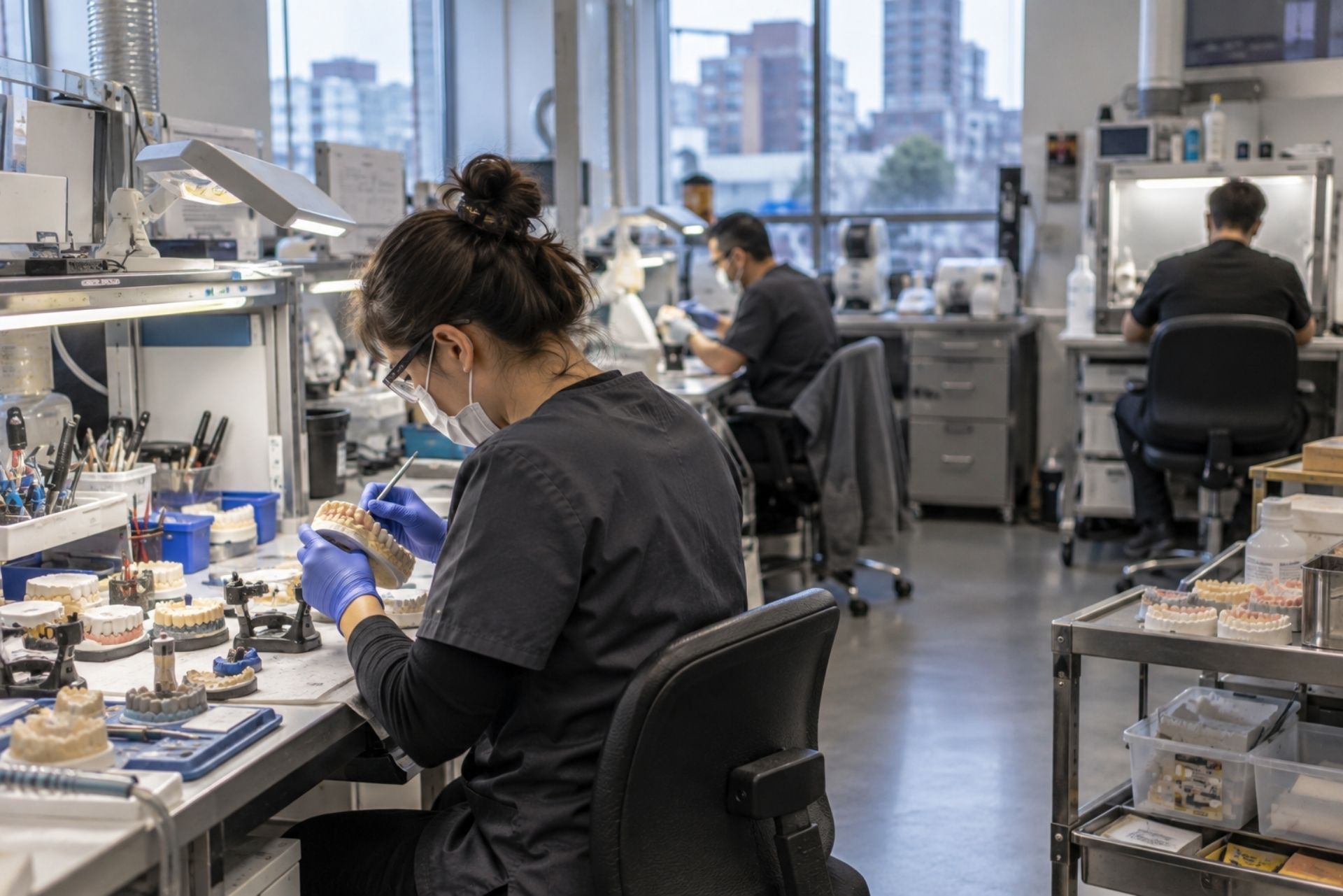
Dental labs aren't factories, but they carry real occupational risks. Your technicians work with heat, sharp tools, fine particulates, and volatile chemicals daily.
Repetitive Strain and Ergonomic Injuries
Technicians spend hours hunched over benches, carving wax patterns, finishing crowns, and adjusting prosthetics with hand tools. Carpal tunnel syndrome, tendinitis, and chronic neck or shoulder pain are the most common claims in dental lab settings. These injuries develop slowly, which means they're often reported late and cost more to treat.
Ergonomic workstations, adjustable chairs, and scheduled micro-breaks can reduce these claims. Documenting your ergonomic program also helps during audits because it shows your carrier you're actively managing risk.
Chemical Exposure and Respiratory Risks
Methyl methacrylate (MMA) is a staple in dental labs, and it's genuinely dangerous. This chemical, which recently forced the evacuation of 40,000 residents after a California leak, causes skin sensitization, respiratory irritation, and neurological symptoms with prolonged exposure. Your technicians handle it routinely.
Silica dust from grinding ceramic and zirconia restorations is another serious hazard. OSHA's general industry silica rule sets strict permissible exposure limits, and dental labs that skip proper ventilation or dust collection systems risk both employee health and regulatory fines. Beryllium in some alloys adds another layer of concern. Proper ventilation, PPE, and exposure monitoring aren't just good practice: they directly affect your workers' comp claim frequency.
Burn and Sharp Object Injuries in the Lab
Casting equipment, Bunsen burners, and porcelain ovens create burn risks that are easy to underestimate. Technicians also work with rotary instruments, burs, and sharp hand tools that cause lacerations. These acute injuries typically generate smaller claims than repetitive strain or chemical exposure, but they're more frequent.
Keep first aid kits stocked and ensure your team knows your reporting procedures. Prompt reporting of even minor injuries prevents small incidents from becoming expensive claims later.
Your workers' comp premium depends heavily on how your employees are classified. Getting this wrong is one of the most expensive mistakes a dental lab owner can make.
Comparison: Class Code 4692 vs. Clerical 8810
Most dental lab technicians fall under NCCI Class Code 4692, which covers dental laboratory work. This code carries a higher rate than clerical codes because of the physical risks involved. If you also employ office staff who handle scheduling, billing, or customer service and never enter the production area, those employees should be classified under Code 8810 (clerical).
The difference matters. Class Code 8810 rates are a fraction of 4692 rates. Failing to separate your payroll by classification means you're paying lab-technician rates on your receptionist's salary. On the flip side, misclassifying a technician as clerical to save money will trigger penalties during your audit.
You can review the latest rate filings from the New York Compensation Insurance Rating Board to verify current loss costs for your classifications.
Table: Premium Rate Factors for Lab Staff
| Factor | Class Code 4692 (Lab Tech) | Class Code 8810 (Clerical) |
|---|---|---|
| Risk Level | Moderate-High | Low |
| Typical Rate per $100 Payroll | $2.50 - $4.00 | $0.15 - $0.30 |
| Common Injuries | Repetitive strain, chemical exposure, burns | Minimal (ergonomic only) |
| Experience Mod Impact | Significant | Minimal |
| Audit Scrutiny | High | Low |
These figures are approximate and vary by carrier and experience modification rate. The 21.9% loss cost decrease taking effect October 2026 should bring Code 4692 rates down noticeably.
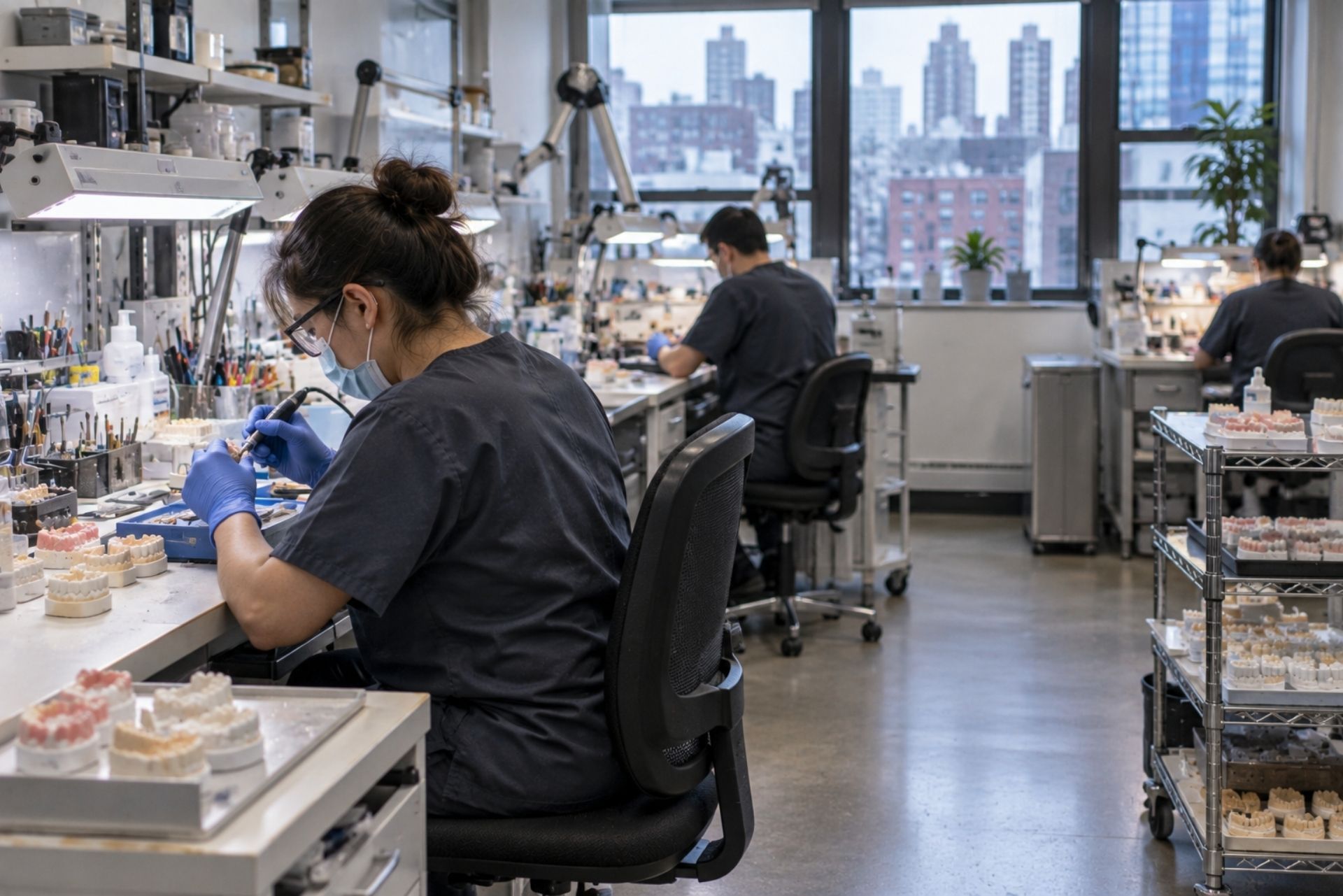
Every workers' comp policy in New York is subject to an annual audit. This isn't optional, and ignoring audit requests can result in estimated premiums that are much higher than what you'd actually owe.
Documentation Needed for NYSIF and Private Carriers
Your auditor will request payroll records broken down by classification code, tax returns, quarterly wage reports (NYS-45 forms), and certificates of insurance for any subcontractors. Having these organized before the auditor arrives saves time and reduces errors.
Keep your payroll records separated by job function throughout the year, not just at audit time. If your bookkeeper lumps all wages into one category, you'll spend hours sorting it out, and any ambiguity usually gets resolved in the carrier's favor, not yours. Digital payroll systems that allow custom job-code tracking make this much easier.
Avoiding Common Mistakes with 1099 Contractors
Here's where many dental lab owners get caught. If you use independent contractors, like a freelance ceramist or a part-time CAD designer, and those contractors don't carry their own workers' comp policy, your carrier will add their payments to your payroll during the audit. That means you'll pay premiums on their earnings at your highest applicable rate.
Get certificates of insurance from every 1099 contractor before they start work. Verify the certificates are current. If a contractor's policy lapses mid-project, their compensation gets added to your audit. This single mistake can add thousands to your annual premium.
Common Questions About Dental Lab Insurance
Do I need coverage if I only have one part-time technician?
Yes. New York requires workers' comp for all employers regardless of how many hours an employee works. Even a technician who comes in 10 hours a week must be covered.
Are repetitive motion injuries like carpal tunnel covered?
They are. New York workers' compensation covers occupational diseases and repetitive stress injuries. The employee needs to demonstrate the condition arose from their work duties, but carpal tunnel in a dental technician is a well-established occupational injury.
How do I lower my premium if my lab is low-risk?
Start by ensuring your payroll is correctly split between classification codes. Implement a formal safety program, report claims promptly, and manage return-to-work transitions. Your experience modification rate (E-Mod) drops when your claims history stays clean, and that directly reduces your premium. The NYCIRB's published loss cost data can help you benchmark your lab's performance.
What happens if a technician is exposed to hazardous chemicals?
Workers' comp covers medical treatment, lost wages, and any resulting disability from chemical exposure on the job. Toxic exposure claims involving substances like MMA or silica dust can become complex because symptoms sometimes appear months or years later. Document all exposure incidents immediately, even if the employee feels fine at the time. Lead and beryllium exposure claims follow similar patterns, with delayed symptoms that can affect workers long after initial contact.
Does workers' comp cover remote CAD/CAM designers?
If your CAD/CAM designer is a W-2 employee, they need coverage even if they work from home. The risk profile is much lower (essentially clerical), so they'd typically fall under Code 8810. If they're a 1099 contractor, you still need their certificate of insurance on file to avoid audit adjustments.
Protecting Your Lab and Your Bottom Line
Workers' compensation for dental labs in New York involves more moving parts than most small business owners expect. Between chemical hazards, repetitive injuries, proper class code assignments, and annual audits, there's real money at stake, and real consequences for getting it wrong.
The October 2026 loss cost decrease is a welcome break for lab owners, but it won't help if your payroll is misclassified or your contractor certificates are missing. Take time this quarter to review your policy, organize your records by classification, and verify that every subcontractor carries current coverage. A 30-minute review now can prevent a five-figure audit surprise next year.
If you haven't spoken with an insurance professional who understands dental lab operations specifically, now is the time. Generic business insurance agents often miss the nuances of Class Code 4692, chemical exposure protocols, and the particular risks your technicians face every day. Get a quote that reflects what your lab actually does, not what a generic algorithm assumes.
ABOUT THE AUTHOR:
TAYLOR RICHARDSON
Taylor Richardson is the founder and CEO of 5M Insurance. With a focus on real estate risk management, Taylor helps investors and property managers nationwide secure smarter, scalable coverage solutions—without the headaches of traditional insurance brokers.
Contact Us
Comprehensive Coverage for Businesses of All Sizes
Protecting Your Business, Securing Your Future
General Liability Insurance
Protection against lawsuits and third-party claims.

Workers Comp Insurance
Required protection for employees in case of injury or illness.
Commercial Property Insurance
Coverage for buildings, equipment, and business assets.
Commercial Auto Insurance
Coverage for company vehicles and fleet operations.
Commercial Umbrella Insurance
Protection against errors, omissions, and negligence claims.
Business Owner's Policy
A bundled policy combining essential business coverages.
Personalized Insurance for Every Stage of Life
Protect What Matters Most with Comprehensive Coverage
Jewelry Insurance
Specialized protection for valuable items like engagement rings, watches, and heirlooms.
Pet Insurance
Financial protection for veterinary care and unexpected pet health expenses.
Specialized Insurance for Your Business Needs
Serving the Industries That Drive
New York & New Jersey






What Our Clients Say
Trusted by Businesses & Families Across New York & New Jersey
Frequently Asked Questions
Get Answers to Your Insurance Questions
We understand that insurance can be complex. Here are answers to some of the most common questions our clients ask. If you need more information, our team is always here to help.
- Still have questions?
How do I know what coverage I need?
Choosing the right insurance starts with understanding your risks. For personal insurance, consider factors like your home’s value, your vehicle, and your financial responsibilities. Homeowners may need additional protection for floods or valuable belongings, while drivers should evaluate coverage limits based on their assets.
For businesses, the right coverage depends on the industry, number of employees, and liability risks. General liability is essential for most businesses, but some may need property, workers’ compensation, or business owner’s policies. Our team can assess your needs and guide you to the best options.
What factors affect my insurance rate?
Insurance rates are influenced by multiple factors. For auto policies, your driving history, vehicle type, and location play a major role. Home insurance costs depend on your home’s value, construction type, and potential risks like flooding or fire hazards.
For business insurance, rates vary based on the industry, size, claims history, and coverage limits. High-risk industries may require specialized policies, while businesses with strong safety measures and claims-free histories can qualify for better rates. Our agents help find discounts and cost-saving opportunities.
Why should I work with an independent insurance agency?
Unlike captive agents who represent a single insurance company, independent agencies like Joyce Insurance Agency work with multiple carriers to find the best coverage for your needs. This means you get more choices, competitive rates, and a policy that truly fits your situation.
We take the time to understand your needs, compare options, and provide expert advice. Whether you're insuring your home, car, or business, our priority is finding you the best protection at a great value.
How quickly can I get insured?
The time it takes to secure a policy depends on the type of insurance. Auto and home policies can often be issued the same day, while business insurance may take longer, especially for specialized coverage. Workers’ compensation and commercial policies may require underwriting approval, which can extend the timeline.
We prioritize efficiency and make the process as smooth as possible. Once we understand your needs, we work quickly to get you insured with minimal hassle.
What should I do if I need to file a claim?
If you need to file a claim, contact us as soon as possible. We’ll guide you through the process and ensure you have everything needed to submit your claim correctly. Gathering necessary documentation, such as photos, receipts, or witness statements, can help speed up the process.
We work directly with your insurance provider to streamline communication and advocate on your behalf. Our goal is to make sure your claim is handled quickly and fairly so you can recover without unnecessary stress.
How can I lower my insurance costs?
There are several ways to reduce insurance premiums without sacrificing coverage. For auto insurance, maintaining a clean driving record, bundling policies, and increasing deductibles can help lower costs. Homeowners can save by installing security systems, upgrading safety features, and bundling home and auto policies.
For business owners, implementing risk management strategies, maintaining a claims-free history, and working with an independent agent to find competitive rates can lead to cost savings. Our team helps you explore discounts and options to ensure you’re getting the best value.
Contact Us
Phone
Location