A single ransomware attack can shut down a dental lab for days. When your operation handles patient health information, digital prescription files, and CAD/CAM designs tied to real people, the fallout goes beyond lost revenue. You're looking at
regulatory penalties, breach notification costs, and potential lawsuits from the
dental practices you serve. New York dental labs face a uniquely complex risk profile: the state's strict data privacy laws, heavy reliance on
digital workflows, and deep vendor networks create exposure that generic business insurance simply doesn't cover. Cyber insurance built for this exact situation - covering patient data, digital prescriptions, ransomware incidents, vendor liability, and breach response - isn't optional anymore. It's the cost of doing business in a state where regulators don't look the other way. The average cost of a healthcare data breach in 2026 sits at
$6.64 million, dwarfing the cross-industry average. Even a small lab with ten employees can face six-figure losses from a single incident when you factor in forensic investigation,
legal counsel, and downtime. This guide breaks down what you need, what it costs, and where most labs get it wrong.
Why New York Dental Labs Are High-Priority Cyber Targets
Dental labs occupy a peculiar position in the healthcare supply chain. You're not a hospital, not a private practice, but you handle the same protected health information that those entities do. Attackers know this, and they know that smaller operations tend to have weaker defenses than large health systems.
Your lab likely stores patient names, dates of birth, dental records, and sometimes insurance details alongside digital impressions and prescription data. That combination makes you a target worth hitting. Labs that process hundreds of cases per week accumulate a significant volume of PHI without always recognizing the scope of their exposure.
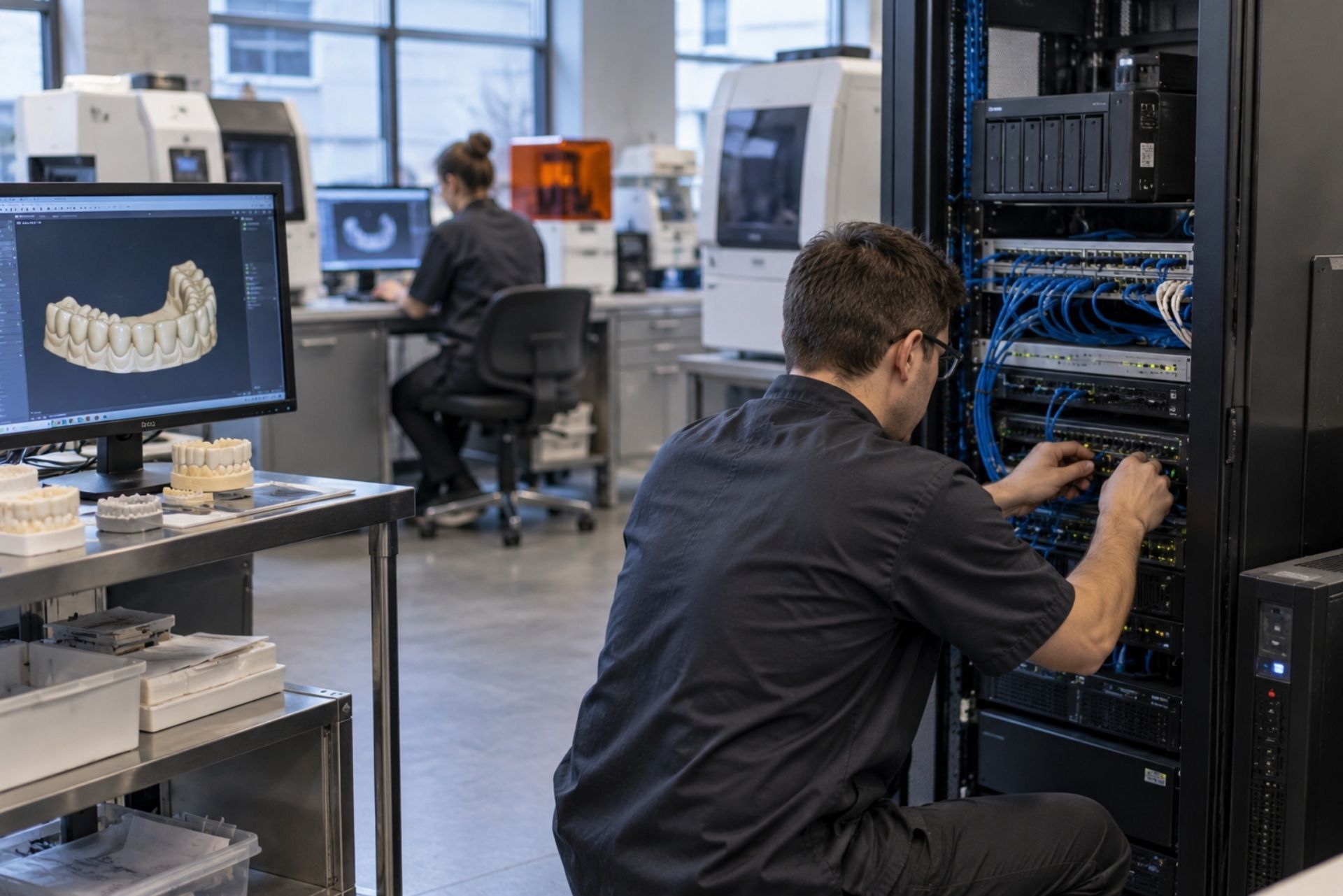
The shift to fully digital workflows over the past several years has expanded your attack surface dramatically. Every connected scanner, every cloud-based case management portal, and every email containing a digital prescription is a potential entry point.
The Vulnerability of Digital Prescriptions and CAD/CAM Files
Digital prescriptions flow between dental practices and your lab constantly. These files contain patient identifiers and treatment specifics, and they're often transmitted through email or shared portals with minimal encryption. A compromised email account can expose thousands of patient records in minutes.
CAD/CAM files themselves present a less obvious risk. While a .STL file might seem harmless, the metadata and associated case files frequently include PHI. Labs storing these files on networked drives without proper segmentation create a situation where ransomware can lock down both production files and patient data simultaneously. Nearly 24% of healthcare organizations experienced device-related cyberattacks that directly impacted patient care, and connected lab equipment falls squarely into that risk category.
HIPAA and NYS DFS Shield Act Compliance Requirements
New York imposes a double layer of regulatory burden on labs handling patient data. Federal HIPAA rules require you to maintain administrative, physical, and technical safeguards for PHI. The proposed 2026 HIPAA Security Rule changes tighten requirements around risk analysis, encryption, and multi-factor authentication, raising the compliance bar even further.
On the state level, the SHIELD Act (Stop Hacks and Improve Electronic Data Security) requires any business holding private information of New York residents to implement reasonable cybersecurity safeguards. Failing to do so doesn't just invite fines; it creates a
presumption of negligence in civil litigation. Your cyber insurance policy needs to account for defense costs and penalties under both frameworks, because a breach will trigger scrutiny from multiple regulators simultaneously.

Core Protections: Ransomware and Breach Response
The two scenarios that keep lab owners up at night are ransomware lockouts and data breaches. They're related but distinct, and your policy needs to address each one specifically.
A ransomware attack freezes your production. Cases don't ship. Dentists call asking where their crowns are. Every hour of downtime costs money and damages relationships you've spent years building. A data breach, on the other hand, might not stop production at all, but it triggers legal obligations that can be just as expensive.
Managing Ransomware Extortion and Data Restoration
Good cyber coverage for ransomware goes beyond just payig the ransom (which your insurer may or may not approve). It covers forensic investigation to determine how the attacker got in, data restoration from backups, business interruption losses during downtime, and the cost of notifying affected parties if PHI was compromised.
Here's where labs often get burned: many basic policies cap business interruption coverage at levels that don't reflect actual losses. If your lab generates $40,000 per week in revenue and you're down for two weeks, a $25,000 business interruption limit won't come close. You need to calculate your actual daily revenue and negotiate limits accordingly.
Restoration costs are another blind spot. Rebuilding corrupted CAD/CAM libraries and re-importing case data from dental practices can take weeks. Make sure your policy covers the labor and technology costs of data reconstruction, not just the ransom payment itself.
First-Party vs. Third-Party Coverage Differences
First-party coverage pays for your own losses: forensic costs, data restoration, business interruption, notification expenses, and crisis management. Third-party coverage protects you when someone else sues you or a regulator comes knocking.
For dental labs, both matter. First-party coverage handles the immediate fallout of an incident. Third-party coverage kicks in when a dental practice sues you because their patients' data was exposed through your systems, or when the New York Attorney General's office opens an investigation. Labs that only carry first-party coverage leave themselves exposed to the litigation side, which is often where the largest costs accumulate.
Comparing Coverage: Basic vs. Comprehensive Cyber Insurance
Not all cyber policies are built the same. A basic cyber endorsement added to your general liability policy and a standalone comprehensive policy differ enormously in what they'll actually pay for.
Many lab owners assume their existing business insurance includes some cyber protection. It might, but those endorsements typically carry low limits, narrow definitions of covered incidents, and significant exclusions. A standalone policy designed for healthcare-adjacent businesses gives you broader protection and higher limits where they matter most.
Comparison Chart: Standard Cyber Add-ons vs. Standalone Policies
| Coverage Feature | Basic Cyber Add-on | Standalone Comprehensive Policy |
|---|---|---|
| Ransomware Payment | Often excluded or sublimited | Covered with negotiation support |
| Business Interruption | $10K-$25K typical cap | $250K-$1M+ available |
| Breach Notification Costs | Limited to direct costs | Includes credit monitoring, call center |
| Regulatory Defense | Rarely included | HIPAA and SHIELD Act defense covered |
| Third-Party Liability | Minimal or none | Full defense and settlement coverage |
| Forensic Investigation | Capped at low amounts | Full investigation covered |
| Social Engineering Fraud | Excluded | Optional endorsement available |
| Vendor/Supply Chain | Not covered | Dependent business interruption included |
The price difference between these two approaches is real, but so is the gap in protection. A standalone policy for a mid-size New York dental lab typically runs $3,000 to $8,000 annually, depending on revenue, employee count, and security posture. That's a fraction of what even a minor breach would cost out of pocket.
Addressing Vulnerabilities in the Supply Chain and Vendors
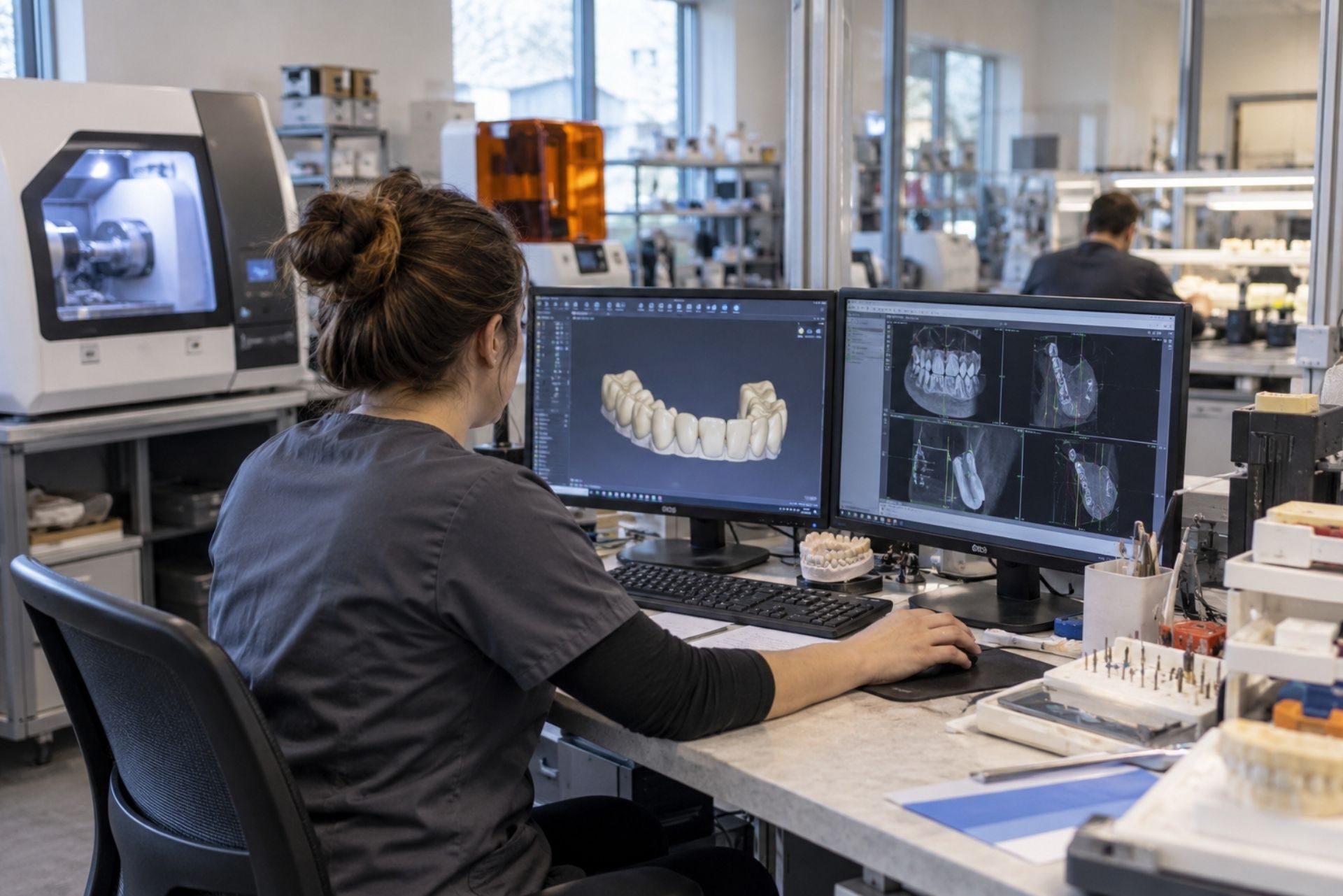
Your lab doesn't operate in isolation. You receive digital files from dozens of dental practices, use cloud-based management software, and may outsource certain fabrication steps to other labs. Each of these connections is a potential pathway for a cyber incident that lands on your doorstep.
Dental labs that haven't assessed their cybersecurity preparedness alongside their vendor relationships are carrying risk they can't see. Your policy should include dependent business interruption coverage, which pays your losses when a vendor's cyber incident disrupts your operations.
Liability for Shared Patient Data with External Clinics
When a dental practice sends you a case with patient data, you become a custodian of that information. If your systems are breached and that data is exposed, you're liable even though you didn't collect the data originally. Business Associate Agreements under HIPAA formalize this responsibility, but they don't eliminate your financial exposure.
Your cyber policy should specifically cover claims arising from PHI received from business partners. Some policies exclude data that originates outside your organization, which creates an enormous gap for dental labs. Read the exclusions carefully, or better yet, have a broker who understands healthcare data review them.
Vetting Software Vendors for Cloud-Based Lab Management
Cloud-based lab management platforms handle case tracking, billing, and often store digital prescriptions. If that vendor suffers a breach, your patients' data is compromised through no fault of your own, but the notification obligations and reputational damage still fall partly on you.
Before signing with any cloud vendor, verify they carry their own cyber insurance, maintain SOC 2 compliance, and encrypt data both in transit and at rest. Your insurer may even require this due diligence as a condition of coverage. Some policies offer reduced premiums for labs that can document vendor security assessments, so the effort pays for itself.
Common Questions About Dental Lab Cyber Coverage
FAQ: Cost, Requirements, and Incident Handling
How much does cyber insurance cost for a small New York dental lab? Expect $2,500 to $6,000 annually for a lab with under 20 employees and revenue below $2 million. Premiums vary based on your security controls, claims history, and the limits you choose.
Does my general liability policy already cover cyber incidents? Almost certainly not in any meaningful way. Standard GL policies exclude electronic data and cyber events. Even if there's a small cyber endorsement, the limits are usually too low for a real incident.
What happens if I get hit with ransomware and don't have cyber insurance? You'll pay for forensic investigation, data restoration, legal counsel, breach notifications, and potential regulatory fines entirely out of pocket. For a healthcare-related breach in New York, that can easily exceed $100,000 even for a small lab.
Are there specific security measures I need to qualify for coverage? Most insurers now require multi-factor authentication, endpoint detection, regular backups stored offline, and employee security training. Some carriers won't quote you without these basics in place.
Does cyber insurance cover attacks that come through a vendor's system? Standalone policies with dependent business interruption coverage do. Basic add-ons typically don't. Ask specifically about "contingent" or "dependent" business interruption when shopping for coverage.
Will my insurer help me respond to an incident, or just pay claims?
Most standalone policies include access to a breach response panel: pre-vetted forensic firms, attorneys, and notification vendors who can mobilize within hours. This is one of the most valuable parts of the policy.
What This Means for Your Lab's Security
Cyber insurance for New York dental labs isn't just a policy you buy and file away. It's a financial backstop that lets you survive the kind of incident that puts uninsured labs out of business. The combination of patient data exposure, digital prescription workflows, ransomware threats, vendor dependencies, and New York's aggressive regulatory environment creates a risk profile that demands real coverage, not a token endorsement on your BOP.
Start by auditing your current exposure. How many patient records do you touch monthly? Which vendors have access to your systems? What would two weeks of downtime cost you? Those numbers will tell you what limits you actually need.
Then talk to a broker who specializes in healthcare or dental industry coverage. Generic commercial insurance agents often don't understand the HIPAA and SHIELD Act implications that make dental lab cyber risk different from, say, a retail shop's. Get a standalone policy, verify your vendor contracts, and document your security controls. The labs that do this work now won't be scrambling when an incident hits.
ABOUT THE AUTHOR:
TAYLOR RICHARDSON
Taylor Richardson is the founder and CEO of 5M Insurance. With a focus on real estate risk management, Taylor helps investors and property managers nationwide secure smarter, scalable coverage solutions—without the headaches of traditional insurance brokers.
Contact Us
Comprehensive Coverage for Businesses of All Sizes
Protecting Your Business, Securing Your Future
General Liability Insurance
Protection against lawsuits and third-party claims.

Workers Comp Insurance
Required protection for employees in case of injury or illness.
Commercial Property Insurance
Coverage for buildings, equipment, and business assets.
Commercial Auto Insurance
Coverage for company vehicles and fleet operations.
Commercial Umbrella Insurance
Protection against errors, omissions, and negligence claims.
Business Owner's Policy
A bundled policy combining essential business coverages.
Personalized Insurance for Every Stage of Life
Protect What Matters Most with Comprehensive Coverage
Jewelry Insurance
Specialized protection for valuable items like engagement rings, watches, and heirlooms.
Pet Insurance
Financial protection for veterinary care and unexpected pet health expenses.
Specialized Insurance for Your Business Needs
Serving the Industries That Drive
New York & New Jersey






What Our Clients Say
Trusted by Businesses & Families Across New York & New Jersey
Frequently Asked Questions
Get Answers to Your Insurance Questions
We understand that insurance can be complex. Here are answers to some of the most common questions our clients ask. If you need more information, our team is always here to help.
- Still have questions?
How do I know what coverage I need?
Choosing the right insurance starts with understanding your risks. For personal insurance, consider factors like your home’s value, your vehicle, and your financial responsibilities. Homeowners may need additional protection for floods or valuable belongings, while drivers should evaluate coverage limits based on their assets.
For businesses, the right coverage depends on the industry, number of employees, and liability risks. General liability is essential for most businesses, but some may need property, workers’ compensation, or business owner’s policies. Our team can assess your needs and guide you to the best options.
What factors affect my insurance rate?
Insurance rates are influenced by multiple factors. For auto policies, your driving history, vehicle type, and location play a major role. Home insurance costs depend on your home’s value, construction type, and potential risks like flooding or fire hazards.
For business insurance, rates vary based on the industry, size, claims history, and coverage limits. High-risk industries may require specialized policies, while businesses with strong safety measures and claims-free histories can qualify for better rates. Our agents help find discounts and cost-saving opportunities.
Why should I work with an independent insurance agency?
Unlike captive agents who represent a single insurance company, independent agencies like Joyce Insurance Agency work with multiple carriers to find the best coverage for your needs. This means you get more choices, competitive rates, and a policy that truly fits your situation.
We take the time to understand your needs, compare options, and provide expert advice. Whether you're insuring your home, car, or business, our priority is finding you the best protection at a great value.
How quickly can I get insured?
The time it takes to secure a policy depends on the type of insurance. Auto and home policies can often be issued the same day, while business insurance may take longer, especially for specialized coverage. Workers’ compensation and commercial policies may require underwriting approval, which can extend the timeline.
We prioritize efficiency and make the process as smooth as possible. Once we understand your needs, we work quickly to get you insured with minimal hassle.
What should I do if I need to file a claim?
If you need to file a claim, contact us as soon as possible. We’ll guide you through the process and ensure you have everything needed to submit your claim correctly. Gathering necessary documentation, such as photos, receipts, or witness statements, can help speed up the process.
We work directly with your insurance provider to streamline communication and advocate on your behalf. Our goal is to make sure your claim is handled quickly and fairly so you can recover without unnecessary stress.
How can I lower my insurance costs?
There are several ways to reduce insurance premiums without sacrificing coverage. For auto insurance, maintaining a clean driving record, bundling policies, and increasing deductibles can help lower costs. Homeowners can save by installing security systems, upgrading safety features, and bundling home and auto policies.
For business owners, implementing risk management strategies, maintaining a claims-free history, and working with an independent agent to find competitive rates can lead to cost savings. Our team helps you explore discounts and options to ensure you’re getting the best value.
Contact Us
Phone
Location