A cracked acrylic mold leaks methyl methacrylate onto the shop floor. The fumes trigger a complaint from the neighboring tenant. Within days, an environmental inspector shows up, and suddenly you're staring at a five-figure cleanup bill your general liability policy won't touch. This scenario plays out more often than most dental lab owners expect, and the financial fallout can be severe.
Dental labs handle a surprising range of hazardous materials: acrylics, solvents, grinding dust, gypsum waste, and heavy metals from alloy work. Each one carries pollution risk that standard business insurance typically excludes. Understanding how pollution liability applies to your lab, from the chemicals you use daily to the waste you haul off-site, is the difference between a manageable incident and a business-ending one. The costs tied to acrylics, solvents, dust exposure, waste disposal, and environmental cleanup can escalate fast. And the common exclusions buried in your policy? They're designed to limit your insurer's exposure, not yours. If you operate a dental lab of any size, you need to know exactly where your coverage starts and where it stops.
Understanding Pollution Risks in Modern Dental Labs
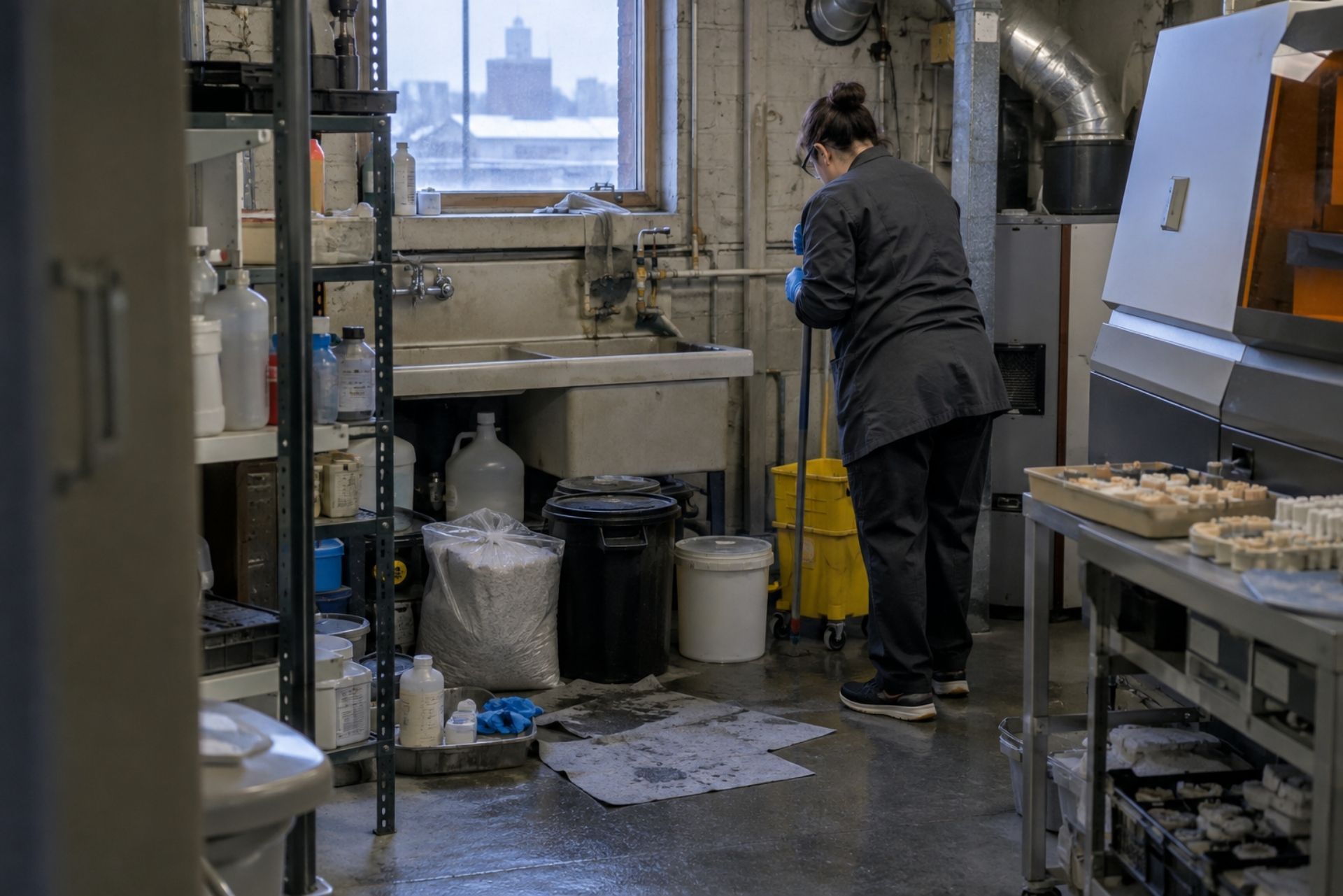
Dental laboratories aren't smokestacks or chemical plants, but they generate a steady stream of pollutants that regulators take seriously. The combination of chemical processing, mechanical grinding, and biomedical waste creates a risk profile that surprises many lab owners when they first sit down with an environmental consultant.
Your lab's pollution footprint depends on the volume and type of work you do. A small crown-and-bridge shop has different exposure than a full-service lab running denture production lines. Either way, the risks are real, and they fall into three main categories.
Chemical Hazards: Acrylics and Solvents
Methyl methacrylate (MMA) is the backbone of acrylic denture fabrication. It's volatile, flammable, and classified as a hazardous air pollutant by the EPA. A spill that seeps into floor drains or contaminates soil beneath your building can trigger federal cleanup requirements. EPA violations for improper hazardous waste disposal, including solvents and MMA, can reach up to $75,000 per day, per violation.
Solvents used for cleaning equipment, thinning materials, and degreasing components add another layer. Acetone, isopropyl alcohol, and various proprietary cleaning agents all require proper storage, ventilation, and disposal. Even small quantities, when handled improperly over time, can create contamination issues that demand professional remediation.
Particulate Matter: Dust from Grinding and Polishing
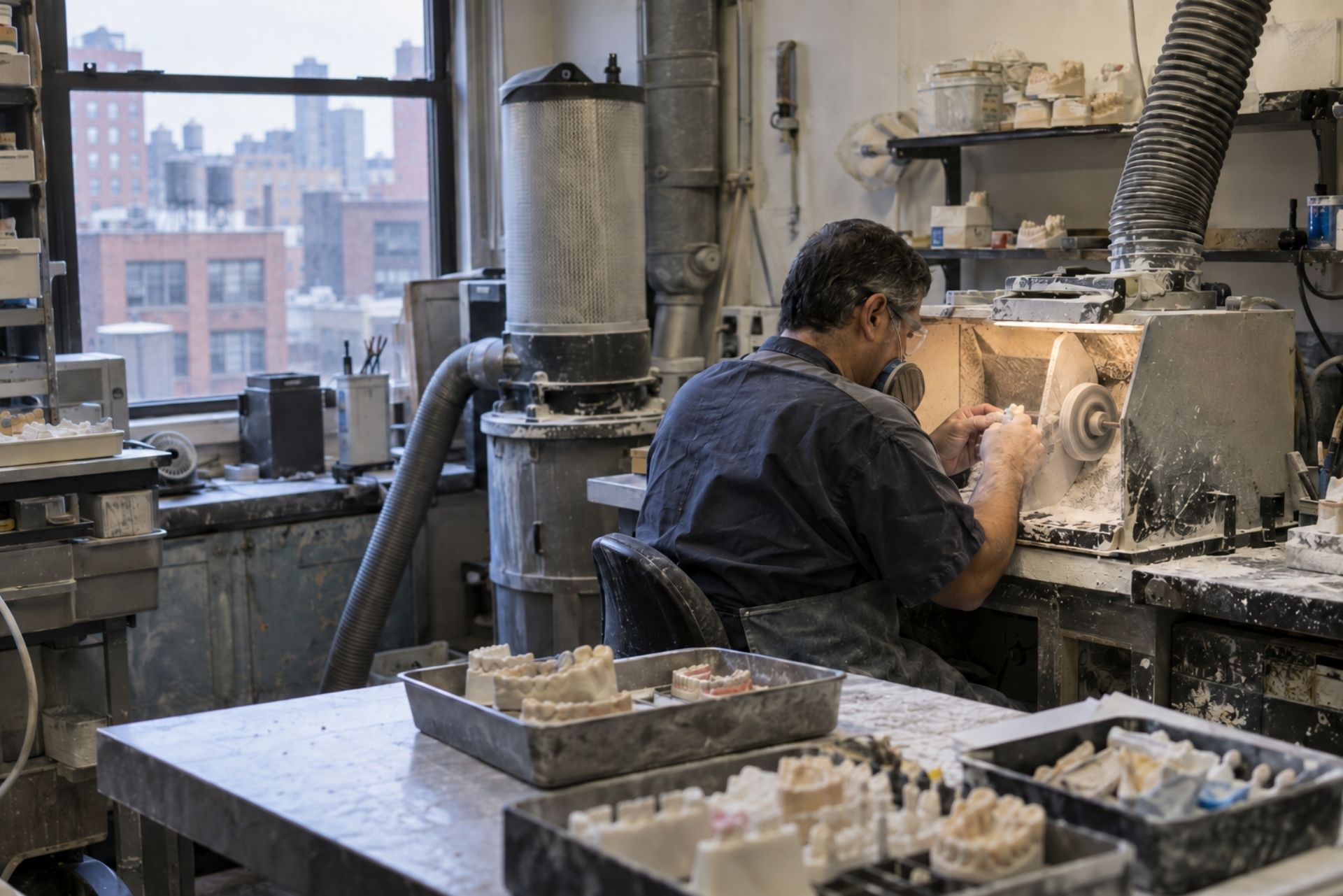
Grinding zirconia, porcelain, and metal alloys generates fine particulate dust that poses both health and environmental risks. Silica dust from ceramic work is a known carcinogen. Metal dust from cobalt-chromium or nickel-chromium alloys can contaminate HVAC systems and settle on neighboring properties.
If your dust collection system fails or your filters aren't maintained, airborne particles can migrate beyond your workspace. A third-party claim from an adjacent business or resident alleging respiratory harm from your dust emissions is a pollution event, not a standard liability claim. Maintaining proper ventilation and understanding the costs of professional cleaning and maintenance for your facility is part of managing this risk.
Biohazardous Waste and Heavy Metal Residues
Dental labs process impressions and models that may carry biological material. Spent investment, used plaster, and contaminated water all require proper disposal protocols. Heavy metals like beryllium, found in some dental alloys, are subject to strict OSHA exposure limits and EPA disposal rules.
The
costs associated with medical and hazardous waste disposal vary significantly by region and waste type, but cutting corners here is a direct path to regulatory action. A single improper disposal event can trigger both fines and mandatory cleanup that dwarf what you saved by skipping proper waste management.

Why General Liability Often Falls Short
Most dental lab owners carry a commercial general liability (CGL) policy and assume it covers "everything." It doesn't. The gap between what you think is covered and what's actually covered is where pollution claims live.
The Standard Pollution Exclusion Explained
Nearly every CGL policy issued since the mid-1980s contains an absolute pollution exclusion or a total pollution exclusion. This clause removes coverage for bodily injury, property damage, or cleanup costs arising from the discharge, dispersal, release, or escape of pollutants. The language is broad on purpose.
Your insurer will argue that a solvent spill, a dust emission event, or contaminated wastewater discharge all fall under this exclusion. Courts have generally upheld these exclusions, though some states interpret them more narrowly than others. The point is: you can't rely on your CGL policy to respond to a pollution event at your lab.
Comparison: General Liability vs. Pollution Liability
Here's a quick look at how these two policy types differ for dental lab operations:
| Coverage Feature | General Liability (CGL) | Pollution Liability (PLL) |
|---|---|---|
| Slip-and-fall injuries | Covered | Not typically covered |
| Chemical spill cleanup | Excluded | Covered |
| Third-party toxic exposure claims | Excluded | Covered |
| Off-site waste disposal incidents | Excluded | Covered |
| Regulatory defense costs | Excluded | Often covered |
| Transportation of hazardous materials | Excluded | Covered (with endorsement) |
| Pre-existing contamination | Excluded | Excluded (usually) |
The distinction is clear. Your CGL handles the everyday premises and operations risks. Pollution liability picks up where the pollution exclusion drops your CGL coverage. Running a dental lab without both is a significant blind spot.
Critical Coverage Components for Lab Owners
A well-structured pollution liability policy for a dental lab should address several specific risk areas. Not all policies are created equal, so you need to know what to ask for.
On-Site and Off-Site Cleanup Costs
This is often the largest expense in a pollution event. If MMA contaminates the soil beneath your building, or solvent vapors migrate into a shared wall, remediation costs can run from $10,000 for a minor incident to well over $100,000 for extensive contamination. Your pollution policy should cover both on-site cleanup at your facility and off-site remediation if pollutants migrate to neighboring properties or groundwater.
Look for policies that include first-party cleanup coverage, meaning you're covered even if no third party has filed a claim yet. Some policies only respond to third-party demands, which leaves you exposed if you discover contamination on your own and need to remediate proactively.
Third-Party Bodily Injury and Property Damage
If a neighboring business employee develops respiratory issues linked to dust or fumes from your lab, you're facing a third-party bodily injury claim. Your CGL won't cover it due to the pollution exclusion. Your pollution liability policy should cover defense costs and settlements for these claims.
Property damage works the same way. Contaminated runoff that damages a landlord's property or a neighbor's inventory triggers pollution liability, not general liability. Having appropriate additional insured coverage can also provide strategic value when multiple parties are involved in a claim.
Transportation and Disposal Site Liability
Your responsibility for hazardous waste doesn't end when it leaves your loading dock. Under RCRA (the Resource Conservation and Recovery Act), you remain liable as the generator of waste even after a licensed hauler takes it away. If your waste hauler dumps improperly, or if the disposal facility has a release, you can be named as a responsible party.
A good pollution policy includes transportation liability coverage and disposal site liability. This protects you if contamination occurs during transit or at the final disposal location. It's one of the most overlooked coverage components, and one of the most important for labs that generate regulated waste regularly.
Common Exclusions to Watch For in Your Policy
Even pollution liability policies have limits. Understanding the exclusions in your specific policy prevents nasty surprises during a claim.
Intentional Non-Compliance with Environmental Laws
No pollution policy covers intentional violations. If you knowingly dump solvents down a drain, skip required waste manifests, or ignore an EPA notice of violation, your insurer will deny the claim. The key word is "knowing." Policies distinguish between accidental releases and deliberate non-compliance.
This exclusion also typically extends to situations where you were aware of a condition likely to cause pollution and failed to act. If your ventilation system has been flagged as inadequate and you don't repair it, a resulting dust emission claim could be denied. Documentation matters: keep records of maintenance, inspections, and compliance efforts.
Pre-existing Contamination and Asbestos
Most pollution policies exclude contamination that existed before the policy's inception date. If you move into a building with existing soil contamination from a prior tenant, your pollution policy won't cover the cleanup. This is why Phase I environmental site assessments are worth the investment before signing a lease or purchasing a property.
Asbestos is almost universally excluded from pollution liability policies. Older dental lab buildings may contain asbestos in insulation, floor tiles, or pipe wrapping. Disturbing these materials during renovation creates a separate liability that requires specialized asbestos abatement coverage, not a standard pollution policy. Your
business insurance program should account for this if your building predates the 1980s.
Frequently Asked Questions About Lab Pollution Insurance
How much does a pollution liability policy cost for a small dental lab? Premiums typically range from $1,500 to $5,000 annually for a small to mid-size lab, depending on your location, materials used, claims history, and chosen coverage limits. Labs working with beryllium-containing alloys or high volumes of MMA may see higher premiums.
Does my landlord's insurance cover a chemical spill in my leased space? Almost never. Your landlord's property policy will likely exclude pollution events caused by a tenant. You're responsible for cleanup costs and any resulting third-party claims. Many commercial leases explicitly assign environmental liability to the tenant.
Can I bundle pollution liability with my general liability policy? Some insurers offer a pollution liability endorsement on a CGL policy, but standalone pollution policies generally provide broader coverage and higher limits. An endorsement may cover only "sudden and accidental" events, leaving gradual contamination uninsured.
What's the difference between "claims-made" and "occurrence" pollution policies? Claims-made policies cover claims filed during the policy period, regardless of when the pollution event happened (subject to a retroactive date). Occurrence policies cover events that happen during the policy period, even if the claim comes years later. Most pollution policies are claims-made, so maintaining continuous coverage is critical.
Do I need pollution coverage if I only do CAD/CAM digital work? Digital workflows reduce but don't eliminate pollution risk. You still likely use cleaning solvents, generate some dust from finishing work, and produce waste materials. The risk is lower, but a single incident can still exceed what your CGL covers.
Pollution liability for dental labs isn't a theoretical concern. It's a practical risk tied to the acrylics, solvents, dust, and waste your operation produces every day. The cleanup costs from even a minor incident can exceed $10,000, and federal fines for disposal violations can hit $75,000 per day.
Start by reviewing your current CGL policy's pollution exclusion language. Know exactly what it excludes. Then talk to a broker who understands environmental coverage for small manufacturing operations. Ask specifically about first-party cleanup, transportation liability, and disposal site coverage.
Get a Phase I environmental assessment if you're in a leased space you haven't tested. Document your waste disposal chain from generation to final disposal. Keep maintenance records for ventilation and dust collection systems. These steps don't just reduce your risk: they strengthen your position if you ever need to file a claim. The labs that handle pollution liability proactively are the ones that survive an incident without losing everything they've built.
ABOUT THE AUTHOR:
TAYLOR RICHARDSON
Taylor Richardson is the founder and CEO of 5M Insurance. With a focus on real estate risk management, Taylor helps investors and property managers nationwide secure smarter, scalable coverage solutions—without the headaches of traditional insurance brokers.
Contact Us
Comprehensive Coverage for Businesses of All Sizes
Protecting Your Business, Securing Your Future
General Liability Insurance
Protection against lawsuits and third-party claims.

Workers Comp Insurance
Required protection for employees in case of injury or illness.
Commercial Property Insurance
Coverage for buildings, equipment, and business assets.
Commercial Auto Insurance
Coverage for company vehicles and fleet operations.
Commercial Umbrella Insurance
Protection against errors, omissions, and negligence claims.
Business Owner's Policy
A bundled policy combining essential business coverages.
Personalized Insurance for Every Stage of Life
Protect What Matters Most with Comprehensive Coverage
Jewelry Insurance
Specialized protection for valuable items like engagement rings, watches, and heirlooms.
Pet Insurance
Financial protection for veterinary care and unexpected pet health expenses.
Specialized Insurance for Your Business Needs
Serving the Industries That Drive
New York & New Jersey




What Our Clients Say
Trusted by Businesses & Families Across New York & New Jersey
Frequently Asked Questions
Get Answers to Your Insurance Questions
We understand that insurance can be complex. Here are answers to some of the most common questions our clients ask. If you need more information, our team is always here to help.
- Still have questions?
How do I know what coverage I need?
Choosing the right insurance starts with understanding your risks. For personal insurance, consider factors like your home’s value, your vehicle, and your financial responsibilities. Homeowners may need additional protection for floods or valuable belongings, while drivers should evaluate coverage limits based on their assets.
For businesses, the right coverage depends on the industry, number of employees, and liability risks. General liability is essential for most businesses, but some may need property, workers’ compensation, or business owner’s policies. Our team can assess your needs and guide you to the best options.
What factors affect my insurance rate?
Insurance rates are influenced by multiple factors. For auto policies, your driving history, vehicle type, and location play a major role. Home insurance costs depend on your home’s value, construction type, and potential risks like flooding or fire hazards.
For business insurance, rates vary based on the industry, size, claims history, and coverage limits. High-risk industries may require specialized policies, while businesses with strong safety measures and claims-free histories can qualify for better rates. Our agents help find discounts and cost-saving opportunities.
Why should I work with an independent insurance agency?
Unlike captive agents who represent a single insurance company, independent agencies like Joyce Insurance Agency work with multiple carriers to find the best coverage for your needs. This means you get more choices, competitive rates, and a policy that truly fits your situation.
We take the time to understand your needs, compare options, and provide expert advice. Whether you're insuring your home, car, or business, our priority is finding you the best protection at a great value.
How quickly can I get insured?
The time it takes to secure a policy depends on the type of insurance. Auto and home policies can often be issued the same day, while business insurance may take longer, especially for specialized coverage. Workers’ compensation and commercial policies may require underwriting approval, which can extend the timeline.
We prioritize efficiency and make the process as smooth as possible. Once we understand your needs, we work quickly to get you insured with minimal hassle.
What should I do if I need to file a claim?
If you need to file a claim, contact us as soon as possible. We’ll guide you through the process and ensure you have everything needed to submit your claim correctly. Gathering necessary documentation, such as photos, receipts, or witness statements, can help speed up the process.
We work directly with your insurance provider to streamline communication and advocate on your behalf. Our goal is to make sure your claim is handled quickly and fairly so you can recover without unnecessary stress.
How can I lower my insurance costs?
There are several ways to reduce insurance premiums without sacrificing coverage. For auto insurance, maintaining a clean driving record, bundling policies, and increasing deductibles can help lower costs. Homeowners can save by installing security systems, upgrading safety features, and bundling home and auto policies.
For business owners, implementing risk management strategies, maintaining a claims-free history, and working with an independent agent to find competitive rates can lead to cost savings. Our team helps you explore discounts and options to ensure you’re getting the best value.
Contact Us
Phone
Location