A front desk employee skims $200 a week from patient copays. A billing coordinator inflates procedure codes on insurance claims for months. A trusted office manager diverts reimbursement checks into a personal account. These aren't hypothetical scenarios: they're the kinds of losses that commercial crime insurance for
dental offices is designed to cover. Employee theft, billing fraud, and funds transfer schemes cost dental practices hundreds of thousands of dollars every year, and most standard business policies leave these exposures completely uncovered. If you own or manage a dental practice, understanding how crime coverage works, what limits you need, and which internal controls reduce your risk isn't optional. It's a financial survival skill.
Why Dental Practices Need Commercial Crime Insurance
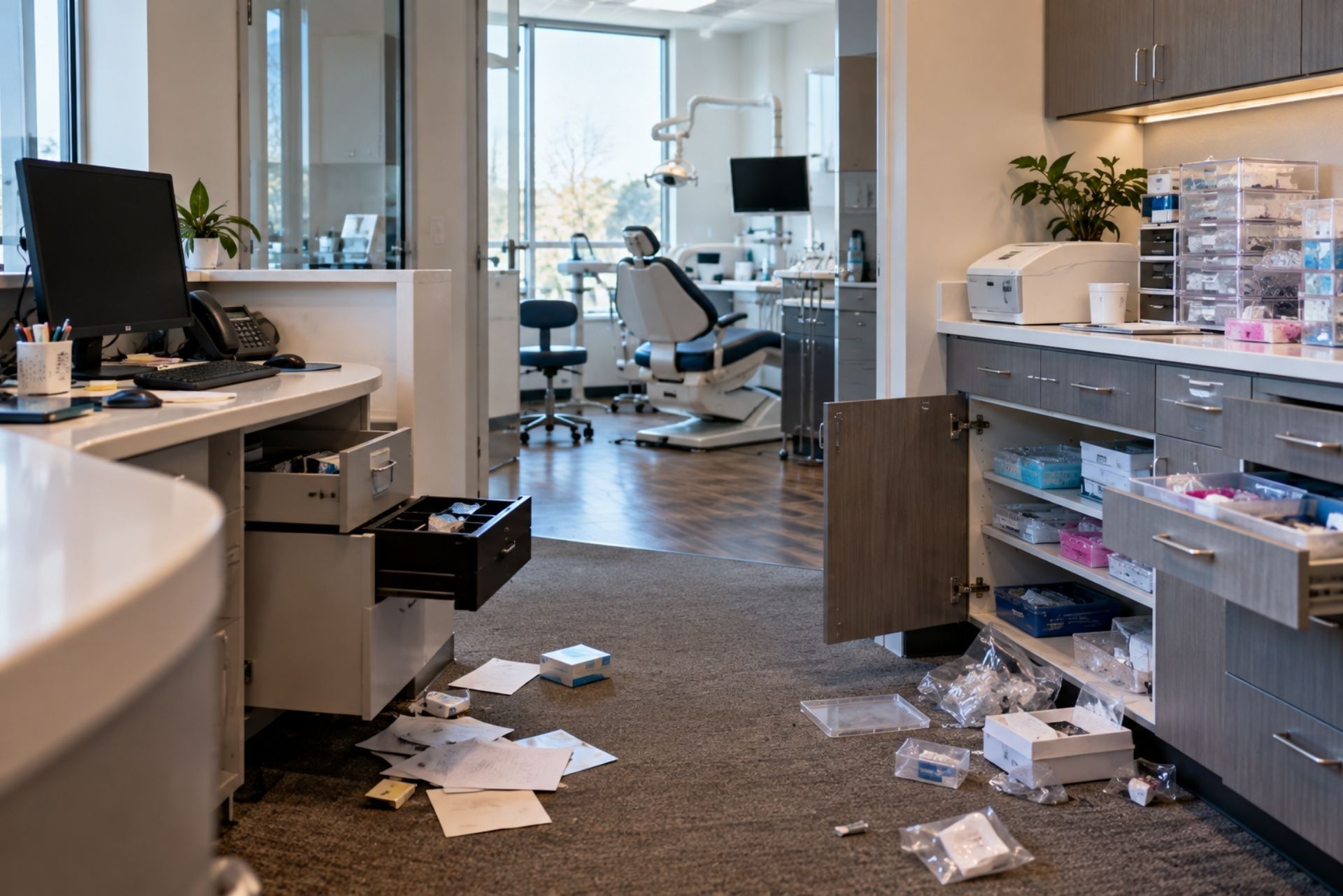
Dental offices handle a unique mix of cash payments, insurance reimbursements, high-value supplies, and sensitive patient records. That combination creates more opportunities for internal fraud than most practice owners realize. Unlike a retail store where inventory shrinkage is visible, dental fraud often hides inside billing systems and bank reconciliations for months or years before anyone notices.
The structure of most practices makes things worse. Small teams mean fewer eyes on financial processes. A single employee often handles collections, deposits, and bookkeeping, which is exactly the kind of arrangement that invites problems. Crime insurance exists to backstop these vulnerabilities when prevention alone isn't enough.
Common Internal Risks in Dental Offices
The most frequent crime exposures in dental practices fall into a few categories. Embezzlement through cash skimming or diverted payments tops the list. Billing fraud, including phantom patients, upcoding, and billing for services never performed, is another growing concern. Forgery and check alteration remain surprisingly common since many dental offices still receive insurance reimbursements via paper checks, making them vulnerable to check washing and interception.
Wire transfer fraud rounds out the picture. A staff member or outside actor redirects electronic payments to unauthorized accounts, and by the time anyone catches it, the money is gone.
The Financial Impact of Practice Fraud
The numbers are sobering. Roughly 48% of dental practices have experienced embezzlement, a figure that's climbed significantly over the past two decades. The average embezzlement case now exceeds $100,000 in losses before it's even detected.
And those are averages. In 2026 alone, a West Virginia dental staff member embezzled $463,000, while a Washington practice network paid $1 million to resolve fraudulent billing allegations. For a solo practitioner or small group practice, a six-figure loss can threaten the entire business. Crime insurance doesn't prevent fraud, but it keeps a fraud event from becoming a practice-ending event.

Core Coverages for Dental Professionals
A commercial crime policy bundles several distinct coverage parts. Each one addresses a different type of loss, and understanding what's included (and what's not) matters more than most practice owners think.
Employee Dishonesty and Theft
This is the backbone of any dental crime policy. Employee dishonesty coverage pays for direct financial losses caused by a staff member's fraudulent or dishonest acts. That includes cash theft, embezzlement, unauthorized use of practice funds, and manipulation of billing records for personal gain.
One detail to watch: most policies require that the dishonest act be committed by an identifiable employee. If money goes missing but you can't determine who took it, some insurers will deny the claim. Ask your agent whether your policy includes a "proof of loss" provision that relaxes this requirement.
Forgery, Alteration, and Funds Transfer Fraud
Forgery coverage protects you if someone forges or alters checks, drafts, or other financial instruments drawn on your practice accounts. This is particularly relevant for dental offices that still process paper checks from insurance carriers.
Funds transfer fraud coverage is a separate but related piece. It responds when a third party uses fraudulent instructions to trick your bank into wiring money out of your account. Social engineering attacks, where someone impersonates a vendor or staff member via email, often trigger this coverage. Not every crime policy includes funds transfer fraud automatically, so confirm it's listed on your declarations page.
Theft of Money and Securities
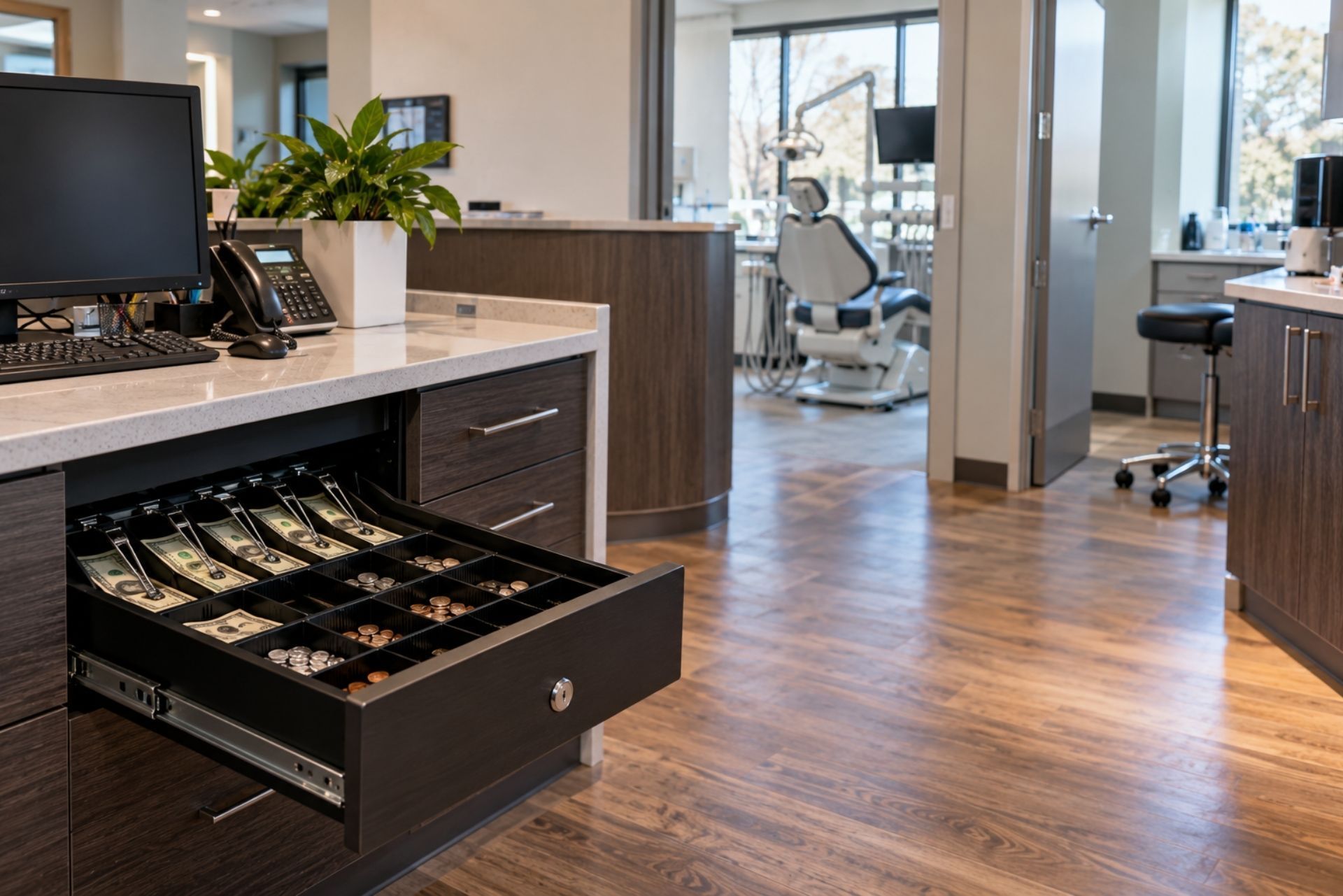
This coverage applies to the physical theft of cash, coins, or securities from your premises or while in transit (like a bank deposit run). It's straightforward but important. If someone breaks into your office and steals the day's cash receipts, this is the coverage that responds, not your general liability or property policy.
Comparing General Liability vs. Commercial Crime Coverage
Practice owners frequently assume their general liability or business owner's policy (BOP) already covers theft and fraud. It almost never does in any meaningful way. General liability responds to third-party bodily injury and property damage claims. A BOP might include a small amount of employee dishonesty coverage, often $5,000 to $10,000, but that's a fraction of what most fraud losses actually cost.
Coverage Comparison Table
| Feature | General Liability / BOP | Commercial Crime Policy |
|---|---|---|
| Employee theft/embezzlement | Minimal or none ($5K-$10K if included) [https://www.primeinsurance.org/business-insurance/crime] | Covered up to policy limit ($25K-$500K+) |
| Billing fraud losses | Not covered | Covered under employee dishonesty |
| Forgery/check alteration | Not covered | Covered |
| Funds transfer fraud | Not covered | Available as coverage part or endorsement |
| Theft of cash on premises | Limited property coverage may apply | Covered with separate sub-limit |
| Third-party theft (patients, vendors) | Not covered | May be available by endorsement |
| Social engineering losses | Not covered | Available on some policies |
The gap between these two types of coverage is enormous. A $10,000 employee dishonesty rider on your BOP won't help when you're facing a $150,000 embezzlement loss.
Mitigating Risks in Your Practice
Insurance is a financial backstop, not a substitute for good management. Insurers know this too: practices with strong internal controls often qualify for lower premiums and fewer coverage restrictions.
Implementing Internal Financial Controls
The single most effective control is separation of duties. The person who posts payments should never be the same person who reconciles the daily deposit or handles bank statements. In a small office with limited staff, the practice owner should personally review bank statements and EOBs (explanation of benefits) monthly.
Other controls that make a real difference:
- Require dual signatures on checks above a set threshold (often $1,000 or $2,500) [https://dokumen.pub/personal-financial-planning-1nbsped-0072536403-9780072536409.html]
- Run regular audits comparing scheduled appointments to billed procedures
- Use practice management software with access controls and audit trails
- Review credit card and refund transactions weekly: refund fraud is a common scheme
- Conduct background checks on all employees with financial access before hiring
Embezzlement is rarely a dramatic heist: it's a slow drip of numbers that are slightly off. Individually, the discrepancies look like errors. Together, they're a catastrophe. Consistent oversight catches these patterns early.
Inventory Management for Supplies and Equipment
Dental supplies represent a real theft exposure that many practices overlook. High-value items like implant components, precious metal alloys, orthodontic brackets, and cosmetic injectables are easy to pocket and difficult to track without a system in place.
Assign one person to manage inventory orders and a different person to verify receipt. Conduct quarterly physical counts of your most expensive supplies and compare them against purchase records. If your practice stocks controlled substances or high-value cosmetic products, consider a locked storage area with logged access.
Common Questions About Dental Crime Insurance
Does my business owner policy already include this? Most BOPs include a token amount of employee dishonesty coverage, typically $5,000 to $10,000 [https://www.primeinsurance.org/business-insurance/crime]. That's not enough for a real embezzlement event. You need a standalone commercial crime policy or a substantial endorsement to get adequate limits.
What happens if an employee steals patient data? Crime insurance covers financial losses from theft of money, securities, and property. If an employee steals patient data, that's a data breach, and it falls under cyber liability insurance, not your crime policy. Many dental practices need both.
How much coverage does a small dental office actually need? A solo practice grossing $500,000 to $1 million annually should consider at least $75,000 to $100,000 in crime coverage [https://www.primeinsurance.org/business-insurance/crime]. Multi-doctor practices or those with higher revenue should look at $250,000 or more [https://www.primeinsurance.org/business-insurance/crime]. Your agent can help you model a worst-case scenario based on your cash flow and billing volume.
Will insurance cover theft by a business partner? Standard employee dishonesty coverage typically excludes owners and partners. If you have a business partner with financial access, you'll need to add a specific endorsement or rider that extends coverage to include partners. This is a commonly missed gap.
Are dental supplies like Botox or implants covered if stolen?
Theft of tangible property from your premises is generally covered under the "theft of money and securities" or "inside premises" coverage part. However, sub-limits often apply. Review your policy's property theft limits and make sure they reflect the actual value of your inventory.
Making the Right Choice for Your Practice
Crime insurance for dental offices isn't a luxury purchase: it's a practical response to a well-documented risk. Nearly half of all dental practices experience some form of internal theft, and the average loss runs well into six figures. A general liability policy won't cover it. A basic BOP won't come close.
The right approach combines adequate crime coverage limits with strong internal controls. Separate your financial duties, audit your billing records, manage your inventory, and review your bank statements personally. Then back it all up with a crime policy that covers employee dishonesty, forgery, funds transfer fraud, and property theft at limits that actually match your exposure.
Talk to an insurance agent who understands dental practices specifically. Ask them to walk through your current policies and identify where crime-related gaps exist. A 30-minute conversation now is a lot cheaper than discovering a $200,000 hole in your coverage after it's too late.
ABOUT THE AUTHOR:
TAYLOR RICHARDSON
Taylor Richardson is the founder and CEO of 5M Insurance. With a focus on real estate risk management, Taylor helps investors and property managers nationwide secure smarter, scalable coverage solutions—without the headaches of traditional insurance brokers.
Contact Us
Comprehensive Coverage for Businesses of All Sizes
Protecting Your Business, Securing Your Future
General Liability Insurance
Protection against lawsuits and third-party claims.

Workers Comp Insurance
Required protection for employees in case of injury or illness.
Commercial Property Insurance
Coverage for buildings, equipment, and business assets.
Commercial Auto Insurance
Coverage for company vehicles and fleet operations.
Commercial Umbrella Insurance
Protection against errors, omissions, and negligence claims.
Business Owner's Policy
A bundled policy combining essential business coverages.
Personalized Insurance for Every Stage of Life
Protect What Matters Most with Comprehensive Coverage
Jewelry Insurance
Specialized protection for valuable items like engagement rings, watches, and heirlooms.
Pet Insurance
Financial protection for veterinary care and unexpected pet health expenses.
Specialized Insurance for Your Business Needs
Serving the Industries That Drive
New York & New Jersey






What Our Clients Say
Trusted by Businesses & Families Across New York & New Jersey
Frequently Asked Questions
Get Answers to Your Insurance Questions
We understand that insurance can be complex. Here are answers to some of the most common questions our clients ask. If you need more information, our team is always here to help.
- Still have questions?
How do I know what coverage I need?
Choosing the right insurance starts with understanding your risks. For personal insurance, consider factors like your home’s value, your vehicle, and your financial responsibilities. Homeowners may need additional protection for floods or valuable belongings, while drivers should evaluate coverage limits based on their assets.
For businesses, the right coverage depends on the industry, number of employees, and liability risks. General liability is essential for most businesses, but some may need property, workers’ compensation, or business owner’s policies. Our team can assess your needs and guide you to the best options.
What factors affect my insurance rate?
Insurance rates are influenced by multiple factors. For auto policies, your driving history, vehicle type, and location play a major role. Home insurance costs depend on your home’s value, construction type, and potential risks like flooding or fire hazards.
For business insurance, rates vary based on the industry, size, claims history, and coverage limits. High-risk industries may require specialized policies, while businesses with strong safety measures and claims-free histories can qualify for better rates. Our agents help find discounts and cost-saving opportunities.
Why should I work with an independent insurance agency?
Unlike captive agents who represent a single insurance company, independent agencies like Joyce Insurance Agency work with multiple carriers to find the best coverage for your needs. This means you get more choices, competitive rates, and a policy that truly fits your situation.
We take the time to understand your needs, compare options, and provide expert advice. Whether you're insuring your home, car, or business, our priority is finding you the best protection at a great value.
How quickly can I get insured?
The time it takes to secure a policy depends on the type of insurance. Auto and home policies can often be issued the same day, while business insurance may take longer, especially for specialized coverage. Workers’ compensation and commercial policies may require underwriting approval, which can extend the timeline.
We prioritize efficiency and make the process as smooth as possible. Once we understand your needs, we work quickly to get you insured with minimal hassle.
What should I do if I need to file a claim?
If you need to file a claim, contact us as soon as possible. We’ll guide you through the process and ensure you have everything needed to submit your claim correctly. Gathering necessary documentation, such as photos, receipts, or witness statements, can help speed up the process.
We work directly with your insurance provider to streamline communication and advocate on your behalf. Our goal is to make sure your claim is handled quickly and fairly so you can recover without unnecessary stress.
How can I lower my insurance costs?
There are several ways to reduce insurance premiums without sacrificing coverage. For auto insurance, maintaining a clean driving record, bundling policies, and increasing deductibles can help lower costs. Homeowners can save by installing security systems, upgrading safety features, and bundling home and auto policies.
For business owners, implementing risk management strategies, maintaining a claims-free history, and working with an independent agent to find competitive rates can lead to cost savings. Our team helps you explore discounts and options to ensure you’re getting the best value.
Contact Us
Phone
Location