A bather at a busy Queens salon reaches into a crate to lift a 70-pound doodle that hates the dryer. The dog spins, sinks its teeth into her forearm, and she wrenches her lower back pulling away. By the end of the week, she has stitches, an antibiotic prescription, a physical therapy referral, and no ability to lift anything heavier than a slicker brush.
That single afternoon can turn into months of lost-wage payments and medical bills. If your salon carries the right coverage, the policy absorbs it. If it doesn't, New York treats the uninsured employer as the one responsible, and the fallout goes well beyond the injured worker's bills.
This guide covers workers' compensation for New York
pet groomers from the ground up: the injuries that actually drive claims, the class codes that set your price, and the payroll audits that catch so many salon owners off guard. You'll get specific steps, not marketing copy.
The Necessity of Workers' Compensation for NY Pet Grooming Businesses
New York requires nearly every employer with employees to carry workers' compensation, and grooming salons are no exception. If you have one part-time bather or a full staff of groomers, you need a policy in place from the first day someone works for you. The law doesn't care that your shop is small or that your staff are mostly family friends.
Here's what that means for you in dollars. For injuries occurring between July 1, 2026, and June 30, 2027, the maximum weekly benefit for injured workers in New York is $1,281.50, and the minimum has risen to $384.45. A groomer out for three months with a torn rotator cuff can rack up thousands in wage replacement alone, before a single surgical bill arrives.
Without a policy, your business pays those benefits directly. The state can also hit you with penalties for each period you operated without coverage, and a stop-work order can shut your doors entirely. For a salon running on tight margins, one uninsured claim can end the business.
There's also a market reason to act now. The New York State Department of Financial Services approved a 21.9% average decrease in workers' compensation loss cost levels effective October 1, 2026. Loss costs are only one piece of what carriers charge, so your premium won't necessarily drop by that full amount. Still, it's a good moment to shop your renewal and make sure you're not overpaying.
Don't treat coverage as optional for:
- Part-time bathers working a few Saturdays a month
- Receptionists who occasionally help hold dogs
- Family members on payroll (unless a specific exemption applies and you've documented it)
- "Contractors" who work your schedule with your tools

Common Physical Risks in the Grooming Salon
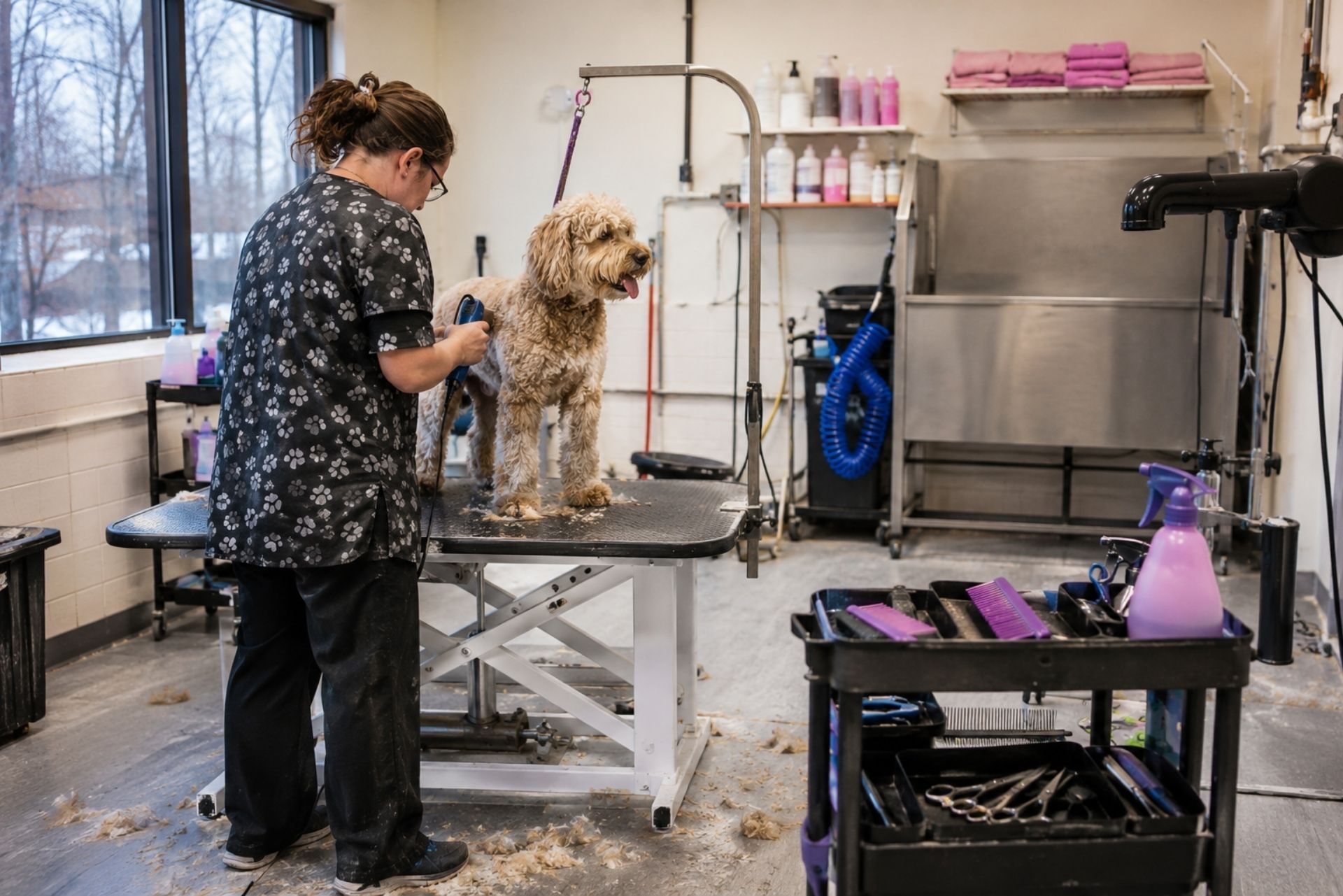
Grooming is skilled work, but physically it looks a lot like warehouse labor combined with animal handling. The IGS Global Groomer Health Study 2025-2026 found that 87% of dog groomers and 91% of cat groomers have sustained an animal-related injury during their career. Those aren't rare events. They're a career expectation.
Understanding where claims come from helps you prevent them and explain your operation accurately to an underwriter.
Animal Bites and Scratch Infections
Bites are the claim most people picture, and for good reason. A deep puncture to the hand is more serious than it looks, because hands have tendons and joint spaces close to the surface. A cat bite that seems minor on Monday can be a swollen, infected hand requiring IV antibiotics by Wednesday.
Typical bite and scratch claims include:
- Puncture wounds requiring wound care, tetanus shots, and antibiotics
- Infections that lead to hospitalization or surgical drainage
- Nerve or tendon damage that keeps a groomer off shears for weeks
- Rabies post-exposure treatment when vaccination history can't be confirmed
One thing to keep in mind: delayed reporting causes problems. A groomer who brushes off a scratch and reports it five days later, once it's infected, creates a harder claim to manage. Require same-day reporting for every bite, no matter how small, and keep a log.
Lifting Injuries and Repetitive Strain Issues
Bites get attention, but the slow-building injuries often cost more. Lifting heavy dogs into tubs and onto tables puts repeated load on the lower back and shoulders. Many salons still lack hydraulic or electric tables, which forces staff into dead lifts dozens of times a day.
Repetitive strain is the quieter problem. Holding shears and clippers for eight hours, often with the wrist bent, leads to carpal tunnel syndrome, tendonitis, and trigger finger. Constant standing and leaning over the table adds neck and back strain. These cumulative trauma claims can involve injections, surgery, and long recovery periods.
Practical ways to reduce these claims:
- Install adjustable-height tables and walk-in or ramped tubs.
- Set a two-person lift rule for dogs over a set weight.
- Rotate tasks so nobody spends a full shift on bathing or scissoring alone.
- Replace worn clipper blades and dull shears that force a harder grip.
- Use anti-fatigue mats at every station.
Slip and Fall Hazards in the Bathing Area
The bathing area combines water, shampoo, loose hair, and a wet animal trying to escape. That's a recipe for slips, and falls on tile often mean wrist fractures, knee injuries, or head trauma. A groomer carrying a dog when she falls takes the impact without catching herself.
Keep floors dry with squeegees and drains that actually work, and use non-slip flooring or mats rated for wet areas. Hair buildup near dryer stations is just as slippery as water, so sweep between dogs, not at closing.
Proposed legislation in Albany could also shape safety practices. Assembly Bill A1108 would license grooming facilities and require that no pet be left unaccompanied while restrained on a table or in a bathing area. Even before anything passes, following that standard reduces both animal injuries and the chaotic rescues that lead to staff falls.
Understanding NY Class Codes and Insurance Costs
Your workers' comp premium starts with your classification code. Each code carries a rate per $100 of payroll, and that rate reflects how often and how severely people in that type of work get hurt. Get the code wrong and you'll either overpay for months or face a surprise bill at audit.
The basic formula looks like this: payroll divided by 100, multiplied by your class rate, then adjusted by your experience modification and any credits or surcharges. New York also adds an employer assessment on top. The employer assessment rate for 2027 will remain at 7.0% of the standard premium, which funds the Workers' Compensation Board's administrative expenses.
Here's what drives your number up or down:
- Your governing class code, based on the main operation of the business
- Total payroll in each class
- Experience modification, once your salon is large enough to qualify
- Claims history, especially frequent small bite claims
- Safety practices you can document for the underwriter
A common mistake is accepting whatever code the agent picks without asking why. Groomers sometimes get lumped in with retail pet stores or kennels, and those don't always reflect what your staff actually do. Ask to see the code and its description in writing.
The Difference Between Code 8831 and 9015
Code 8831 is the classification commonly used for animal care operations such as veterinary hospitals, kennels, and pet grooming. It reflects the hands-on risks of working with animals: bites, scratches, lifting, and handling. Most grooming salons should expect their groomers and bathers to fall under this code or one closely tied to it. Confirm the exact description with your carrier, because New York uses its own rating bureau and code wording can differ from other states.
Code 9015 is a different animal entirely. It generally applies to building operations, such as janitors and maintenance staff who clean and care for a property. You might see it if your business owns its building and employs someone whose only job is cleaning and upkeep.
The catch is that salon owners sometimes try to shift groomers into a cheaper code, or a carrier misassigns a dedicated cleaner into 8831. Neither move holds up at audit. If your "cleaner" also bathes dogs on busy days, the auditor will likely reclassify that payroll to the animal care code. Keep job descriptions accurate and duties separate if you want a split classification to stick.
Comparison of Coverage: Workers' Comp vs. General Liability
Salon owners regularly assume their
general liability policy covers staff injuries. It doesn't. General liability protects you against claims from third parties, like a customer who trips in your lobby or a client whose dog is injured. Your own employees' injuries belong to workers' comp.
| Situation | Workers' Comp | General Liability |
|---|---|---|
| Groomer bitten by client's dog | Covered | Not covered |
| Bather hurts back lifting a dog | Covered | Not covered |
| Customer slips in your lobby | Not covered | Covered |
| Client sues after dog is nicked | Not covered | Possibly, often needs care, custody, control coverage |
| Groomer misses work after injury | Lost wages paid | Not covered |
| Required by NY law for employees | Yes | No, but often required by landlords |
Notice the row about a dog being cut during grooming. Many general liability policies exclude damage to property in your care, and animals count as property legally. You'll often need an animal bailee or care, custody, and control endorsement to cover injuries to pets in your salon.
Workers' comp policies also typically include employer's liability coverage. That part responds if an injured employee or a family member sues you separately, a rare situation but an expensive one. Check your limits rather than assuming the defaults are enough.
What not to do:
Don't rely on a business owner's policy to cover staff injuries
Don't skip pet care coverage because you've "never cut a dog"
Don't assume a
mobile grooming van is covered by your salon policy without asking
Preparing for the Annual Payroll Audit
Workers' comp is priced on estimated payroll at the start of the policy. After the term ends, the carrier audits your actual payroll and adjusts the premium. If your business grew, you'll owe money. If it shrank, you may get a refund. These audits are routine, but they're where many grooming salons get hit with bills they never budgeted for.
The audit might be a mailed questionnaire, a phone call, or an in-person visit, depending on your size and carrier. You'll typically need:
- Payroll records and quarterly tax filings (NYS-45 and federal 941s)
- A list of employees with job titles and duties
- Records of overtime, tips, and commissions
- Payments to subcontractors and their certificates of insurance
- Your general ledger or a profit and loss statement
Commission-based pay is standard in grooming, and auditors count it as payroll. If you pay groomers 50% of each groom, that total goes into the calculation. Tips handling varies, so ask your carrier how they treat them before the audit, not during it.
Managing Records for Independent Contractors
Grooming salons frequently use booth renters and "independent" groomers. The audit is where those arrangements get tested. If the auditor decides your contractors are really employees, their pay gets added to your payroll and you'll owe premium on it.
Federal rules are also in motion. In February 2026, the U.S. Department of Labor announced a proposal to return to a streamlined "economic reality" test for worker classification. New York applies its own standards for workers' comp, which tend to be strict, so don't assume a federal change lets you off the hook.
A groomer looks more like an employee if you set the schedule, take the bookings, supply the tables and dryers, and set prices. A true booth renter pays you rent, keeps her own client list, sets her own prices, and carries her own insurance. Collect a current certificate of insurance from every contractor, every year. Without it, the auditor will almost always charge you for that worker.
How to Avoid Unexpected Premium Increases
Most audit shock comes from poor estimates at renewal. You lowballed payroll to get a cheaper quote, then hired two bathers in the spring. The audit catches the difference, and now you owe a lump sum.
Avoid that with a few habits:
- Update your carrier mid-term when you add staff, so payroll adjustments happen gradually
- Separate clerical payroll for front-desk staff who never handle animals, with clear job descriptions
- Exclude overtime premium where allowed, by showing the extra half-time portion separately in your records
- Respond to audit requests quickly, because non-response can trigger an estimated audit at a punishing figure
- Dispute errors in writing if a classification or payroll amount looks wrong
That said, don't game the system by mislabeling groomers as receptionists. Auditors interview staff and check duties, and reclassification often comes with back premium for the full term.
Common Questions About NY Grooming Insurance
Do I need workers' comp if I only have one part-time bather? Yes. New York generally requires coverage for part-time employees too, even if they work just a few hours a week.
Does workers' comp cover me as the salon owner? Sole proprietors and some business owners can often exclude themselves, but you can usually opt in. If you're the one grooming most dogs, covering yourself is worth considering.
Are mobile groomers treated differently? The animal handling risk is the same, but you'll also need commercial auto coverage for the van. Make sure your workers' comp policy lists the mobile operation and its payroll.
Will a bite claim raise my premium? It can, especially if bite claims become frequent. Small salons may not have an experience mod yet, but carriers still review claims history at renewal.
What new grooming rules is New York considering? Senate Bill S6963 would require groomers to obtain a certificate of registration and have facilities request proof of annual vaccinations. Vaccine records also help when assessing bite exposure risk.
Can my booth renters just sign a waiver instead of carrying insurance? No. A waiver doesn't replace a certificate of insurance, and auditors won't accept it as proof of independent status.
Making the Right Choice for Your Salon
Protecting your staff and your business comes down to a few decisions made well. Carry workers' comp from the first hire, confirm your class code in writing, and keep payroll estimates honest. The bites, lifting injuries, and repetitive strain that define this trade aren't going away, so plan around them.
Your next steps are simple. Review your current policy's classification and payroll estimate before the October rate changes take hold. Gather contractor certificates now instead of scrambling at audit time. Then document your safety practices, from two-person lifts to non-slip floors, so you can show an underwriter you run a careful shop.
Getting workers' comp right as a New York groomer isn't about finding the cheapest quote. It's about having a policy that pays when your best groomer can't hold shears for six weeks, and an audit that confirms what you already expected.
ABOUT THE AUTHOR:
BARNABY JOYCE
Barnaby Joyce is the President of Joyce Insurance Agency. He and the Joyce team help New York families and businesses compare their options and find coverage that fits their needs.
Contact Us
Comprehensive Coverage for Businesses of All Sizes
Protecting Your Business, Securing Your Future
General Liability Insurance
Protection against lawsuits and third-party claims.

Workers Comp Insurance
Required protection for employees in case of injury or illness.
Commercial Property Insurance
Coverage for buildings, equipment, and business assets.
Commercial Auto Insurance
Coverage for company vehicles and fleet operations.
Commercial Umbrella Insurance
Protection against errors, omissions, and negligence claims.
Business Owner's Policy
A bundled policy combining essential business coverages.
Personalized Insurance for Every Stage of Life
Protect What Matters Most with Comprehensive Coverage
Jewelry Insurance
Specialized protection for valuable items like engagement rings, watches, and heirlooms.
Pet Insurance
Financial protection for veterinary care and unexpected pet health expenses.
Specialized Insurance for Your Business Needs
Serving the Industries That Drive
New York & New Jersey






What Our Clients Say
Trusted by Businesses & Families Across New York & New Jersey
Frequently Asked Questions
Get Answers to Your Insurance Questions
We understand that insurance can be complex. Here are answers to some of the most common questions our clients ask. If you need more information, our team is always here to help.
- Still have questions?
How do I know what coverage I need?
Choosing the right insurance starts with understanding your risks. For personal insurance, consider factors like your home’s value, your vehicle, and your financial responsibilities. Homeowners may need additional protection for floods or valuable belongings, while drivers should evaluate coverage limits based on their assets.
For businesses, the right coverage depends on the industry, number of employees, and liability risks. General liability is essential for most businesses, but some may need property, workers’ compensation, or business owner’s policies. Our team can assess your needs and guide you to the best options.
What factors affect my insurance rate?
Insurance rates are influenced by multiple factors. For auto policies, your driving history, vehicle type, and location play a major role. Home insurance costs depend on your home’s value, construction type, and potential risks like flooding or fire hazards.
For business insurance, rates vary based on the industry, size, claims history, and coverage limits. High-risk industries may require specialized policies, while businesses with strong safety measures and claims-free histories can qualify for better rates. Our agents help find discounts and cost-saving opportunities.
Why should I work with an independent insurance agency?
Unlike captive agents who represent a single insurance company, independent agencies like Joyce Insurance Agency work with multiple carriers to find the best coverage for your needs. This means you get more choices, competitive rates, and a policy that truly fits your situation.
We take the time to understand your needs, compare options, and provide expert advice. Whether you're insuring your home, car, or business, our priority is finding you the best protection at a great value.
How quickly can I get insured?
The time it takes to secure a policy depends on the type of insurance. Auto and home policies can often be issued the same day, while business insurance may take longer, especially for specialized coverage. Workers’ compensation and commercial policies may require underwriting approval, which can extend the timeline.
We prioritize efficiency and make the process as smooth as possible. Once we understand your needs, we work quickly to get you insured with minimal hassle.
What should I do if I need to file a claim?
If you need to file a claim, contact us as soon as possible. We’ll guide you through the process and ensure you have everything needed to submit your claim correctly. Gathering necessary documentation, such as photos, receipts, or witness statements, can help speed up the process.
We work directly with your insurance provider to streamline communication and advocate on your behalf. Our goal is to make sure your claim is handled quickly and fairly so you can recover without unnecessary stress.
How can I lower my insurance costs?
There are several ways to reduce insurance premiums without sacrificing coverage. For auto insurance, maintaining a clean driving record, bundling policies, and increasing deductibles can help lower costs. Homeowners can save by installing security systems, upgrading safety features, and bundling home and auto policies.
For business owners, implementing risk management strategies, maintaining a claims-free history, and working with an independent agent to find competitive rates can lead to cost savings. Our team helps you explore discounts and options to ensure you’re getting the best value.
Contact Us
Phone
Location