A Brooklyn grooming salon opens on a Tuesday morning to find its scheduling system frozen and a ransom note on the front desk computer. Forty appointments are booked that day, and nobody can see which dog is coming in, which one has a seizure history, or who already prepaid a deposit. That's the kind of morning that cyber insurance for New York pet groomers is built to handle.
Most groomers think of risk in physical terms: a nicked ear, a slip in the tub room, a dog bite on a bather. Those risks are real, and your general liability and professional coverage handle them. The catch is that your business now runs on online booking, stored payment cards, text reminders, and customer files packed with names, addresses, and phone numbers.
When one of those systems fails or gets breached, the bill rarely looks like a vet invoice. It looks like forensic investigators, legal fees, notification letters, refunds for fraudulent charges, and days of lost revenue. This guide walks through the specific digital risks groomers face, how coverage actually responds, and what New York law expects from you after a breach.
Why New York Pet Groomers Need Cyber Protection
New York is one of the most demanding states in the country for any business that holds customer data. The SHIELD Act applies to any business that owns or licenses private information of New York residents, regardless of size. A two-chair shop in Rochester and a five-location operation in Manhattan face the same core obligations.
Here's what that means for you. If your booking system stores a client's name alongside a card number, or if your email account holds scanned driver's licenses for mobile grooming waivers, you're holding regulated data. A breach triggers notice requirements, potential regulator attention, and real costs whether or not a single dollar was stolen.
Groomers also sit in an awkward spot. You handle high transaction volume with small tickets, you rely on third-party apps you didn't build, and your front desk staff often share logins because it's faster. Criminals know service businesses like yours rarely have an IT person on payroll.
Consider a mobile groomer in Westchester whose phone gets stolen with the booking app logged in. That phone holds home addresses, gate codes, and notes like "key under the mat, owner works days." That isn't just a privacy problem. It's a physical security problem for your clients, and it can end in a lawsuit.
Cyber coverage exists because general
liability policies were written for slip-and-falls, not stolen data. Without it, you're self-insuring a risk you probably can't price.

The Digital Risks of Online Booking and Payment Processing
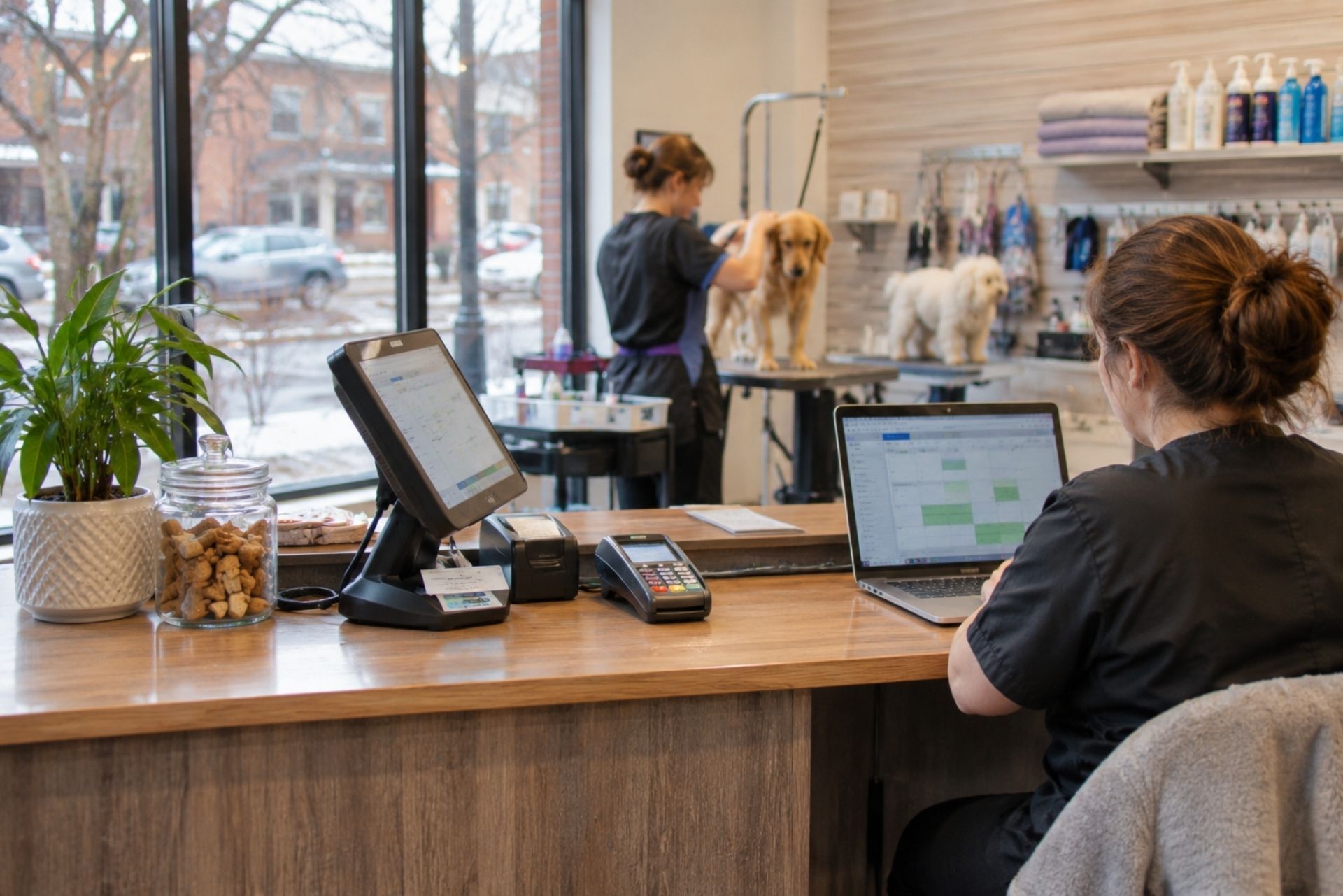
Online booking changed grooming for the better. Clients book at midnight, deposits cut no-shows, and reminders go out automatically. That same convenience creates new openings for fraud.
Fraud reports involving online booking platforms rose significantly in 2026, and that trend matters for groomers because your booking page is often the first place a client enters payment details. Every plugin, embedded form, and connected app is a possible weak point.
Securing Customer Credit Card Data
Criminals are increasingly using e-skimming on service-industry booking pages, injecting malicious code that copies card details as customers type them. Your client sees a normal checkout. The thief sees a full card number, expiration date, and security code.
The fallout lands on you. Your payment processor can pass along fines and assessments, card brands may require a forensic investigation, and clients start calling about charges they didn't make. Some processors will even freeze your merchant account during the review, which hits cash flow fast.
Practical steps to reduce card exposure:
- Don't store full card numbers in notes fields, spreadsheets, or email. Use tokenized card-on-file features from your processor.
- Don't take card numbers over text or social media direct messages.
- Do complete your annual PCI self-assessment honestly. Insurers may ask about it.
- Do use hosted payment pages so card data never touches your website directly.
Risks of Integrated Scheduling Software
Your scheduling software probably connects to your payment processor, your email marketing tool, your text reminder service, and maybe your accounting program. Each connection is a door. If one vendor gets breached, your client data can leak even though your own systems were fine.
Read your software contract. Many vendors limit their liability to a few months of subscription fees, which won't cover notification costs for thousands of clients. Your cyber policy should include coverage for breaches that happen at a vendor holding your data, and you should confirm that wording before you buy.
Common Cyber Threats Facing the Grooming Industry
Groomers don't usually get hit by sophisticated nation-state hackers. They get hit by cheap, repeatable scams that work on busy people. The two that cause the most damage are below.
Social Engineering and Business Email Compromise
A typical claim goes like this: your bookkeeper gets an email that looks like it's from your shampoo and supply distributor, saying their bank details changed. The invoice looks right, the logo looks right, and the amount matches what you normally pay. You wire the money, and it's gone.
Another version targets payroll. An "employee" emails asking to change their direct deposit account before Friday. By the time the real groomer asks where their paycheck went, the funds have moved through several accounts.
This is where policy wording matters. Many cyber policies cover social engineering fraud only through a sublimit, sometimes much smaller than the main limit, and some require you to verify payment changes by phone before coverage applies. Common client mistake: assuming "cyber" automatically includes funds transfer fraud. It often doesn't unless you add it.
Don'ts checklist for your office:
- Don't change vendor bank details based on email alone. Call a known number.
- Don't let one person approve and send wires.
- Don't click "urgent" payment links from the owner's personal email.
Ransomware and Data Lockouts
Ransomware encrypts your files and demands payment to unlock them. For a grooming business, that means no schedule, no client history, no vaccination records, and no idea who's walking in the door. Some attackers also steal data first and threaten to publish it.
The real cost usually isn't the ransom. It's the days of disrupted business, the rebuild, and the overtime your staff spends calling clients one by one. Business interruption coverage under a cyber policy is designed to replace that lost income, though most policies apply a waiting period of several hours before it kicks in.
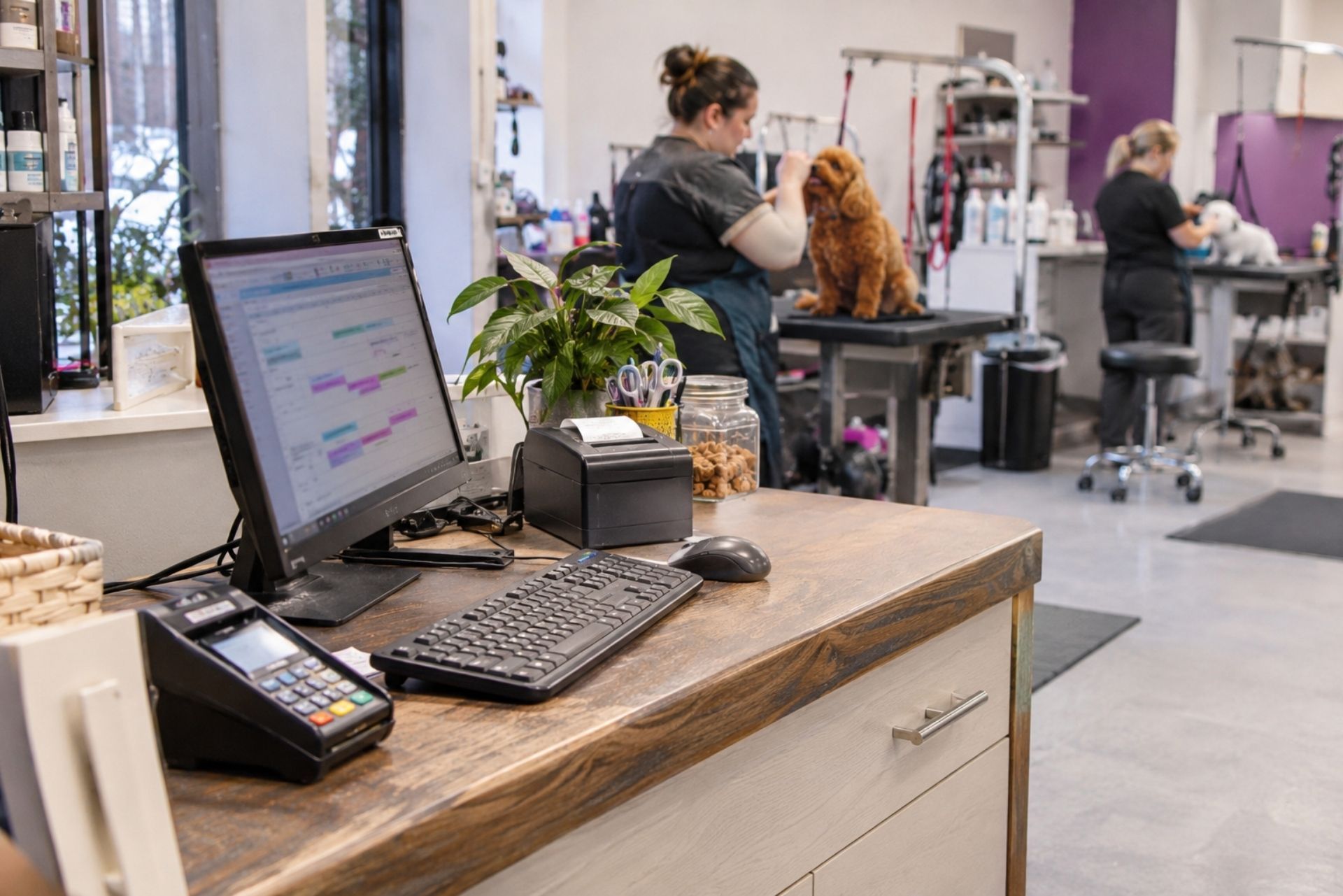
The cyber market has tightened. Insurance carriers in 2026 now mandate specific technical controls before they'll approve a policy, including universal multi-factor authentication, endpoint detection and response (EDR or MDR), and immutable "air-gapped" backups. If you can't check those boxes, you may get declined or offered reduced coverage.
That surprises a lot of small groomers. You may have bought cyber coverage years ago with a one-page application. Today's applications ask detailed questions, and a wrong answer can give the carrier grounds to deny a claim later. Answer honestly, and if you're unsure what "EDR" means for your setup, ask your agent or IT provider before signing.
First-Party vs. Third-Party Coverage
First-party coverage pays your own costs after an incident. Third-party coverage pays when someone else claims you harmed them.
First-party coverage typically includes:
- Breach response: forensic investigation, legal counsel, notification letters, call centers, and credit monitoring for affected clients
- Business interruption: lost income while systems are down
- Data restoration: rebuilding your scheduling database and records
- Cyber extortion: ransom negotiation and, where legal, payment
- Funds transfer fraud / social engineering: often sublimited or optional
Third-party coverage typically includes:
- Privacy liability: lawsuits from clients whose data was exposed
- Regulatory defense and penalties: responding to the New York Attorney General, where insurable
- PCI fines and assessments: costs passed down from card brands
- Media liability: claims tied to your website or social content
Most small groomers need both halves. A breach that exposes 3,000 client records creates first-party costs immediately and third-party exposure later.
Comparison: General Liability vs. Cyber Liability for Groomers
Plenty of grooming owners believe their business owner's policy (BOP) or general liability covers "everything." It doesn't. General liability responds to bodily injury and property damage. Data isn't tangible property under most GL forms, and many policies now carry explicit data breach exclusions.
Some BOPs include a small cyber endorsement. Those can be useful as a starting point, but the limits are often low and the coverage narrow. Check whether yours includes business interruption and social engineering before you assume you're protected.
| Risk Scenario | General Liability | Cyber Liability |
|---|---|---|
| Client trips over a hose in the lobby | Covered | Not covered |
| Dog injured during grooming | Usually needs professional/animal bailee coverage | Not covered |
| Booking page skimmed, cards stolen | Not covered | Covered |
| Ransomware shuts down scheduling | Not covered | Covered (business interruption) |
| Client sues over leaked home address | Typically excluded | Covered (privacy liability) |
| Fake vendor invoice paid by wire | Not covered | Covered if social engineering added |
| Breach notification letters and legal costs | Not covered | Covered (breach response) |
| PCI fines from card brands | Not covered | Often covered, check sublimit |
The takeaway from that table is simple: GL and cyber protect completely different things. You need both, alongside animal bailee coverage for the pets in your care.
New York's SHIELD Act defines private information broadly. It includes a name combined with items like a Social Security number, driver's license number, or account and card numbers with access codes. It also covers usernames or email addresses paired with passwords, and biometric data.
If private information is breached, you must notify affected New York residents. Recent amendments set a firm outer deadline of 30 days after discovery, so the old "reasonable time" cushion is gone. You also have to notify the New York Attorney General, the Department of State, and the Division of State Police, and larger breaches can trigger notice to consumer reporting agencies.
Thirty days sounds like a lot until you're living it. A forensic firm has to determine what was accessed, an attorney has to confirm which clients are affected and where they live, and someone has to draft, print, and mail compliant letters. Cyber insurance breach response coverage is designed specifically to fund the legal and mailing costs needed to meet that deadline.
The SHIELD Act also requires reasonable data security safeguards. Small businesses get some flexibility based on size and complexity, but "we never thought about it" isn't a safeguard. Written procedures, staff training, and vendor oversight all count in your favor if the Attorney General asks questions.
One more nuance: if you groom pets for clients who live in New Jersey or Connecticut, their state laws may apply too. Your breach counsel should sort that out, and your policy should pay for it.
Step-by-Step Breach Response for Small Businesses
The first 48 hours shape how expensive a breach becomes. Panic leads to mistakes like wiping computers, paying a ransom before calling anyone, or emailing clients before the facts are known.
Follow this order:
- Call your insurer's breach hotline first. Most policies require notice quickly and want you using their pre-approved vendors. Hiring your own IT person without approval can cut your reimbursement.
- Isolate affected devices. Disconnect them from Wi-Fi. Don't power them off or wipe them, since forensic evidence matters.
- Preserve records. Save suspicious emails, screenshots of ransom notes, and login alerts.
- Let breach counsel lead. Attorneys assigned by your carrier help preserve legal privilege and determine notification duties.
- Contact your payment processor if card data may be involved.
- Switch to a manual backup plan. Print tomorrow's schedule from a backup or rebuild it from text confirmations.
- Reset credentials on email, booking, banking, and processor accounts, and turn on MFA everywhere.
- Send notifications once counsel confirms scope, within New York's 30-day window.
- Document lost revenue with daily booking comparisons to support a business interruption claim.
Don'ts checklist:
- Don't pay a ransom on your own. Sanctions issues and coverage conditions apply.
- Don't post about the breach on social media before counsel approves the message.
- Don't blame the vendor publicly, even if they're at fault.
Common Questions About Grooming Cyber Insurance
Do I need cyber insurance if I only take payments in person? Probably, yes. Your client database, email, and scheduling system still hold private information, and ransomware doesn't care how you take payment.
How much coverage should a small grooming shop carry? It depends on how many client records you hold and how much revenue you'd lose during a week of downtime. Ask your agent to estimate notification costs per record and your daily revenue, then size limits from there.
Will my policy pay if my booking software company gets hacked? Many policies cover breaches of your data held by a vendor, but not all. Look for "dependent business interruption" and vendor breach wording.
Why did my insurer ask about MFA and backups? Carriers now require controls like multi-factor authentication, EDR, and offline backups before approving coverage. Weak answers can lead to a decline or a higher premium.
Does cyber insurance cover a fake invoice my manager paid? Only if your policy includes social engineering or funds transfer fraud coverage. It's often a sublimit you have to request.
Can mobile groomers get cyber coverage? Yes. Mobile groomers often carry higher privacy risk because they store home addresses and entry instructions on phones and tablets.
Building a Resilient Digital Grooming Business
Good insurance works best on top of good habits. The controls carriers now require, like MFA, endpoint protection, and offline backups, also happen to stop most attacks before they start. Treat the application as a free security checklist rather than paperwork.
Start with the basics this month. Give every staff member their own login. Turn on MFA for email, booking software, and banking. Set up a backup of your client and schedule data that's stored separately from your main system and can't be altered by ransomware.
Then look at what you collect. Do you really need a photo of a client's driver's license, or just a phone number and emergency contact? Every field you stop collecting is one less thing to notify about after a breach. Trim old records you no longer need, and keep a written policy describing how long you keep data.
Finally, review your coverage once a year as you add services, staff, or locations. A shop that adds a second van or a retail web store has changed its risk profile, and the policy should keep pace.
The right cyber coverage for your grooming business won't stop every attack, but it turns a business-ending week into a manageable one. Pair honest security habits with a policy that covers breach response, business interruption, and social engineering, and you'll be ready for the morning nobody plans for. Talk with a licensed New York agent who understands both small service businesses and the SHIELD Act, and get your gaps closed before you need them.
ABOUT THE AUTHOR:
BARNABY JOYCE
Barnaby Joyce is the President of Joyce Insurance Agency. He and the Joyce team help New York families and businesses compare their options and find coverage that fits their needs.
Contact Us
Comprehensive Coverage for Businesses of All Sizes
Protecting Your Business, Securing Your Future
General Liability Insurance
Protection against lawsuits and third-party claims.

Workers Comp Insurance
Required protection for employees in case of injury or illness.
Commercial Property Insurance
Coverage for buildings, equipment, and business assets.
Commercial Auto Insurance
Coverage for company vehicles and fleet operations.
Commercial Umbrella Insurance
Protection against errors, omissions, and negligence claims.
Business Owner's Policy
A bundled policy combining essential business coverages.
Personalized Insurance for Every Stage of Life
Protect What Matters Most with Comprehensive Coverage
Jewelry Insurance
Specialized protection for valuable items like engagement rings, watches, and heirlooms.
Pet Insurance
Financial protection for veterinary care and unexpected pet health expenses.
Specialized Insurance for Your Business Needs
Serving the Industries That Drive
New York & New Jersey






What Our Clients Say
Trusted by Businesses & Families Across New York & New Jersey
Frequently Asked Questions
Get Answers to Your Insurance Questions
We understand that insurance can be complex. Here are answers to some of the most common questions our clients ask. If you need more information, our team is always here to help.
- Still have questions?
How do I know what coverage I need?
Choosing the right insurance starts with understanding your risks. For personal insurance, consider factors like your home’s value, your vehicle, and your financial responsibilities. Homeowners may need additional protection for floods or valuable belongings, while drivers should evaluate coverage limits based on their assets.
For businesses, the right coverage depends on the industry, number of employees, and liability risks. General liability is essential for most businesses, but some may need property, workers’ compensation, or business owner’s policies. Our team can assess your needs and guide you to the best options.
What factors affect my insurance rate?
Insurance rates are influenced by multiple factors. For auto policies, your driving history, vehicle type, and location play a major role. Home insurance costs depend on your home’s value, construction type, and potential risks like flooding or fire hazards.
For business insurance, rates vary based on the industry, size, claims history, and coverage limits. High-risk industries may require specialized policies, while businesses with strong safety measures and claims-free histories can qualify for better rates. Our agents help find discounts and cost-saving opportunities.
Why should I work with an independent insurance agency?
Unlike captive agents who represent a single insurance company, independent agencies like Joyce Insurance Agency work with multiple carriers to find the best coverage for your needs. This means you get more choices, competitive rates, and a policy that truly fits your situation.
We take the time to understand your needs, compare options, and provide expert advice. Whether you're insuring your home, car, or business, our priority is finding you the best protection at a great value.
How quickly can I get insured?
The time it takes to secure a policy depends on the type of insurance. Auto and home policies can often be issued the same day, while business insurance may take longer, especially for specialized coverage. Workers’ compensation and commercial policies may require underwriting approval, which can extend the timeline.
We prioritize efficiency and make the process as smooth as possible. Once we understand your needs, we work quickly to get you insured with minimal hassle.
What should I do if I need to file a claim?
If you need to file a claim, contact us as soon as possible. We’ll guide you through the process and ensure you have everything needed to submit your claim correctly. Gathering necessary documentation, such as photos, receipts, or witness statements, can help speed up the process.
We work directly with your insurance provider to streamline communication and advocate on your behalf. Our goal is to make sure your claim is handled quickly and fairly so you can recover without unnecessary stress.
How can I lower my insurance costs?
There are several ways to reduce insurance premiums without sacrificing coverage. For auto insurance, maintaining a clean driving record, bundling policies, and increasing deductibles can help lower costs. Homeowners can save by installing security systems, upgrading safety features, and bundling home and auto policies.
For business owners, implementing risk management strategies, maintaining a claims-free history, and working with an independent agent to find competitive rates can lead to cost savings. Our team helps you explore discounts and options to ensure you’re getting the best value.
Contact Us
Phone
Location