A single milling machine failure can idle your entire production line for weeks. A power outage lasting just a few hours can ruin a batch of zirconia restorations mid-sinter. And when your primary material supplier hits a snag, the cases pile up while your dentist clients start calling competitors. These aren't hypothetical scenarios: they're Tuesday for many lab owners who've been caught without the right coverage.
Business interruption insurance for dental labs addresses a specific and often overlooked risk: the income you lose when your operation shuts down through no fault of your own. Equipment breakdowns, utility failures, supplier delays, payroll obligations, and the time it takes to recover are all variables that can drain your cash reserves fast. Most lab owners carry general liability and property insurance, but those policies won't replace the revenue you lose while waiting for a new CAD/CAM unit to arrive from overseas. They won't cover the wages you need to keep paying skilled ceramists so they don't take jobs elsewhere.
This guide breaks down how these policies actually work for dental laboratories, what triggers coverage, how recovery periods are calculated, and where standard policies fall short. Whether you run a three-person crown-and-bridge shop or a 40-tech full-service lab, the financial exposure is real, and it's growing as equipment becomes more specialized and supply chains stretch thinner.
Why Dental Labs Need Business Interruption Coverage
Dental labs occupy a strange middle ground. You're part manufacturer, part healthcare provider, part artisan workshop. That combination creates a risk profile most generic commercial policies don't fully address. Your revenue depends on a continuous flow of cases, and even short disruptions can cascade into lost clients and damaged relationships with dental practices that rely on your turnaround times.
A lab doing $1.2 million in annual revenue loses roughly $4,900 per business day when production stops completely. Most labs can absorb a day or two. But equipment procurement timelines in 2026 stretch from three to twelve months for specialized units, and regulatory re-certification can add weeks on top of that. A 24-month indemnity period is now the recommended standard for dental labs because of these extended timelines.
The High Cost of Specialized Lab Downtime
Your overhead doesn't pause when production does. Rent, loan payments, insurance premiums, and utility base charges all keep running. The real pain point, though, is the cost of maintaining your workforce. Trained dental technicians, particularly those skilled in implant work or digital workflows, are difficult to replace. If you lay them off during a shutdown, you may spend months recruiting and training replacements once you're back online.
There's also the client retention problem. Dental practices typically work with two or three labs. If you can't deliver for several weeks, those practices shift volume to your competitors, and winning that volume back is never guaranteed. The true cost of downtime often exceeds the direct financial loss by a factor of two or three when you account for long-term revenue erosion.
Common Triggers: Equipment Failure and Utility Loss
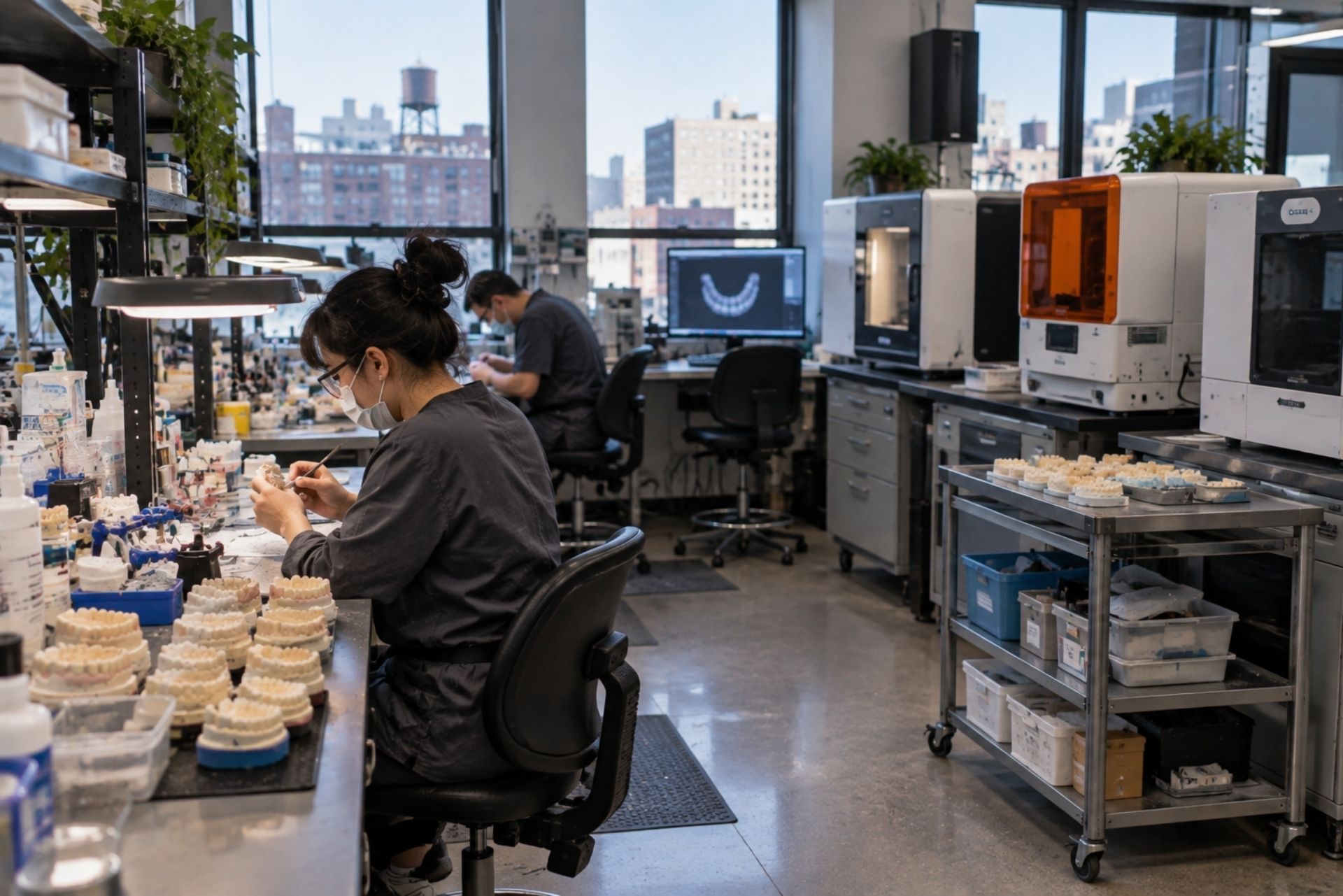
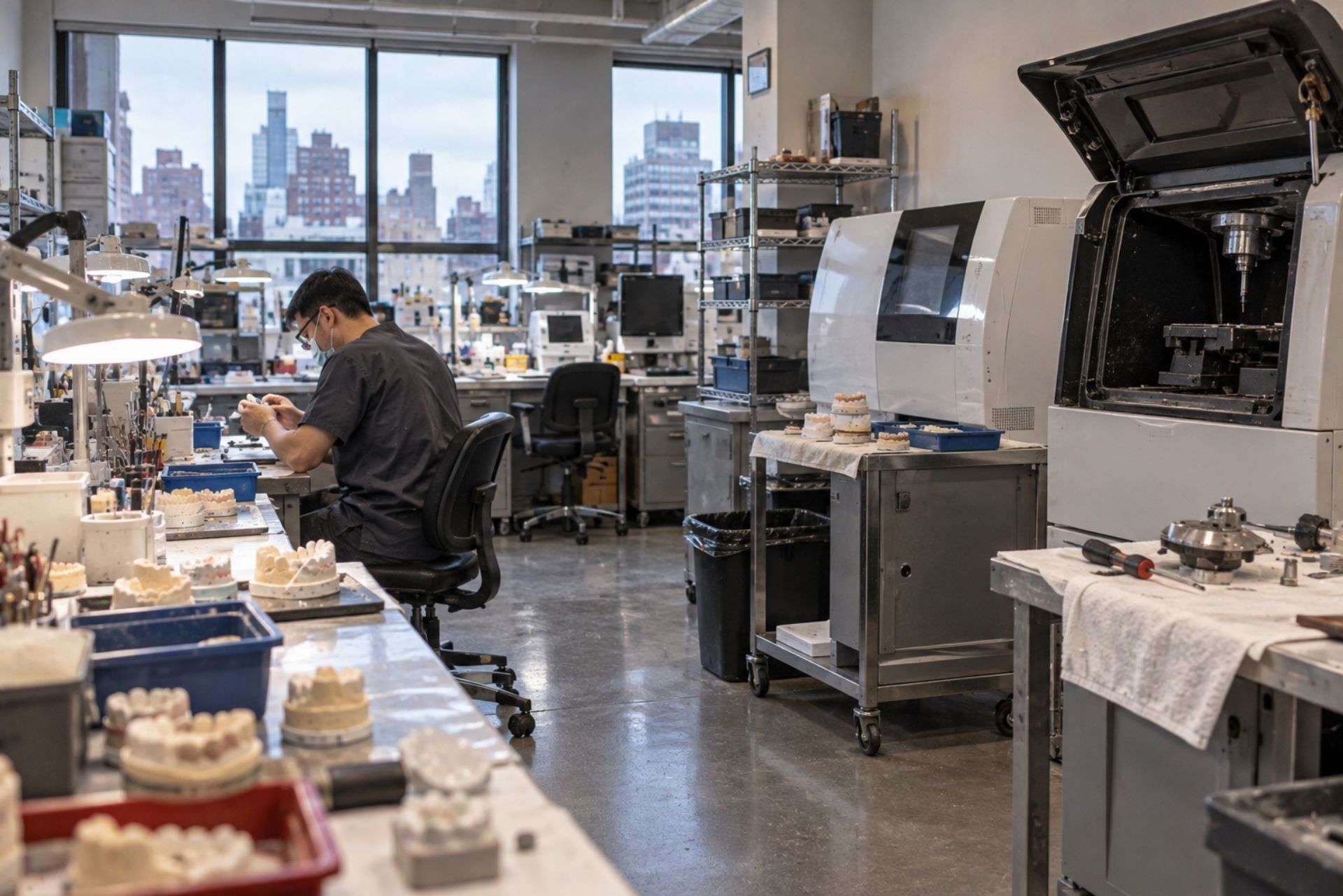
CAD/CAM milling machines, sintering furnaces, and 3D printers are the backbone of modern lab production. When a five-axis mill goes down, you can't simply swap in a replacement overnight. Proper maintenance and troubleshooting of CAD/CAM dental equipment remains critical precisely because downtime is so expensive.
Utility loss is another common trigger. Zirconia sintering furnaces are particularly vulnerable to power interruptions: an unexpected outage mid-cycle can
compromise an entire batch of restorations, and the furnace itself may require recalibration or repair. Labs in areas prone to storms, grid instability, or rolling brownouts face this risk repeatedly throughout the year.

Key Coverages for Lab Operations
A well-structured business interruption policy for a dental lab should cover lost net income, continuing fixed expenses, and extra expenses incurred to minimize the shutdown period. Extra expense coverage is particularly valuable: it reimburses you for costs like outsourcing cases to another lab, renting temporary equipment, or expediting shipping on replacement parts.
Some policies also cover "civil authority" shutdowns, where a government order prevents access to your facility. This became relevant during public health emergencies and remains a standard inclusion in most commercial policies. The key is understanding what your specific policy treats as a covered peril versus an exclusion.
Managing Supplier and Material Delays
Supply chain disruptions hit dental labs in ways that aren't always obvious. Your policy may cover direct physical damage to your facility, but what happens when your zirconia disc supplier can't deliver for six weeks? Or when a proprietary resin is backordered due to a factory fire at the manufacturer's plant?
Contingent business interruption coverage fills this gap. It protects your income when a supplier or key customer experiences a covered loss that disrupts your operations. Not every policy includes this automatically: you often need to add it as an endorsement. Make sure your policy names your critical suppliers or, better yet, includes blanket contingent coverage that doesn't require listing each vendor individually.
Protecting Payroll and Skilled Technicians
Payroll protection is one of the most misunderstood elements of business interruption coverage. Some policies include ordinary payroll as a covered continuing expense. Others exclude it entirely or limit it to a short window, such as 60 or 90 days.
For dental labs, this distinction matters enormously. Your technicians represent years of training and institutional knowledge. A policy that excludes payroll essentially forces you to choose between hemorrhaging cash to retain staff or losing them permanently. When reviewing your policy, confirm that ordinary payroll is covered for the full indemnity period, not just for key employees or management.
Understanding Recovery Periods and Indemnity Limits
The recovery period, sometimes called the period of restoration, defines how long your policy will pay benefits after a covered loss. It typically begins at the time of the loss and ends when your operations could reasonably be restored to pre-loss conditions. The operative word is "could": insurers expect you to act with reasonable speed, not drag your feet.
You can estimate your potential exposure using tools like a business interruption insurance calculator to model different downtime scenarios against your fixed costs and revenue.
Calculating the Extended Period of Indemnity
The extended period of indemnity covers the gap between when you reopen and when your revenue returns to normal. Even after your equipment is repaired and your doors are open, it takes time to rebuild your case volume. Dentists who shifted to other labs won't all come back immediately.
Standard policies often include a 30-day extended period. For dental labs, that's rarely enough. A 60- to 90-day extended indemnity period is more realistic, and some labs negotiate 120 days or more. This extension is usually available for a modest additional premium, and it's one of the most cost-effective upgrades you can make to your policy.
Comparing Coverage: Standard vs. Specialized Lab Policies
Not all business interruption policies are built the same. A standard commercial package policy might technically include business interruption coverage, but the details often fall short for dental lab operations.
| Coverage Feature | Standard Commercial Policy | Specialized Lab Policy |
|---|---|---|
| Indemnity Period | 12 months typical | 24 months recommended |
| Equipment Breakdown | Often excluded or limited | Included with sublimits |
| Contingent BI (Supplier) | Rarely included | Available as endorsement |
| Ordinary Payroll | Excluded or 60-day cap | Full period coverage |
| Extended Period of Indemnity | 30 days | 60-120 days |
| Extra Expense Coverage | Basic sublimit | Higher limits for outsourcing |
| Waiting Period | 72 hours | 24-48 hours negotiable |
The trend in equipment breakdown coverage has shifted significantly, with insurers
increasingly recognizing the complexity of modern manufacturing equipment and adjusting their underwriting accordingly.
How to Avoid Common Coverage Gaps
The most frequent mistake lab owners make is assuming their property insurance handles everything. Property insurance covers the physical damage to your equipment. Business interruption covers the income you lose while that equipment is being repaired or replaced. They're separate coverages, and gaps between them can be devastating.
Another common error: underreporting your revenue during the application process. Your policy's benefit limit is based on the financial data you provide. If you understate your gross earnings, you'll receive less than you need when a claim hits. Review your reported figures annually, especially if your lab has been growing.
Common Questions About Dental Lab Insurance
Does business interruption insurance cover equipment breakdowns? Only if your policy includes equipment breakdown coverage, which is often a separate endorsement. Standard property policies typically exclude mechanical and electrical failure.
How long does it take to receive a business interruption claim payment? Most insurers begin partial payments within 30 to 60 days of a documented claim. Full settlement can take longer, especially if the recovery period is disputed.
Can I cover payroll for all employees, not just key staff? Yes, but you need to confirm that ordinary payroll is included in your policy. Many standard policies exclude it or cap it at 60 to 90 days.
What's a waiting period, and can I shorten it? The waiting period is the deductible expressed in time rather than dollars. Most policies default to 72 hours. You can often negotiate this down to 24 or 48 hours for a higher premium.
Does my policy cover losses from a supplier's shutdown? Only with contingent business interruption coverage, which must be specifically added to most policies.
Are digital files and case data covered if my server fails? Electronic data coverage is typically a separate endorsement. Standard business interruption policies don't cover data restoration costs.
Steps to Right-Size Your Coverage
Start by calculating your monthly fixed costs: rent, utilities, loan payments, insurance, and payroll. Multiply that by the longest realistic downtime scenario for your lab. For most operations, that's the time it would take to replace your most critical and hardest-to-source piece of equipment.
Then add your average monthly net income to that figure. The total gives you a rough monthly exposure number. Multiply by your desired indemnity period, typically 24 months, and you'll have a baseline coverage limit to discuss with your broker.
Choosing the Right Broker for Lab Coverage
Work with a broker who understands manufacturing and healthcare hybrid risks. A generalist commercial broker may not know that a sintering furnace failure can cascade into weeks of lost production, or that your zirconia supplier operates from a single facility overseas. Ask potential brokers about their experience with dental or medical device manufacturing clients specifically.
Policy Review Checklist for Lab Owners
- Verify your indemnity period is at least 24 months
- Confirm ordinary payroll is covered for the full period
- Check for contingent business interruption coverage
- Review your reported gross earnings against actual figures
- Ensure equipment breakdown is included, not just fire and theft
- Confirm your extra expense sublimit is sufficient to outsource cases
- Check the waiting period and negotiate if needed
The Bottom Line for Your Laboratory
Your dental lab's income depends on a chain of equipment, utilities, materials, and skilled people all working together. When any link breaks, the financial impact starts immediately and compounds daily. Business interruption coverage for dental labs isn't a luxury: it's the policy that keeps your business alive while you rebuild.
The specifics matter more than the broad strokes. A 12-month indemnity period that seemed adequate five years ago won't protect you when a milling machine takes nine months to arrive and another two months to install and certify. Payroll exclusions that look minor on paper become catastrophic when your best technicians leave for competitors.
Review your current policy against the benchmarks in this guide. If your coverage has gaps, particularly around equipment breakdown, supplier contingency, or payroll protection, talk to your broker before your next renewal. The best time to fix a policy is before you need it.
ABOUT THE AUTHOR:
TAYLOR RICHARDSON
Taylor Richardson is the founder and CEO of 5M Insurance. With a focus on real estate risk management, Taylor helps investors and property managers nationwide secure smarter, scalable coverage solutions—without the headaches of traditional insurance brokers.
Contact Us
Comprehensive Coverage for Businesses of All Sizes
Protecting Your Business, Securing Your Future
General Liability Insurance
Protection against lawsuits and third-party claims.

Workers Comp Insurance
Required protection for employees in case of injury or illness.
Commercial Property Insurance
Coverage for buildings, equipment, and business assets.
Commercial Auto Insurance
Coverage for company vehicles and fleet operations.
Commercial Umbrella Insurance
Protection against errors, omissions, and negligence claims.
Business Owner's Policy
A bundled policy combining essential business coverages.
Personalized Insurance for Every Stage of Life
Protect What Matters Most with Comprehensive Coverage
Jewelry Insurance
Specialized protection for valuable items like engagement rings, watches, and heirlooms.
Pet Insurance
Financial protection for veterinary care and unexpected pet health expenses.
Specialized Insurance for Your Business Needs
Serving the Industries That Drive
New York & New Jersey






What Our Clients Say
Trusted by Businesses & Families Across New York & New Jersey
Frequently Asked Questions
Get Answers to Your Insurance Questions
We understand that insurance can be complex. Here are answers to some of the most common questions our clients ask. If you need more information, our team is always here to help.
- Still have questions?
How do I know what coverage I need?
Choosing the right insurance starts with understanding your risks. For personal insurance, consider factors like your home’s value, your vehicle, and your financial responsibilities. Homeowners may need additional protection for floods or valuable belongings, while drivers should evaluate coverage limits based on their assets.
For businesses, the right coverage depends on the industry, number of employees, and liability risks. General liability is essential for most businesses, but some may need property, workers’ compensation, or business owner’s policies. Our team can assess your needs and guide you to the best options.
What factors affect my insurance rate?
Insurance rates are influenced by multiple factors. For auto policies, your driving history, vehicle type, and location play a major role. Home insurance costs depend on your home’s value, construction type, and potential risks like flooding or fire hazards.
For business insurance, rates vary based on the industry, size, claims history, and coverage limits. High-risk industries may require specialized policies, while businesses with strong safety measures and claims-free histories can qualify for better rates. Our agents help find discounts and cost-saving opportunities.
Why should I work with an independent insurance agency?
Unlike captive agents who represent a single insurance company, independent agencies like Joyce Insurance Agency work with multiple carriers to find the best coverage for your needs. This means you get more choices, competitive rates, and a policy that truly fits your situation.
We take the time to understand your needs, compare options, and provide expert advice. Whether you're insuring your home, car, or business, our priority is finding you the best protection at a great value.
How quickly can I get insured?
The time it takes to secure a policy depends on the type of insurance. Auto and home policies can often be issued the same day, while business insurance may take longer, especially for specialized coverage. Workers’ compensation and commercial policies may require underwriting approval, which can extend the timeline.
We prioritize efficiency and make the process as smooth as possible. Once we understand your needs, we work quickly to get you insured with minimal hassle.
What should I do if I need to file a claim?
If you need to file a claim, contact us as soon as possible. We’ll guide you through the process and ensure you have everything needed to submit your claim correctly. Gathering necessary documentation, such as photos, receipts, or witness statements, can help speed up the process.
We work directly with your insurance provider to streamline communication and advocate on your behalf. Our goal is to make sure your claim is handled quickly and fairly so you can recover without unnecessary stress.
How can I lower my insurance costs?
There are several ways to reduce insurance premiums without sacrificing coverage. For auto insurance, maintaining a clean driving record, bundling policies, and increasing deductibles can help lower costs. Homeowners can save by installing security systems, upgrading safety features, and bundling home and auto policies.
For business owners, implementing risk management strategies, maintaining a claims-free history, and working with an independent agent to find competitive rates can lead to cost savings. Our team helps you explore discounts and options to ensure you’re getting the best value.
Contact Us
Phone
Location