Does Your New York Homeowners Policy Cover Flood Damage?
See How We're Different
or call us: 845-942-7200
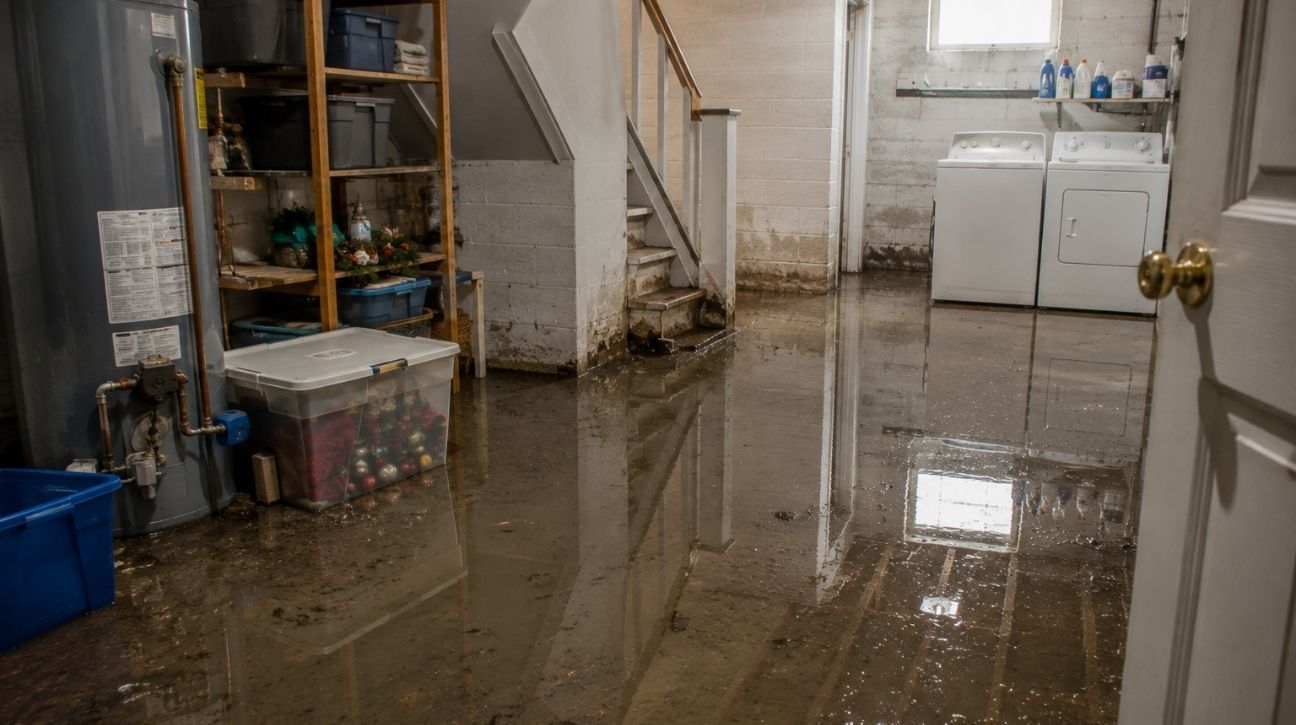
A single nor'easter can dump enough rain on the Hudson Valley to turn a finished basement into a wading pool. A tropical storm remnant can overwhelm New York City's storm drains and push water into ground-floor apartments across Queens. And every year, thousands of New York homeowners file claims expecting their standard policy to cover the mess, only to learn it won't. Whether your home sits on the South Shore of Long Island or in a quiet neighborhood in Syracuse, understanding whether your New York homeowners insurance covers flood damage is one of the most consequential financial questions you can ask. The answer, almost universally, is no. Your standard policy was never designed to pay for flood losses, and that gap has cost New York families billions in uninsured damage over the past decade. This guide breaks down what's actually excluded, what your real options are, and how to close the coverage gap before the next big storm.
The Truth About Standard Homeowners Insurance and Floods
Most New York homeowners carry an HO-3 policy, sometimes called a "special form." It covers your dwelling against a broad list of perils: fire, wind, hail, lightning, theft, and more. But every HO-3 contains a flood exclusion buried in the policy language. This isn't a quirk of one carrier or another. It's an industry-wide standard, and it applies whether you bought your policy from a large national insurer or a regional mutual company.
Standard Exclusions in New York Policies
Open your declarations page and flip to the exclusions section. You'll find language that specifically removes coverage for "flood, surface water, waves, tidal water, overflow of a body of water, or spray from any of these." That language has been standard in homeowner forms for decades. The exclusion exists because flood losses are catastrophic and correlated: when a flood hits a neighborhood, it hits everyone at once. Private insurers historically couldn't price that risk profitably within a standard homeowners product, so they carved it out entirely.
Your policy also excludes damage from mudflow, sewer backup caused by flooding, and storm surge. Some carriers offer optional sewer backup endorsements (usually $5,000 to $25,000 in coverage), but those endorsements typically won't pay if the backup was caused by a flood event. Read the endorsement language carefully.
Flood Damage vs. Water Damage: The Crucial Difference
Here's where claims get denied and homeowners get angry. Your HO-3 does cover certain types of water damage: a burst pipe, an overflowing washing machine, rain entering through a wind-damaged roof. These are "sudden and accidental" water losses from an internal or covered-peril source.
Flood damage is different. FEMA defines a flood as a temporary condition where water covers normally dry land, affecting two or more acres or two or more properties. If water enters your home from the ground up, through rising rivers, storm surge, or surface runoff, that's a flood. Your homeowners policy won't pay a dime. The distinction matters enormously during hurricanes and nor'easters, where both wind-driven rain (covered) and storm surge (not covered) can damage the same house simultaneously. Adjusters will try to separate the two causes, and the burden often falls on you to prove which damage came from which source.
New York Flood Risks: From Coastal Storms to Inland Runoff
New York's flood exposure isn't limited to beachfront properties. The state spans coastal zones, river valleys, lake plains, and mountainous terrain, each with its own flood dynamics. Metropolitan New York ranks as America's largest hurricane exposure zone, with trillions of dollars in residential property at risk from storm surge alone. But inland communities along the Mohawk River, the Susquehanna, and dozens of smaller tributaries face repeated riverine flooding that rarely makes national headlines.
Understanding FEMA Flood Zones in NY
FEMA assigns flood zones based on probability. High-risk zones (labeled A and V on flood maps) carry a 1% annual chance of flooding, which translates to a 26% chance over a 30-year mortgage. V zones add coastal wave action to the equation. Moderate-risk zones (B and X-shaded) sit between the 100-year and 500-year flood boundaries. Minimal-risk zones (C and X-unshaded) fall outside both.
If your home is in a high-risk zone and you have a federally backed mortgage, your lender requires flood insurance. New York Real Property Law Section 283 now prohibits lenders from requiring flood insurance coverage that exceeds the lesser of the property's replacement cost or the outstanding loan balance, a change that financial institutions need to understand when setting coverage requirements. This can save you money on premiums if your loan balance is well below the maximum NFIP limits.
Why Low-Risk Zones Still Need Protection
About 25% of all NFIP claims come from properties outside high-risk zones. That statistic alone should make you pause. Flood maps can be outdated, sometimes by a decade or more. New development upstream changes drainage patterns. Climate patterns are shifting rainfall intensity. A home in an X zone today could experience flooding that wasn't modeled when the map was drawn.
Lessons from repeated NYC flooding events show that urban areas with heavy impervious surfaces, like concrete and asphalt, can flood dramatically even in moderate rain events. If you're in a low-risk zone, flood insurance is cheaper (often under $500 per year through the NFIP), and it's one of the smartest purchases you can make.
Comparing Your Coverage Options: NFIP vs. Private Market
You have two main paths to flood coverage in New York: the National Flood Insurance Program, administered by FEMA, and private flood insurance carriers. Each has trade-offs worth understanding before you buy.
The NFIP has been the backbone of flood insurance since 1968. Congress has extended the program through 2026, though its long-term reauthorization remains an ongoing legislative question. FEMA's Risk Rating 2.0 pricing model, fully implemented since 2023, now prices policies based on individual property characteristics rather than just flood zone designations.
Private flood insurers have grown significantly in New York over the past five years. They can offer higher coverage limits, broader terms, and sometimes lower premiums for properties that Risk Rating 2.0 prices aggressively.
Comparison Chart: National Flood Insurance Program vs. Private Carriers
| Feature | NFIP | Private Flood Insurance |
|---|---|---|
| Max Building Coverage | $250,000 | $1 million+ (varies by carrier) |
| Max Contents Coverage | $100,000 | $500,000+ (varies by carrier) |
| Loss of Use Coverage | Not included | Often included |
| Replacement Cost on Contents | Not available | Available with many carriers |
| Basement Coverage | Very limited | Broader with some carriers |
| Waiting Period | 30 days | 10-15 days (some carriers) |
| Average Annual Premium (NY) | $700-$1,500+ | Varies widely by risk |
| Accepted by All Lenders | Yes, universally | Most lenders accept; verify first |
| Policy Backed By | U.S. government | Private reinsurance markets |
One thing to keep in mind: if your home is worth more than $250,000 (which describes most New York properties), the NFIP's building coverage cap may leave you significantly underinsured. A private policy or an NFIP policy supplemented by a private excess flood policy can close that gap.
What a Separate Flood Insurance Policy Actually Covers
Whether you go NFIP or private, a flood policy is a standalone contract, completely separate from your homeowners insurance. It covers physical damage caused by flooding, but the specifics depend on whether you're looking at building coverage or contents coverage.
Building Property Coverage
Building coverage pays to repair or replace your home's structure and its permanently installed features. This includes the foundation, electrical and plumbing systems, HVAC equipment, built-in appliances, permanently installed carpeting, and wallboard. Under the NFIP, building coverage also extends to detached garages on the same property.
Here's a common claim scenario I've seen trip up homeowners: your furnace sits in the basement and gets destroyed by three feet of floodwater. Building coverage pays for the furnace replacement because it's a permanent building system. But that finished basement with drywall, custom cabinetry, and a home theater? NFIP coverage for below-grade improvements is extremely limited. Private carriers sometimes offer better basement terms, but read the policy carefully.
Personal Contents Coverage
Contents coverage protects your belongings: furniture, clothing, electronics, and portable appliances. Under the NFIP, contents are paid at actual cash value, meaning depreciation is factored in. A five-year-old couch that cost $2,000 might only pay out $800. Private carriers often offer replacement cost coverage on contents, which pays what it costs to buy a new equivalent item.
Contents coverage does not typically include currency, precious metals, or property outside the insured building. Vehicles are never covered under a flood policy; that's what comprehensive auto insurance handles. If you run a home business, your business inventory and equipment may need a separate commercial flood policy.
Common Questions About NY Flood Protection
FAQ: Real Answers for New York Homeowners
Do I need flood insurance if I'm not in a FEMA flood zone? You're always in a flood zone; some are just lower risk than others. If you're in an X zone, you're not required to carry flood insurance, but you're still eligible, and policies in low-risk zones are significantly cheaper.
How long do I have to wait before my flood policy kicks in? NFIP policies have a standard 30-day waiting period. You can't buy a policy when a storm is in the forecast and expect coverage. Some private carriers offer shorter waiting periods of 10 to 15 days.
Will my flood insurance cover my basement? The NFIP provides very limited basement coverage, mostly restricted to essential building systems like furnaces, water heaters, and circuit breaker panels. Finished basement features like drywall, paneling, and flooring below grade are generally excluded.
Can I get flood insurance if I rent my home? Yes. Renters can purchase contents-only flood coverage through the NFIP for up to $100,000. Private carriers may offer higher limits.
What happens if the NFIP expires? Congress has repeatedly extended the program on short-term authorizations. The current extension runs through late 2026. If it lapses, no new policies can be written and existing policies can't be renewed, though active policies remain in force through their term. This has happened briefly multiple times in recent years.
Does flood insurance cover storm surge? Yes. Storm surge is considered flooding under both NFIP and private flood policies. This is one of the most important coverages for coastal New York homeowners, since storm surge is explicitly excluded from your standard homeowners policy.
Protecting Your Assets Before the Next Storm
Your New York homeowners policy doesn't cover flood damage. That's the single most important takeaway from everything above. The exclusion is absolute, it applies in every flood zone, and no endorsement on your HO-3 will change it. You need a separate flood policy, either through the NFIP or a private carrier, to protect your home and belongings from rising water.
Don't wait for hurricane season to start shopping. The 30-day NFIP waiting period means procrastination has a real cost. Get quotes from both the NFIP and at least two private flood carriers so you can compare coverage terms, not just premiums. Pay attention to basement limitations, contents valuation methods, and whether loss of use is included.
Talk to your insurance agent this week. Ask them to run your property through FEMA's flood map tool and pull quotes side by side. If your home is worth more than $250,000, make sure your coverage limits actually match your exposure. Flood damage is preventable financial devastation, but only if you act before the water rises.
Recent Posts