How New York's Scaffold Law (Labor Law 240) Affects Your Contractor Insurance Costs
See How We're Different
or call us: 845-942-7200
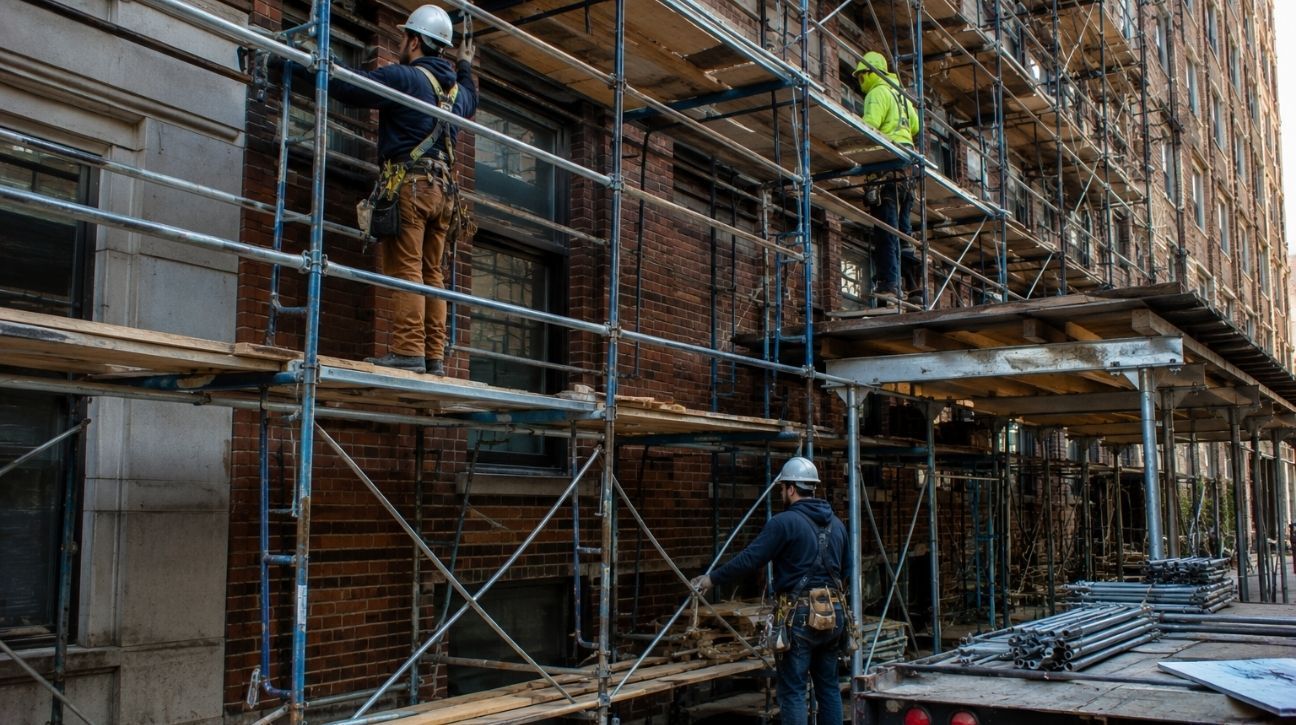
If you're a contractor working in New York, your insurance premiums probably feel like a second mortgage. There's a reason for that, and it has a name: Labor Law 240, better known as the Scaffold Law. This statute, originally enacted in 1885, imposes absolute liability on property owners and general contractors for gravity-related injuries on construction sites. No other state in the country has anything quite like it, and the financial consequences ripple directly into every policy you carry.
Insurance costs in New York City now account for 8% to 10% of total development costs, which is two to five times higher than states using comparative negligence standards. That gap isn't an accident. It's the Scaffold Law at work, inflating premiums across the board and making New York one of the most expensive places in the nation to build. Whether you're a GC managing a high-rise project in Manhattan or a subcontractor doing facade work in Brooklyn, understanding how this law drives your insurance costs is essential to protecting your margins.
Understanding Labor Law 240: The Absolute Liability Rule
New York's Scaffold Law creates a legal framework unlike anything contractors face in other states. At its core, Labor Law 240 holds property owners and general contractors absolutely liable for elevation-related injuries. That word "absolutely" is doing heavy lifting here. It means that even if a worker was partially or mostly at fault for their own injury, the owner or GC still bears full financial responsibility.
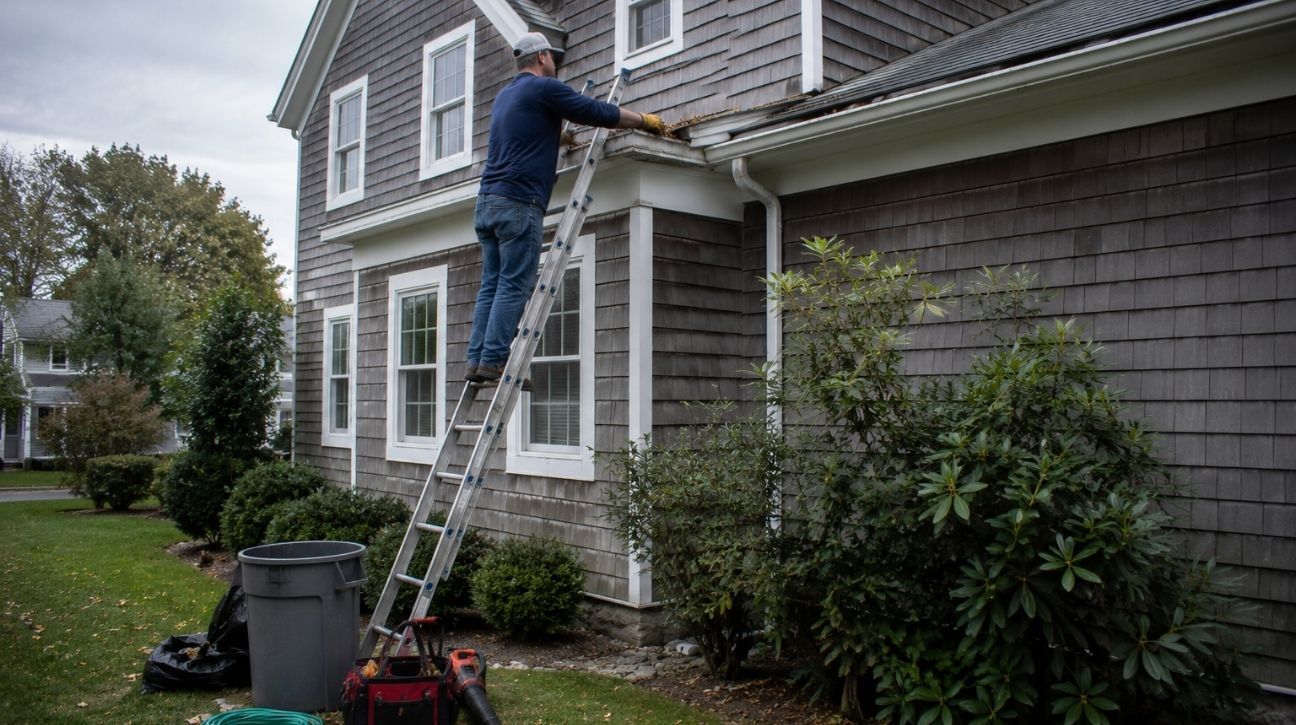
The law covers falls from heights, falling objects, and essentially any hazard related to gravity differentials on a construction site. Scaffolds, ladders, hoists, pulleys, and similar devices all fall under its scope. If a worker is injured because adequate safety devices weren't provided, the contractor or owner pays. Period.
What Makes New York's Scaffold Law Unique
New York is the only state that still applies an absolute liability standard to elevation-related construction accidents. Every other state uses some form of comparative negligence, which means fault can be shared between the injured worker and the employer. Under comparative negligence, if a worker ignores safety protocols and gets hurt, their compensation can be reduced proportionally.
Not in New York. Here, the injured worker's own negligence is irrelevant to liability. A worker could skip a harness, ignore posted safety rules, and even be intoxicated, and the contractor or property owner would still be on the hook for 100% of damages. This one-sided liability structure is what makes the law so controversial and so expensive for the construction industry.
Gravity-Related Risks and Contractor Responsibility
The Scaffold Law doesn't cover every type of construction injury. It's specifically limited to gravity-related hazards: situations where a worker falls from a height or is struck by a falling object. But that scope is broader than it sounds. Courts have interpreted "gravity-related" to include workers standing on unstable surfaces, objects sliding off elevated platforms, and even collapses of temporary structures.
Your responsibility as a contractor extends to providing proper safety equipment and ensuring it's adequate for the task. If a ladder is too short, a scaffold isn't properly braced, or a safety net has a gap, you're liable. The law doesn't ask whether you were reasonable. It asks whether the safety device failed or was absent.
Direct Impacts on Your General Liability Premiums
The Scaffold Law's absolute liability standard translates directly into higher insurance premiums for every contractor operating in New York. Insurers price risk, and when a single claim can result in a multimillion-dollar judgment with no comparative fault defense available, that risk is enormous.
General liability premiums for New York contractors routinely run two to three times higher than national averages. A mid-size GC in Texas might pay $15,000 to $25,000 annually for general liability coverage. A comparable contractor in New York City? Expect $50,000 to $80,000 or more, depending on your trade and claims history. Those numbers aren't hypothetical. They're the reality contractors face every renewal cycle.
Why New York Insurance Rates Lead the Nation
Several factors compound to push New York's rates to the top. The Scaffold Law is the primary driver, but it's amplified by New York's litigation environment. The state's courts tend to be plaintiff-friendly, and average jury verdicts for construction injury cases in the five boroughs regularly exceed $1 million. Some verdicts reach $10 million or more.
Insurers also factor in the high cost of medical care in the New York metro area, the density of high-rise construction, and the sheer volume of claims filed. The result is a market where many national carriers simply refuse to write construction policies in New York, leaving contractors with fewer options and less competitive pricing.
The Difference Between Action Over and Standard Claims
Here's a nuance that catches many contractors off guard. Standard workers' compensation claims are one thing, but "action over" claims are where the Scaffold Law really bites. An action over claim occurs when an injured worker collects workers' comp benefits and then files a separate lawsuit against the property owner or GC under Labor Law 240. The owner or GC, in turn, seeks indemnification from the subcontractor whose employee was injured.
This creates a chain of liability that can devastate a small subcontractor. Your workers' comp policy covers the initial claim, but the action over lawsuit hits your general liability policy. If you don't carry sufficient limits, or if your policy excludes action over claims, you could face an uncovered judgment. Many contractors don't realize this gap exists until it's too late.
Comparison: NY General Liability vs. Other States
The cost difference between operating in New York versus other states isn't subtle. It's dramatic enough to change the economics of an entire project.
Table: Coverage and Cost Comparison by State Type
| Factor | New York (Scaffold Law) | Comparative Negligence States | Low-Litigation States |
|---|---|---|---|
| Liability Standard | Absolute liability | Shared fault | Shared fault |
| Avg. GL Premium (Mid-Size GC) | $50,000 - $80,000+/yr | $20,000 - $35,000/yr | $12,000 - $22,000/yr |
| Insurance as % of Project Cost | 8% - 10% | 3% - 5% | 2% - 4% |
| Worker Negligence Defense | Not available | Available | Available |
| Average Jury Verdict (Injury) | $1M - $10M+ | $300K - $1.5M | $200K - $800K |
| Carrier Availability | Limited | Moderate to high | High |
This table illustrates why New York's Scaffold Law continues to strain the construction industry. Contractors bidding projects in New York must build these inflated insurance costs into every estimate, which ultimately raises the price of construction for everyone: developers, taxpayers, and tenants.
Strategies to Manage and Reduce Your Insurance Costs
You can't change the law, but you can take concrete steps to control what you're paying. Smart contractors treat insurance cost management as an ongoing operational priority, not something they think about once a year at renewal.
Start by reviewing your experience modification rate (EMR). This number, based on your claims history relative to industry averages, is the single biggest lever you have. An EMR below 1.0 signals to insurers that you're a better-than-average risk. An EMR above 1.0 means you'll pay a surcharge on every premium.
The Importance of Meticulous Safety Documentation
Documentation is your best friend in a Scaffold Law state. Every safety meeting, toolbox talk, equipment inspection, and site audit should be recorded and filed. If a claim arises, your documentation won't eliminate absolute liability, but it can influence settlement negotiations and demonstrate to your insurer that you're proactively managing risk.
Specific practices that make a measurable difference:
- Conduct daily site safety inspections with signed checklists
- Photograph scaffold setups, ladder placements, and fall protection equipment before each shift
- Maintain training records for every worker, including subcontractor employees
- Implement a formal return-to-work program to reduce claim duration and costs
- Report incidents immediately, even minor ones, to prevent late-reported claims from inflating your EMR
Contractors who maintain rigorous safety programs consistently see lower premiums over time, even in New York's tough market.
Choosing Carriers with Scaffold Law Expertise
Not all insurance carriers understand the nuances of writing policies in New York. Some national carriers apply generic underwriting models that don't account for the specific risks created by Labor Law 240. You want a carrier, and a broker, who understands action over exposure, knows how to structure your limits properly, and has experience defending claims under the Scaffold Law.
Ask your broker these questions: Does the carrier have a dedicated New York construction practice? What's their claims handling process for Labor Law 240 cases? Do they offer risk management resources specific to gravity-related hazards? The answers will tell you whether you're working with someone who genuinely knows this market or someone who's just collecting your premium.
Common Questions About the Scaffold Law
FAQ: What contractors need to know about rates and risks
Does the Scaffold Law apply to residential projects? Yes. Labor Law 240 applies to all construction, demolition, and repair work on buildings and structures, including residential properties. Even homeowners can be held liable, though there's a narrow exemption for owners of one- and two-family homes who don't direct or control the work.
Can I reduce my liability by hiring subcontractors instead of employees? No. The Scaffold Law holds general contractors liable for injuries to subcontractor employees. You can't contract away absolute liability, though you can require subcontractors to carry adequate insurance and name you as an additional insured.
What insurance limits should I carry for New York construction work? Most experienced brokers recommend a minimum of $1 million per occurrence and $2 million aggregate for general liability, with an umbrella policy of at least $5 million. High-rise or complex projects may require $10 million or more in umbrella or excess coverage.
Are there any legislative efforts to reform or repeal the Scaffold Law? Reform efforts have been introduced in Albany repeatedly over the past two decades, but none have passed. The construction industry continues to push for comparative negligence amendments, while labor unions and trial attorneys have successfully blocked changes. As of 2026, the law remains unchanged.
Does my workers' comp policy cover Scaffold Law claims? Workers' comp covers the initial injury claim, but it does not cover the subsequent lawsuit filed under Labor Law 240. That lawsuit hits your general liability policy. Make sure your GL policy includes action over coverage, or you could face a significant gap.
What This Means for Your Business Bottom Line
New York's Scaffold Law isn't going away anytime soon. Every contractor working in the state needs to accept that reality and plan accordingly. Your insurance costs will be higher than in any other state, and those costs need to be factored into every bid, every project budget, and every business decision you make.
The contractors who thrive in this environment are the ones who treat safety as an investment rather than a checkbox. They document everything, work with brokers who specialize in New York construction, and maintain the kind of claims history that earns them competitive rates despite the market's challenges.
If you haven't reviewed your insurance program in the last 12 months, now is the time. Get quotes from carriers with proven New York construction experience, audit your safety documentation, and make sure your limits are adequate for the exposure you're carrying. The Scaffold Law makes New York a tough place to build, but it doesn't have to break your business.
Recent Posts