NY Homeowners Insurance: Fixed vs. Percentage Deductibles
See How We're Different
or call us: 845-942-7200
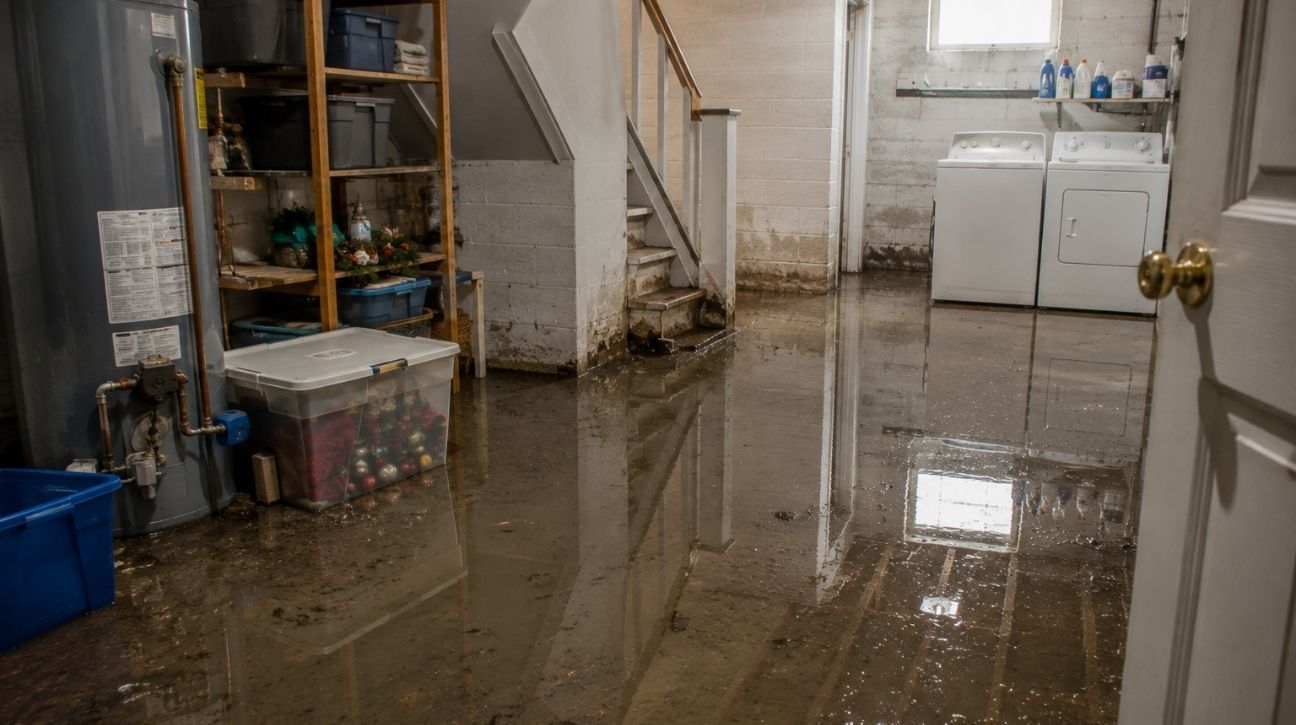
A burst pipe in January. A tree through the roof during a nor'easter. A kitchen fire that guts half the first floor. These are the moments when your homeowners insurance policy stops being an abstraction and becomes the single most important financial document you own. But before your insurer pays a dime, you'll need to cover your deductible, and in New York, the type of deductible on your policy can mean a difference of hundreds or even thousands of dollars out of your pocket. Understanding homeowners insurance deductibles in New York, especially the distinction between fixed and percentage structures, is essential before you file a claim and discover an unpleasant surprise. The state has specific regulations around hurricane and windstorm deductibles that don't exist in many other parts of the country, and a 2026 regulatory update makes this topic even more urgent. Your deductible choice affects both your monthly premium and your financial exposure during a disaster. Whether you own a brownstone in Brooklyn, a colonial in Westchester, or a lakefront cottage in the Finger Lakes, the math changes depending on your home's value, your location, and the type of peril you're most likely to face. This guide breaks down how each deductible type works, what New York law requires, and how to pick the right structure for your situation.
Understanding Deductible Basics for New York Homeowners
Your deductible is the amount you pay before your insurance company covers the rest of a claim. If you have a $1,000 deductible and suffer $15,000 in damage, you pay $1,000 and the insurer pays $14,000. Simple enough. But not all deductibles are structured the same way, and the two most common types, fixed dollar and percentage, behave very differently when it's time to file.
New York homeowners encounter both types depending on the peril, the carrier, and the property's location. Most standard claims like fire, theft, or water damage use a fixed dollar deductible. Percentage deductibles typically apply to catastrophic events like hurricanes or windstorms, where damage amounts tend to be much larger. Knowing which type applies to which peril on your specific policy is something every homeowner should verify before storm season, not after.
How Fixed Dollar Deductibles Work
A fixed dollar deductible is exactly what it sounds like: a flat amount you choose when you buy your policy. Common options in New York range from $500 to $2,500, though some policies offer amounts as high as $5,000 or $10,000 for homeowners willing to absorb more risk.
The appeal is predictability. No matter whether your home is insured for $300,000 or $900,000, a $1,000 fixed deductible means you pay $1,000 on every covered claim. That consistency makes budgeting easier. You can set aside a specific amount in an emergency fund and know exactly what you'll owe. For most non-catastrophic claims, fixed deductibles are standard across New York policies and remain the most common structure for everyday perils like fire, vandalism, and burst pipes.
How Percentage Deductibles are Calculated
Percentage deductibles tie your out-of-pocket cost to your home's insured value, typically the dwelling coverage amount listed on your declarations page. A 2% deductible on a home insured for $500,000 means you'd owe $10,000 before the insurer pays anything. That same 2% on a $250,000 home equals $5,000.
This structure is most commonly applied to wind, hurricane, and sometimes earthquake perils. The percentage usually ranges from 1% to 5% of your dwelling coverage. Here's the critical point many homeowners miss: your deductible isn't based on the claim amount. It's based on your total insured value. So even if a hurricane causes only $20,000 in damage to your $600,000 home, a 2% deductible still means you're responsible for $12,000 of that. The remaining $8,000 is all the insurer covers.
Comparing Fixed vs. Percentage Deductibles
The core difference comes down to scale. Fixed deductibles stay constant regardless of your home's value. Percentage deductibles grow as your coverage increases. For homeowners with high-value properties, especially in coastal areas of Long Island, Staten Island, or the Rockaways, percentage deductibles can represent a significant financial commitment during a major weather event.
A fixed deductible protects you from surprises but typically costs more in monthly premiums. A percentage deductible lowers your premium but shifts more risk onto you during catastrophic events. Neither option is universally better. Your choice should depend on your home's value, your cash reserves, and your geographic exposure to wind and storm damage.
Deductible Comparison Table
| Feature | Fixed Dollar Deductible | Percentage Deductible |
|---|---|---|
| Typical Range | $500 - $5,000 | 1% - 5% of dwelling coverage |
| Cost on $400K Home | $1,000 (if chosen) | $4,000 - $20,000 |
| Applies To | Most standard perils | Hurricane, windstorm, hail |
| Premium Impact | Higher premiums | Lower premiums |
| Predictability | High: same amount every claim | Varies with insured value |
| Best For | Moderate-value homes, budget certainty | Homeowners with strong cash reserves |
| Risk Level | Lower out-of-pocket risk | Higher out-of-pocket risk |
New York Specific Rules: Windstorm and Hurricane Deductibles
New York has distinct regulations governing how insurers apply hurricane deductibles. Effective February 2, 2026, New York Regulation 11 NYCRR 74 requires insurers to use uniform standards for hurricane deductible triggers and calculations. This means carriers can no longer define "hurricane" differently from one policy to the next. The regulation standardizes when a hurricane deductible kicks in and how it's applied, giving homeowners more consistency across the market.
Before this regulation, one insurer might trigger a hurricane deductible based on a National Weather Service watch, while another required a formal hurricane declaration. That inconsistency created confusion and disputes during claims. The 2026 rule eliminates much of that ambiguity.
Coastal vs. Inland Requirements
If you own property on Long Island's South Shore, in the five boroughs, or along the Hudson River's tidal zones, your insurer almost certainly applies a separate wind or hurricane deductible. These coastal areas face higher storm surge and wind exposure, and carriers price that risk accordingly.
Inland homeowners in Albany, Syracuse, or the Hudson Valley may still carry a wind deductible, but it's often lower or structured as a fixed dollar amount rather than a percentage. Some inland policies don't include a separate wind deductible at all, rolling wind damage into the standard all-perils deductible. Recent developments in New York insurance law have pushed for greater transparency in how these geographic distinctions are communicated to policyholders. Check your declarations page carefully. The wind or hurricane deductible is often listed separately from your standard deductible.
Trigger Events for Percentage Deductibles
Your hurricane deductible doesn't apply to every windy day. Under the updated regulation, specific trigger events must occur before the percentage deductible replaces your standard fixed deductible. Typically, the National Weather Service must issue a hurricane warning for your county or region.
Once triggered, the hurricane deductible applies to all wind-related damage from that event, even if the storm weakens to a tropical storm by the time it reaches your property. The deductible resets after the event concludes, meaning a second hurricane later in the season would trigger a separate deductible. This is a detail that catches homeowners off guard: you could owe your percentage deductible twice in one season if two qualifying storms hit.
Financial Impact on Your Premium and Payouts
Your deductible choice directly influences two things: how much you pay each month and how much you receive after a loss. These two factors pull in opposite directions, and finding the right balance requires honest math about your finances.
The Relationship Between Deductibles and Monthly Costs
Raising your deductible from $1,000 to $2,500 can reduce your annual premium by 10% to 20%, depending on your carrier and location. For a New York homeowner paying $2,400 per year, that's a savings of $240 to $480 annually. Over five claim-free years, you'd save $1,200 to $2,400, more than enough to cover the higher deductible if you eventually file.
Percentage deductibles on hurricane coverage tend to lower premiums even further because you're absorbing a much larger share of catastrophic risk. A homeowner in Nassau County might see a meaningful premium reduction by accepting a 2% hurricane deductible instead of a 1% option. But those savings only matter if you can actually cover the deductible when a storm hits. Choosing the right deductible structure before storm season is far better than scrambling for funds after one.
Out-of-Pocket Risks During a Major Claim
Here's where the math gets real. A 2% hurricane deductible on a home insured for $750,000 means $15,000 out of your pocket. If you don't have that in liquid savings, you're looking at personal loans, credit cards, or delayed repairs. Delayed repairs lead to secondary damage: mold, structural deterioration, code violations.
Consider running a simple stress test. Look at your dwelling coverage amount, multiply it by your hurricane deductible percentage, and ask yourself honestly whether you could write that check within 30 days. If the answer is no, a lower percentage or a fixed dollar wind deductible, even at a higher premium, might be the smarter financial choice.
Frequently Asked Questions
Can I have different deductibles for different perils on the same policy? Yes. Most New York policies carry a standard fixed deductible for general perils and a separate percentage deductible for hurricanes or windstorms. These are listed independently on your declarations page.
Does my hurricane deductible apply to tropical storms? It depends on the trigger. Under New York's 2026 regulation, the hurricane deductible activates when a hurricane warning is issued. If a storm is only classified as a tropical storm, your standard deductible typically applies instead.
Can I change my deductible mid-policy? Most carriers allow deductible changes at renewal. Some will adjust mid-term, but it may involve re-underwriting or a policy endorsement fee. Call your agent to confirm.
Is a higher deductible always a bad idea? Not necessarily. If you have strong emergency savings and rarely file claims, a higher deductible lowers your premium and keeps more money in your pocket over time. The risk is concentrated in that one bad event.
Do percentage deductibles apply to my personal property too? Typically no. Percentage deductibles usually apply only to dwelling damage from the specified peril. Personal property claims generally fall under your standard fixed deductible.
Making the Right Choice for Your NY Home
The right deductible for your New York home isn't a one-size-fits-all answer. It depends on where you live, what your home is worth, and how much cash you can access quickly after a disaster. Coastal homeowners should pay close attention to the updated hurricane deductible regulations effective in 2026, since these rules directly affect how much you'll owe after a qualifying storm.
Run the numbers on both structures. Compare the annual premium savings of a higher deductible against the potential out-of-pocket cost during a major claim. If the savings over five years don't outweigh the increased risk, stick with the lower deductible. Talk to your insurance agent about your specific policy's wind and hurricane triggers. Ask them to show you the exact deductible amounts for a hypothetical $50,000 claim under both structures. That conversation alone can save you from a costly surprise when you need your coverage most.
Recent Posts