Certificate of Insurance (COI) Requirements for New York Contractors: What You Need to Know
See How We're Different
or call us: 845-942-7200
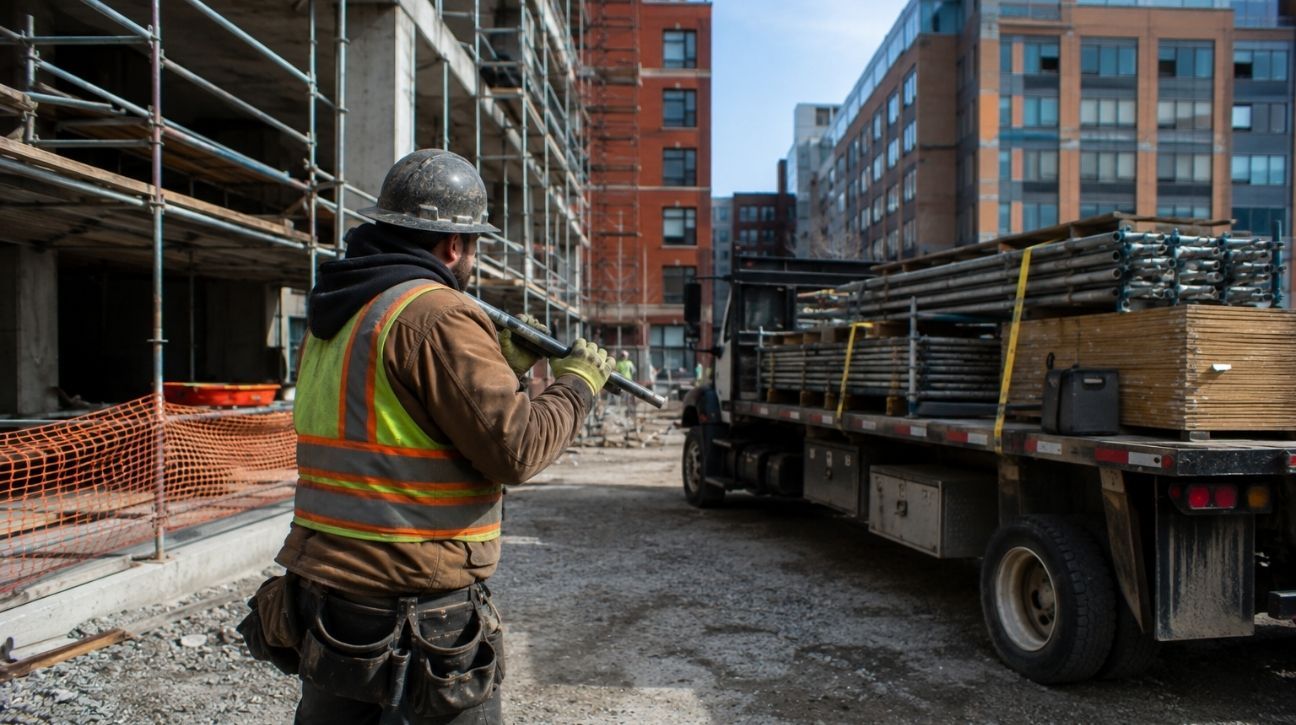
A single missing checkbox on a certificate of insurance can shut down your job site in New York. It happens more often than you'd think. General contractors lose days of work, subcontractors get pulled off projects, and project owners face liability exposure they never anticipated. If you're a contractor working in New York, understanding COI requirements isn't optional: it's the cost of doing business in one of the most heavily regulated construction markets in the country. The rules here differ from nearly every other state, and the penalties for non-compliance range from project delays to criminal charges. New York's labor laws place an outsized burden on property owners and general contractors, which means the insurance documentation flowing up and down the chain has to be airtight. Whether you're a GC vetting subs or a specialty contractor trying to land your next project, knowing exactly what belongs on your COI, and what doesn't, can save you from six-figure headaches. This guide breaks down the specific coverage types, limits, legal quirks, and verification steps that New York demands from contractors in 2026.
Understanding COI Basics for New York Construction
A certificate of insurance is a snapshot of your coverage. It's not a policy, and it doesn't grant any rights to the certificate holder. What it does is confirm that specific policies exist, that they're active, and that they carry certain limits. In New York, the COI functions as your entry ticket to virtually every commercial construction project.
The standard ACORD 25 form is what you'll see most often. It lists your insurer, policy numbers, effective dates, coverage types, and limits. But in New York, the basic ACORD form is rarely enough on its own. You'll typically need endorsements attached, and project owners will want to see specific language that satisfies their contractual requirements.
What a COI Proves to Clients and Regulators
Your COI tells a project owner three things: you carry the right types of insurance, your limits meet or exceed what the contract requires, and the certificate holder has been added as an additional insured where applicable. For regulators, particularly the New York State Workers' Compensation Board, the COI proves you're not operating illegally. New York takes workers' compensation violations seriously, with penalties reaching $2,000 per day for every day an employer operates without coverage.
Why New York State Has Stricter Requirements
New York's construction insurance requirements are shaped by its unique labor laws, particularly Sections 240 and 241 of the Labor Law. These statutes impose absolute liability on property owners and general contractors for gravity-related injuries, regardless of fault. That single legal reality drives up insurance costs and documentation standards across the entire state. The result: New York demands more endorsements, higher limits, and more specific policy language than most other jurisdictions.
Mandatory Coverage Types and Limits
Every New York construction contract will specify minimum insurance requirements. While limits vary by project size and type, certain coverage categories are non-negotiable.
General Liability and the Action Over Exclusion
Commercial general liability (CGL) insurance is the foundation. Most New York projects require a minimum of $1 million per occurrence and $2 million aggregate, though larger projects frequently demand $5 million or more through umbrella policies. One critical detail: your CGL policy must not contain an "action over" exclusion. This exclusion, common in standard policies, bars coverage for lawsuits where an injured worker's employer is sued by a third party. In New York's absolute liability environment, an action-over exclusion can leave a GC completely exposed.
Workers' Compensation and Disability Benefits (DBL)
New York requires every employer with one or more employees to carry workers' compensation insurance. No exceptions for small crews, part-time workers, or family members working on site. You'll also need statutory disability benefits (DBL) coverage and Paid Family Leave (PFL) insurance. Your COI should list all three. The good news for 2026: New York businesses stand to save over $1 billion collectively thanks to a 21.9% reduction in workers' compensation premium rates effective this October.
Comparing Standard vs. New York Specific Coverage
Standard CGL policies written for other states often lack endorsements that New York requires. The most common gap is the absence of a primary and non-contributory endorsement, which ensures that the subcontractor's policy responds first in a claim before the GC's policy kicks in. A waiver of subrogation endorsement is also standard on most New York projects, preventing the sub's insurer from going after the GC to recover claim payments.
Comparison: Basic vs. NY-Compliant Contractor Insurance
| Coverage Element | Basic (Non-NY) Policy | NY-Compliant Policy |
|---|---|---|
| CGL Per Occurrence | $1M typical | $1M-$2M minimum, often higher |
| Additional Insured | Sometimes included | Required on nearly all projects |
| Primary & Non-Contributory | Rarely included | Standard requirement |
| Waiver of Subrogation | Optional | Typically mandatory |
| Action Over Exclusion | Often present | Must be removed or excluded |
| Workers' Comp | State-dependent | Mandatory for 1+ employees |
| Disability Benefits (DBL) | Not required in most states | Required by NY law |
| Paid Family Leave | Varies | Required by NY law |
| Scaffold Law Exposure | Not applicable | Drives higher limits/premiums |
This table illustrates why a policy that works fine in Pennsylvania or New Jersey can leave you dangerously underinsured in New York. If your carrier isn't familiar with New York's specific requirements, you'll likely face gaps that only surface when a claim hits.
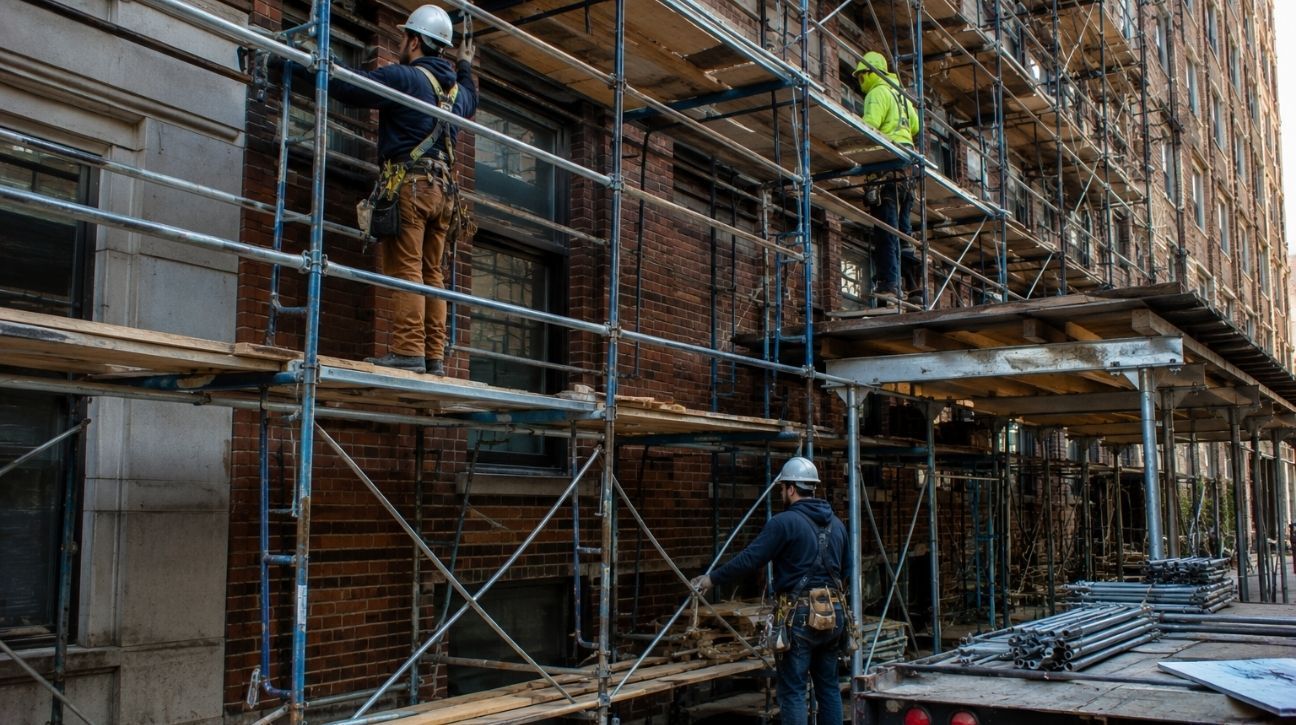
Navigating the New York Scaffolding Law (Labor Law 240/241)
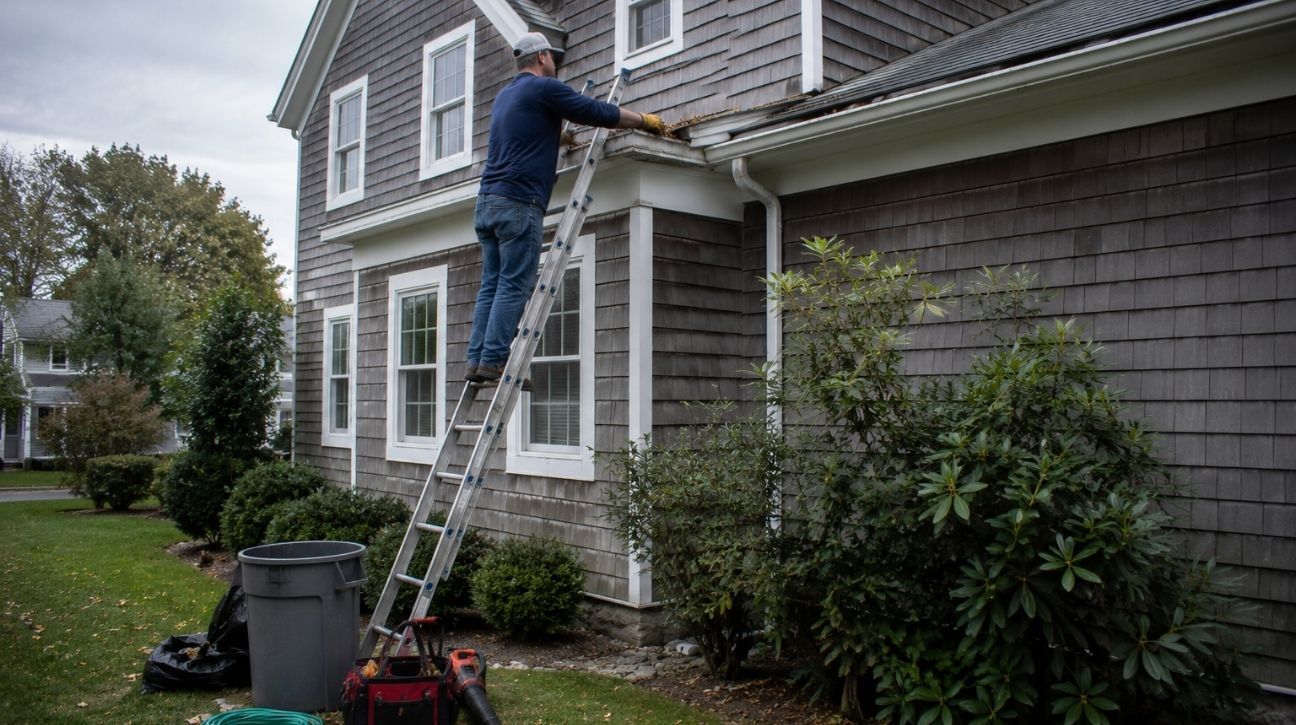
New York's Labor Law Section 240, known as the Scaffold Law, is the single biggest driver of construction insurance costs in the state. It imposes absolute liability on property owners and general contractors for gravity-related injuries on construction sites. A worker falls from a ladder that wasn't properly secured? The GC and owner are liable, even if the worker ignored safety protocols.
This law has been the subject of intense debate for years. In 2025-2026, the New York legislature introduced the AVOID Act, which would modify comparative negligence standards and potentially reduce some of the absolute liability burden. The bill has significant implications for construction risk and litigation, though its passage and implementation timeline remain uncertain. Some industry groups have raised concerns about potential insurance gaps the legislation could create during the transition period.
Until any reform takes effect, the Scaffold Law remains fully in force. That means your COI needs to reflect coverage adequate to handle absolute liability claims.
How Labor Laws Impact Your Premium and COI
The Scaffold Law directly inflates premiums for New York contractors compared to neighboring states. A roofing contractor in New York might pay two to three times what the same contractor pays in Connecticut for equivalent coverage. Your COI reflects this reality through higher required limits, and project owners will often require umbrella or excess liability policies of $5 million to $10 million on mid-size projects. The penalties for labor law violations go beyond insurance: they include fines, stop-work orders, and potential criminal liability for repeat offenders.
How to Properly Request and Verify a Subcontractor's COI
If you're a general contractor, verifying your subcontractors' insurance is one of the most important risk management steps you can take. A bad COI can expose you to claims that should never reach your policy. Don't just glance at the document and file it away.
Start by sending your insurance requirements before the subcontract is signed. Spell out exact coverage types, minimum limits, and required endorsements. Give your subs time to work with their brokers. Rushing this process leads to COIs that look compliant on the surface but lack critical endorsements.
Checking for Additional Insured Status
The additional insured endorsement is where most COI problems hide. You need to be listed as an additional insured on the sub's CGL policy, and the endorsement should be on an ISO form (CG 20 10 or CG 20 37, or their equivalents). A blanket additional insured endorsement triggered by written contract is acceptable on most projects, but verify the language. Some endorsements only provide additional insured status for ongoing operations, not completed operations. You want both. New York's contractor insurance requirements make this a non-negotiable item on virtually every project.
Verifying Policy Dates and Limits
Check three things immediately: the policy effective date, the expiration date, and whether the limits match your contract requirements. A surprising number of COIs arrive with policies that expire before the project's estimated completion date. If the policy expires mid-project, you need a commitment from the sub to provide a renewed certificate before the gap occurs. Also confirm that the aggregate limit hasn't been eroded by prior claims during the policy period. A $2 million aggregate doesn't help much if $1.8 million has already been paid out on other projects.
Common Questions About NY Contractor Certificates
FAQs: Coverage, Costs, and Compliance
How much does contractor insurance cost in New York? Costs vary widely by trade, payroll size, and claims history. A small electrical contractor might pay $3,000 to $6,000 annually for CGL, while a mid-size GC could pay $25,000 or more. Workers' comp rates are dropping significantly in 2026, which should help.
Can I work as a sole proprietor without workers' comp? Only if you have zero employees. The moment you hire anyone, even part-time, you need workers' comp, DBL, and PFL coverage. Sole proprietors can voluntarily cover themselves, and some project owners require it.
What happens if my COI expires during a project? The GC or project owner can stop you from working until you provide an updated certificate. On union jobs, this can happen within hours of expiration. Keep your renewal timeline ahead of your project schedule.
Do I need a separate COI for each project? Not necessarily. A single COI can reference your existing policies. But each project owner may require unique additional insured endorsements, which means your broker will need to issue project-specific certificates.
Is a COI the same as proof of insurance? A COI is one form of proof, but it's not the policy itself. It can be revoked or corrected by the insurer. For workers' comp specifically, New York uses form C-105.2 as official proof, which is filed directly with the Workers' Compensation Board.
Does the AVOID Act change my COI requirements right now? Not yet. The AVOID Act legislation is still moving through the legislative process. Until it's signed and takes effect, current Scaffold Law standards and COI requirements remain unchanged.
How often should I update my COI? At every policy renewal and whenever you add or change coverage. Proactively send updated certificates to active project owners before they ask.
What This Means for Your Business Growth
Getting your COI requirements right in New York isn't just about compliance: it's about credibility. GCs and project owners vet subcontractors partly on the strength of their insurance documentation. A clean, complete COI signals that you run a professional operation, and it opens doors to larger, better-paying projects.
The 2026 workers' comp rate reduction is a real opportunity. Lower premiums free up cash that you can redirect toward bonding capacity, equipment, or hiring. If you've been priced out of certain project tiers because of insurance costs, this is the year to reassess.
Your next step is straightforward. Pull your current COI and compare it against the requirements outlined here. If you're missing endorsements, carrying outdated forms, or working with a carrier that doesn't understand New York construction, talk to a broker who specializes in this market. The cost of fixing a gap before a claim is always less than the cost of discovering it after one. Make sure your insurance works as hard as you do on every job site.
Recent Posts