Care, Custody, or Control Exclusions for New York Pet Groomers: What General Liability Usually Leaves Uninsured
See How We're Different
or call us: 845-942-7200
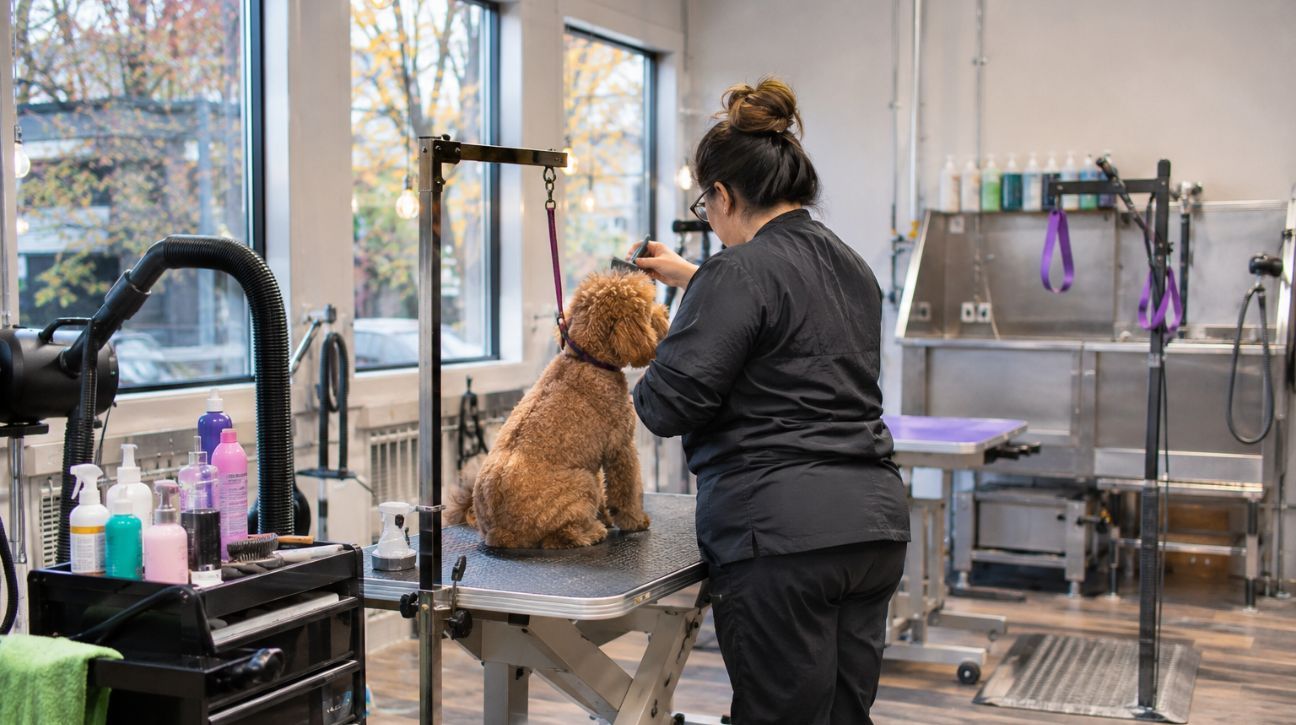
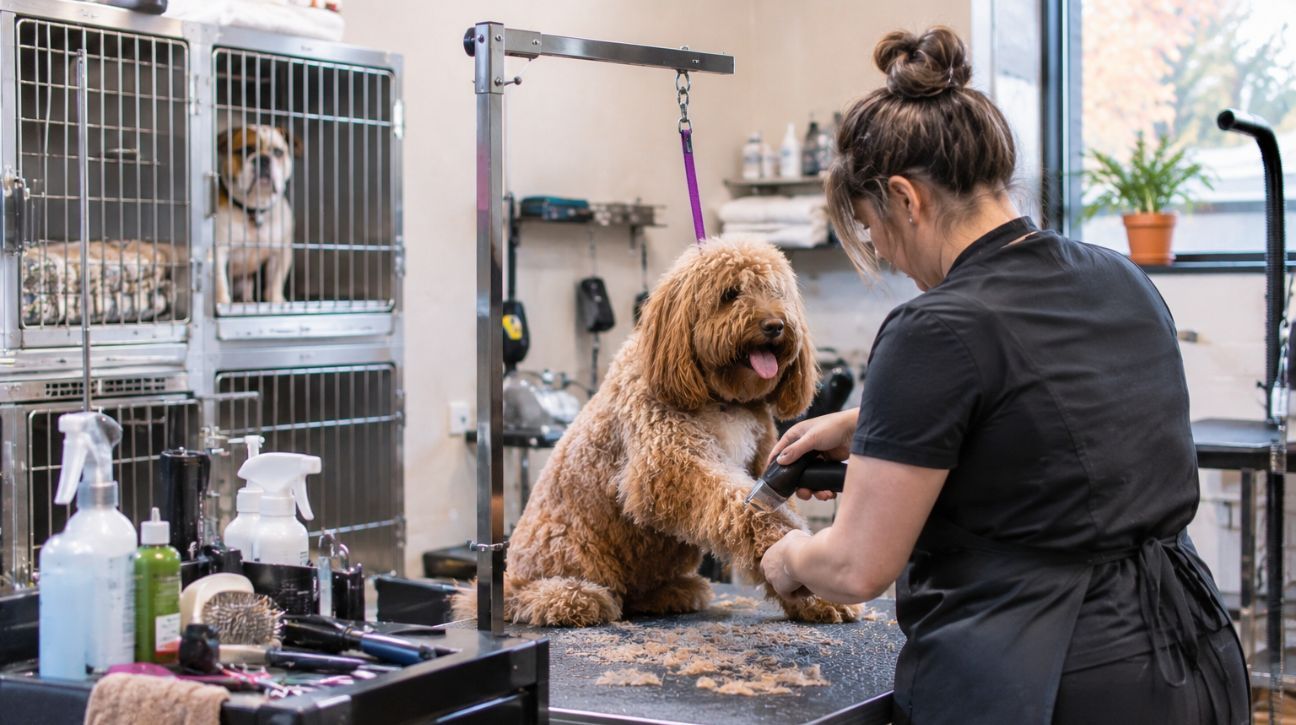
A Shih Tzu comes in for a routine trim on a busy Saturday in Queens. Your groomer turns for two seconds, the dog twists on the table, and a front leg fractures. The owner wants the emergency vet bill covered, plus follow-up surgery, and they're already talking about a lawyer. You call your agent expecting your general liability policy to handle it. Then you hear the phrase every groomer dreads: "That falls under the care, custody, or control exclusion."
This is one of the most common surprises in the pet services industry, and it hits New York groomers especially hard. Your general liability policy may look comprehensive on paper. It covers a client slipping on a wet floor in your lobby or your mobile van scraping a neighbor's fence. But the animals you're actually paid to handle often sit in a blind spot that most shop owners don't discover until a claim is denied.
This guide walks through how these exclusions work, where
New York pet groomers usually end up uninsured, and what endorsements close the gap. If you groom dogs or cats in a salon, a
mobile unit, or your home, this is the coverage conversation you need to have before your next appointment, not after.
The Hidden Gap in New York Pet Grooming Insurance
Most groomers buy general liability because a landlord, a mall, or a municipal permit requires it. That makes sense. GL is the baseline policy for nearly every small business, and it does real work protecting you from third-party bodily injury and property damage claims.
The catch is that GL was built around a simple idea: it pays when you hurt someone or damage something that belongs to someone else, outside your control. Once a client hands you the leash, their dog is legally in your possession. Insurers treat that handoff as the moment the animal stops being "someone else's property out there" and becomes property you're responsible for. That shift is exactly where coverage disappears.
Here's what that means for you in practice. The claims groomers file most often involve the pets themselves:
- Nicks and cuts from clippers or scissors
- Clipper burns and razor irritation
- Heatstroke or breathing distress from cage dryers
- Falls from tables or tubs
- Dogs bitten by other dogs in a holding area
- Escapes through an open door or from a mobile van
A standard GL policy will usually decline every one of these. That's not a loophole a carrier invented to dodge you. It's written into the policy form, and it's been standard language for decades.
The gap feels worse in New York because client expectations are high,
veterinary care is expensive, and pet owners increasingly see their animals as family. A client in Brooklyn or Westchester isn't going to shrug off a $1,800 vet bill because your policy has fine print. They'll expect you to pay, and without the right coverage, that money comes straight out of your operating account. Common grooming injuries like deep lacerations requiring sedation or emergency surgery frequently result in veterinary bills ranging from $1,000 to $3,000
(https://petcost-calculator.com/blog/emergency-vet-costs).
Decoding the Care, Custody, or Control Exclusion
The care, custody, or control exclusion (often shortened to CCC) appears in the property damage section of most commercial general liability forms. In plain terms, it says the policy won't pay for damage to personal property that's in your care, custody, or control at the time of the loss.
Understanding care, custody, or control exclusions for New York pet groomers starts with recognizing that "control" is interpreted broadly. You don't need to be physically holding a dog for the exclusion to apply. If the animal is in your kennel, on your table, inside your van, or waiting in your back room, it's generally considered under your control.
Why General Liability Stops at the Leash
Think of GL as coverage for accidents involving the outside world. A client tripping over a hose in your lobby is a classic GL claim. So is a dog you're walking to the van that bites a passerby on the sidewalk, since that's injury to a third party.
Once the property at risk is the very thing you were hired to handle, insurers see a different kind of exposure. They argue it's closer to a professional services or workmanship risk than a random accident. That's why carriers sell it separately, price it separately, and expect you to ask for it.
Many groomers assume that because they're "liable" for the pet, their "liability" policy covers it. That's the most frequent misunderstanding agents hear in this industry. Liability to the owner for harm to their pet is real, but GL simply isn't the policy designed to pay it.
Defining Personal Property in a Grooming Context
Under the law, pets are treated as personal property. That legal classification is uncomfortable for owners, but it's exactly how insurance forms read them. A Goldendoodle and a client's leather handbag fall into the same category on a GL form.
In a grooming shop, the property in your control typically includes:
- The animal itself: dogs, cats, rabbits, or any pet you accept
- Accessories left with you: collars, harnesses, sweaters, carriers
- Medical items: e-collars or medication handed over at drop-off
Damage or loss to any of these can trigger the exclusion. A $300 designer harness that goes missing in your shop is just as excluded as an injured pet, and it's the kind of small claim that sours client relationships fast. Custom-made or "investment" pet pieces from boutique designers are frequently priced at $300 or more (https://www.reddit.com/r/DogAdvice/comments/1w9pnf9/looking_for_designer_collarleashharness/)
Common Scenarios Where Standard Policies Fail NY Groomers
Policy language makes more sense when you see it play out in real claims. The scenarios below represent the claim types agents see most often from pet grooming businesses across the state.
Injuries During the Grooming Process
Cuts are the single most common grooming claim. A matted coat hides a skin fold, the clippers catch it, and the dog needs stitches. Even a careful groomer with twenty years of experience will face this eventually, because dogs move.
Other common injury claims include:
- Dryer-related heatstroke. Brachycephalic breeds like French Bulldogs and Pugs are especially vulnerable under cage dryers. These claims can be serious and occasionally fatal.
- Table falls. A dog slips a grooming loop or jumps while unattended, causing fractures or spinal injuries.
- Nail quicking and infection. Minor at first, but a client may claim an infection required antibiotics and repeat visits.
- Eye and ear injuries. Shampoo irritation, scissor nicks near the eye, or ear canal damage from aggressive plucking.
Every one of these happens while the animal is under your control, so standard GL will generally decline payment. The owner's vet bill, any follow-up treatment, and in worst cases the value of the animal become your responsibility.
Escapes and Theft from the Premises
Escapes are less frequent than cuts but often more expensive and emotionally explosive. A dog bolts when a delivery driver opens the front door, runs into traffic on a busy avenue, and gets hit. Now you're facing a vet bill or a lost pet, plus a reputation hit that spreads across neighborhood social media groups within hours.
Mobile groomers face their own version. A dog slips past you while you're loading the van in a driveway in Nassau County and disappears. Search costs, reward offers, and potential replacement value can add up fast.
Theft is rarer but real, especially for high-value breeds. If a dog is stolen from your kennel area during a break-in, your property policy covers your equipment, not your client's pet. And because the dog was in your custody, GL won't step in either. You're left uninsured on both fronts unless you've added specific coverage.
Comparison: General Liability vs. Animal Bailee Coverage
Animal bailee coverage is the endorsement or standalone policy that responds to injury, illness, death, or loss of animals in your care. "Bailee" is the legal term for someone temporarily holding another person's property, which is exactly your role during a groom.
Here's how the two coverages compare for typical grooming situations:
| Situation | General Liability | Animal Bailee Coverage |
|---|---|---|
| Client slips in your lobby | Covered | Not covered |
| Dog in your care bites a customer | Usually covered | Not covered |
| Clipper cut requiring stitches | Excluded | Covered (up to limit) |
| Heatstroke from cage dryer | Excluded | Covered (up to limit) |
| Dog escapes and is injured | Excluded | Covered (up to limit) |
| Client's harness lost in shop | Excluded | Sometimes covered |
| Pre-existing illness worsens | Excluded | Often excluded |
| Pet stolen from your kennel | Excluded | Often covered |
The table makes the point clearly: these policies aren't substitutes. They're designed to sit side by side. GL protects you from the public, while bailee coverage protects you from the animals you're paid to handle.
One thing to keep in mind is that limits on bailee coverage are often modest. Market offerings for grooming endorsements are frequently capped at $2,500 per incident and $5,000 per year as base limits. For a small cut or a minor injury, that's usually enough. For a fractured leg requiring orthopedic surgery at a specialty hospital, it may not be. Always ask what higher limits cost before accepting the default.
New York Legal and Financial Stakes for Pet Professionals
New York's legal environment shifted meaningfully for anyone who handles animals. For years, the state followed a strict "vicious propensities" rule, which meant a plaintiff injured by an animal generally had to prove the owner knew the animal was dangerous.
That changed when the New York Court of Appeals ruled in Flanders v. Goodfellow in 2025, allowing plaintiffs to pursue common law negligence claims for animal-related injuries. For groomers, this matters because negligence is now an easier path for injured parties. If a dog in your care bites someone in your lobby, a plaintiff no longer needs to show prior knowledge of aggression. They can argue you handled the situation carelessly. That's a GL exposure, but it raises the stakes for how you document handling procedures and incident reports.
Legislators are also reshaping how insurers treat dogs. Pending legislation would prohibit insurance companies from denying or restricting coverage based on breed. While that bill focuses on dog owners rather than commercial operators, it signals the direction regulators are moving: fewer blanket exclusions tied to breed lists. If your carrier has quietly applied breed-based restrictions to your bailee endorsement, it's worth asking how that language holds up going forward.
New York lawmakers have also proposed a comprehensive pet insurance framework that defines "pre-existing conditions" and "veterinary expenses" and separates pet insurance from traditional animal insurance. Once those definitions are formalized, expect more friction between your bailee policy, the owner's own pet insurance, and who pays first after an injury.
Veterinary Cost Inflation in the Tri-State Area
Vet care in the New York metro area is notoriously expensive. Emergency and specialty hospitals in Manhattan, Long Island, and northern New Jersey often charge well above national averages, and after-hours visits add significant fees on top.
This matters because grooming injuries frequently land at emergency clinics. A dog cut on a Saturday afternoon isn't waiting until Monday for its regular vet. The owner drives to the nearest 24-hour hospital, and the bill reflects that urgency.
Here's what that means for you: a base limit that feels adequate in a lower-cost market can be exhausted by a single serious incident downstate. Groomers in Rochester or Syracuse may be comfortable with base limits, while a salon on the Upper West Side should seriously price higher per-incident caps.
Bridging the Coverage Gap with Professional Endorsements
Closing the gap starts with a direct conversation with your agent, and the right questions. Don't settle for "Yes, you're covered for pets." Ask to see the actual endorsement language and the limits printed on your declarations page.
Here's a practical "Don'ts Checklist" based on mistakes groomers make all the time:
- Don't assume a "pet business package" automatically includes bailee coverage. Some packages list it as optional.
- Don't accept the lowest limit without comparing what higher caps cost.
- Don't ignore exclusions for pre-existing conditions, elderly animals, or specific procedures like de-shedding treatments.
- Don't forget mobile operations. Confirm coverage applies inside your van, not just at a fixed address.
- Don't skip written intake forms documenting each pet's condition at drop-off.
Adding Animal Bailee and Floater Policies
Animal bailee coverage is usually added as an endorsement to a GL policy or a business owner's policy. It's typically the most affordable way to address injury, illness, and loss for animals in your care. When you review it, look closely at the per-incident limit, the annual aggregate, the deductible, and how the policy values a pet that dies or goes missing.
Inland marine or floater coverage handles a related but different problem: your equipment. Clippers, dryers, tubs, and especially the custom build-out inside a mobile grooming van are expensive. A floater follows that equipment wherever it goes, which matters if you groom at clients' homes or travel between locations.
Mobile groomers should also confirm their commercial auto policy and their bailee coverage communicate clearly. If a dog is injured while you're driving between appointments, you want one policy clearly responsible, not two carriers pointing at each other.
Professional liability (sometimes called E&O for pet services) can add another layer. It addresses claims that your grooming advice or service caused harm, such as recommending a shave-down that led to skin problems. Not every groomer needs it, but higher-volume salons often do.
Common Questions About Grooming Exclusions
Does general liability cover a dog I accidentally cut while grooming? Usually not. Because the dog is in your care when the injury happens, the care, custody, or control exclusion typically applies, and you'll need animal bailee coverage for that claim.
What does "animal bailee" coverage actually mean? It's insurance for animals you're temporarily holding for someone else. It pays for injury, illness, death, or loss of pets in your care, up to the limits on your policy.
Is a $2,500 per-incident limit enough for a New York groomer? It covers many minor injuries, but a serious emergency or surgery in the metro area can exceed it. Price higher limits, especially if you groom in New York City or Long Island.
If a dog in my shop bites a customer, which policy pays? That's typically a general liability claim, since the injured person is a third party. New York's 2025 negligence ruling makes these claims easier for plaintiffs to bring, so documentation matters.
Do I need separate coverage for my grooming van? Yes. You'll want commercial auto for the vehicle, a floater for equipment inside, and confirmation that your bailee coverage applies while pets are in the van.
Can an insurer refuse to cover certain breeds I groom? Some commercial policies still include breed restrictions. New York legislation targets breed-based denials for dog owners, so ask your agent whether any breed limits apply to your business policy.
Protecting Your New York Grooming Business Long-Term
The most important lesson here is simple: general liability protects you from the public, not from the pets on your table. Every cut, burn, fall, or escape involving an animal in your care is likely to be excluded unless you've added bailee coverage with limits that match your local vet costs.
Your next steps are practical. Pull your current declarations page and look for an animal bailee endorsement by name. If it's missing, call your agent this week. If it's there, compare the per-incident limit against what an emergency visit actually costs in your area, and ask what doubling it would add to your premium.
Pair that coverage with solid shop habits: intake forms noting existing lumps, matting, or health issues, double-door entry systems, and never leaving a dog unattended on a table. Insurance pays claims, but good procedures prevent them. The groomers who last for decades in New York are the ones who treat both as part of the job.
Recent Posts